
G'day, tech enthusiasts! Braideùn O'Sullivàn here, and let me tell you, there's a buzz in the air, a hum of innovation so loud it's practically shaking the gum trees right here in Australia. For years, we've watched Apple's Siri, a pioneer in the voice assistant space, struggle to keep pace with the dazzling leaps made by OpenAI's ChatGPT and Google's Gemini. It's been a bit like watching a champion surfer catch a small wave while everyone else is riding the Pipeline. But folks, the tide is turning, and it's bringing some seriously exciting news from Cupertino, with a surprising Aussie twist.
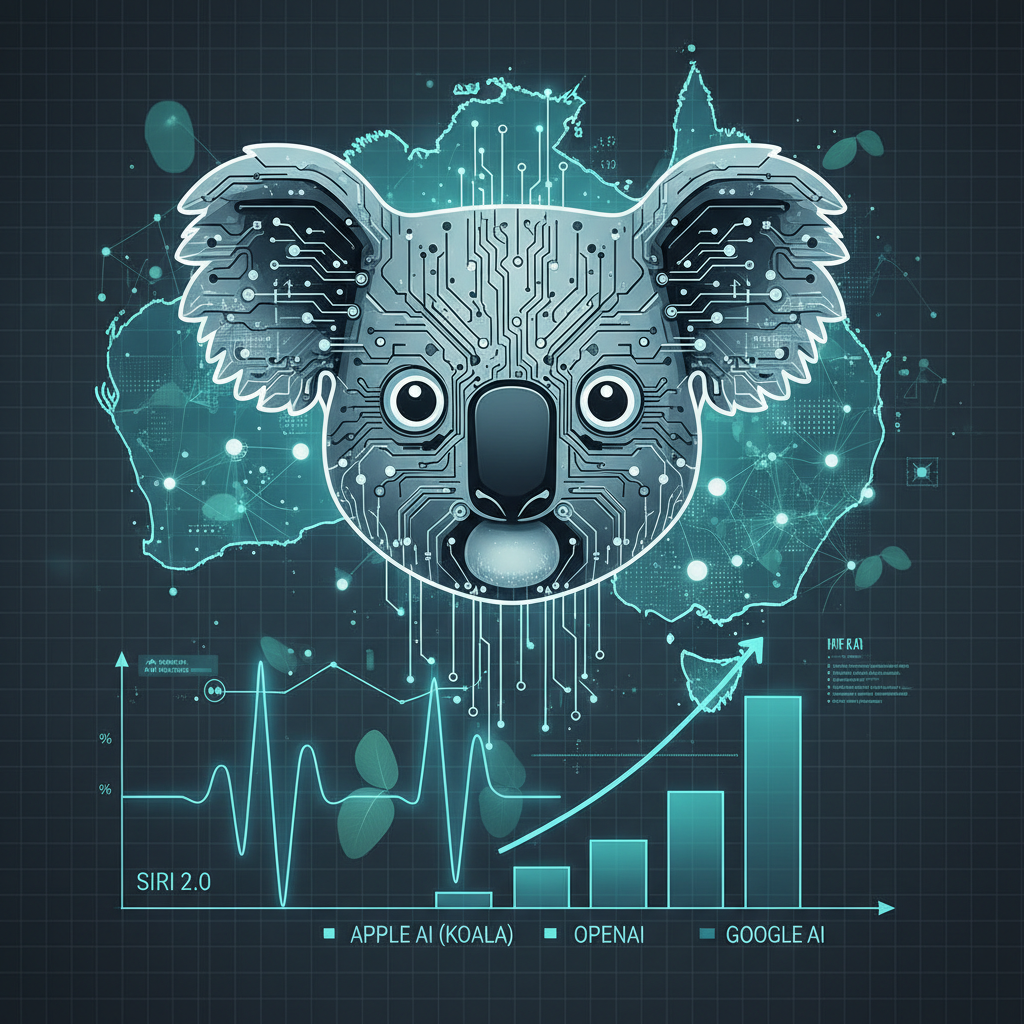
We're hearing whispers, strong whispers, about 'Project Koala', Apple's internal codename for a monumental, ground-up rebuild of Siri's underlying AI architecture. This isn't just a patch or an update; this is a full-blown metamorphosis, a complete reimagining of what a personal AI assistant can be. And believe me, my Irish roots taught me to question, my Australian home taught me to build, and right now, I'm building a case for why this could be the startup story of the decade, even if it's coming from a tech giant.
The Breakthrough in Plain Language: Contextual Intelligence Finally Arrives
So, what's the big deal with Project Koala? At its core, it's about moving Siri from a command-and-response system to a truly context-aware, multimodal conversational AI. Think about it: current Siri often forgets what you just said, struggles with complex queries, and feels a bit, well, robotic. Project Koala aims to fix all that by integrating a new 'Situational Awareness Engine' that learns from your ongoing interactions, app usage, and even environmental cues. Imagine asking Siri, 'What's the best route to the SCG for the cricket today?' and it not only gives you directions but also checks the weather, suggests a good pub nearby for a pre-game pint, and even reminds you about your favourite team's recent form, all without you having to ask each individual question. That's the dream, isn't it?
This leap is powered by a novel approach to multimodal learning, a significant departure from Apple's previous, more siloed AI development. Instead of separate models for voice, text, and image recognition, Project Koala is reportedly leveraging a unified transformer architecture, much like the breakthroughs seen in large language models, but specifically optimized for on-device processing and Apple's privacy-first philosophy. This means your data stays on your device, a huge win for privacy advocates, especially here in Australia where data sovereignty is a growing concern.
Why It Matters: A Battle for the Digital Soul
Why is this so crucial? Because the personal AI assistant is rapidly becoming the central nervous system of our digital lives. Google Assistant and OpenAI's various integrations are already deeply embedded in how millions interact with information, manage their schedules, and control their smart homes. Apple, with its vast ecosystem of devices and services, has an unparalleled opportunity to integrate AI seamlessly into our everyday existence. If Project Koala delivers, it could redefine user experience across iPhones, Apple Watches, Macs, and even the upcoming Vision Pro. It's about making technology disappear into the background, becoming an intuitive extension of ourselves.