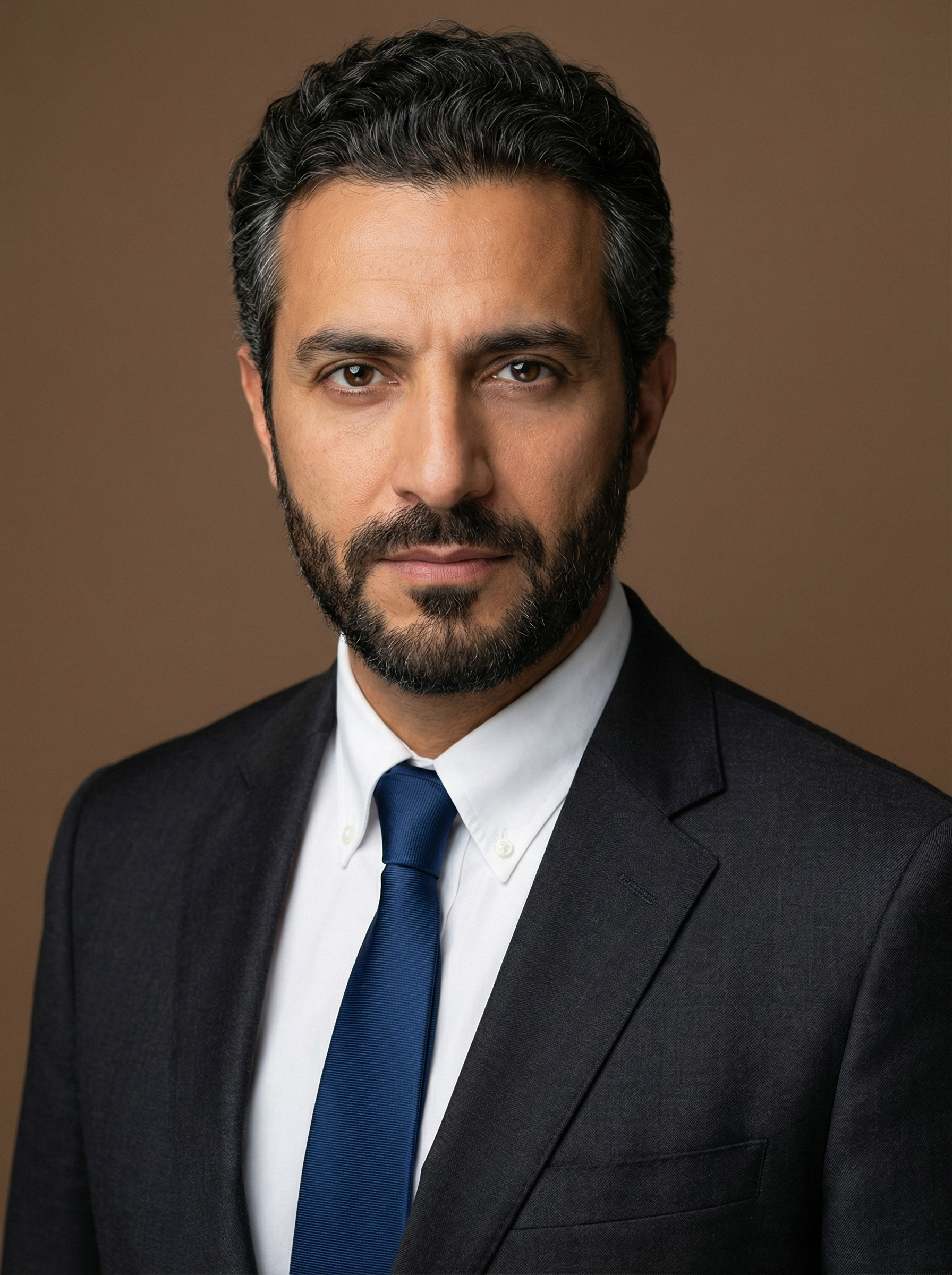
The air in Amman, even in the bustling tech hubs, carries a certain weight, a history, a pragmatism that often feels absent in the gilded cages of Silicon Valley. It is this very spirit, I believe, that has shaped Amjad Masad, the founder and CEO of Replit, into the force he is today. While the tech world obsesses over the latest large language model or the next billion-dollar valuation, Masad is quietly, yet fiercely, rebuilding the very infrastructure of software development, powered by AI, and doing it with a vision that transcends the typical Valley hype cycle. Unpopular opinion from Amman: his approach makes more sense than Silicon Valley's often myopic focus.
I remember first hearing about Replit years ago, a simple online coding environment. Many dismissed it as a toy, a playground for beginners. But Masad saw something deeper, a fundamental shift waiting to happen. He understood that the friction in software development was not just about syntax or debugging, but about access, collaboration, and the sheer cognitive load of managing complex environments. Now, with Replit's aggressive pivot into AI-powered software creation, that 'toy' is becoming a formidable weapon, and Masad, a quiet revolutionary.
His journey began far from the hallowed halls of Stanford or MIT. Masad grew up in Amman, Jordan, a place where innovation often springs from necessity rather than boundless capital. His early fascination with computers was not fueled by endless resources but by curiosity and a relentless drive to understand how things worked. He taught himself to code, spending countless hours in internet cafes, devouring every piece of information he could find. This self-taught ethos, this hunger for knowledge, is a defining characteristic that still permeates Replit's culture. He did not have the luxury of a pre-packaged path; he forged his own.
After honing his skills, Masad found himself at Facebook, then at Codecademy, and later at Google. These experiences, while invaluable, also showed him the limitations of existing development tools and the often-fragmented nature of software creation. He saw the potential for a unified, collaborative, and accessible platform. This vision culminated in the founding of Replit in 2016, with his co-founder Haya Odeh, who he met through mutual friends and shared interests in programming. Their partnership was built on a shared belief that coding should be as easy as writing, accessible to anyone, anywhere.
For years, Replit focused on making coding accessible. It became a haven for students, hobbyists, and even professional developers looking for a quick, browser-based environment. The platform’s ease of use and collaborative features attracted millions. But the real breakthrough, the moment that truly set Replit on its current trajectory, came with the explosion of generative AI. Masad, ever the visionary, immediately recognized the profound implications for software development. He understood that AI wasn't just a tool to assist developers, but a force that could fundamentally transform the act of creation itself.
Replit's AI strategy, particularly with its Ghostwriter feature, is not about replacing developers, but about augmenting them, making them exponentially more productive. It's about taking the drudgery out of coding, allowing humans to focus on higher-level problem-solving and creativity. This is a crucial distinction that many in the West, fixated on job displacement, often miss. "We're not just building an IDE, we're building an operating system for intelligence," Masad once stated in an interview, a sentiment that perfectly encapsulates his ambition. This isn't just about code completion; it's about an intelligent partner in the development process.
Building Replit has not been without its challenges. Scaling a platform that supports millions of developers, handling complex computational demands, and integrating cutting-edge AI models requires immense technical prowess and strategic foresight. Masad has assembled a diverse team, many of whom, like him, came from non-traditional backgrounds or from parts of the world often overlooked by the tech elite. This diversity, I would argue, is a key strength. It brings varied perspectives to problem-solving, fostering a culture of innovation that is less constrained by conventional thinking.
The company has attracted significant investment, reflecting the growing confidence in Masad's vision. In April 2023, Replit announced a $97.5 million Series B funding round, bringing its total valuation to a reported $1.16 billion. This round was led by Andreessen Horowitz, with participation from other prominent investors like Coatue and Khosla Ventures. Such backing underscores the belief that Replit is not just riding the AI wave, but actively shaping it. "Amjad has built a product that fundamentally changes how people interact with code," said David George, a general partner at Andreessen Horowitz, highlighting the transformative nature of Replit's platform. This funding has allowed Replit to accelerate its AI initiatives, hiring top talent and investing heavily in research and development.
Today, Replit stands at the forefront of AI-powered software development. Its platform integrates seamlessly with various AI models, allowing developers to generate code, debug, and even deploy applications with unprecedented speed. This is more than just a productivity boost; it's a paradigm shift. It empowers individuals and small teams to build complex software that would have previously required large, well-funded engineering departments. This democratization of development is particularly relevant for regions like Jordan, where access to resources and talent can be more limited than in established tech hubs. Enabling a single developer to achieve the output of five or ten is a game-changer for emerging markets.
What truly drives Masad is not just technological advancement, but a deep-seated belief in the power of creation and the potential of every individual. He envisions a future where anyone, regardless of their background or location, can become a software creator. This aligns perfectly with the ethos of many educational initiatives in Jordan, like those supported by the King Abdullah II Fund for Development, which aim to empower youth through technology and entrepreneurship. Masad is not just selling a product; he is selling a philosophy: that the ability to build should be universal.
What's next for Replit? I believe we will see an even deeper integration of AI into every aspect of the development lifecycle, moving beyond code generation to intelligent testing, deployment, and even project management. Masad is not content with incremental improvements; he is aiming for a complete re-imagining of how software comes into being. He is proving that the future of coding is not just about writing lines of text, but about orchestrating intelligent agents to build the digital world around us. And in doing so, he is showing that true innovation can emerge from anywhere, even from the quiet determination forged in the streets of Amman, challenging the very notion that Silicon Valley holds a monopoly on genius. The West has it backwards if it thinks talent is confined to its borders; Masad's journey is a testament to that global truth. For more insights into how AI is reshaping industries, you can explore reports from TechCrunch or Reuters Technology. His vision, in my view, is not just about building better tools, but about building a better future for creators worldwide. It is a future where the next great innovation could just as easily come from a developer in Irbid as from a startup in Palo Alto. This is a future I, for one, am eager to witness unfold, and it is a future that Jordan, with its burgeoning tech scene and resilient spirit, is uniquely positioned to embrace. For a deeper dive into the societal implications of such advancements, Wired often provides excellent analysis.