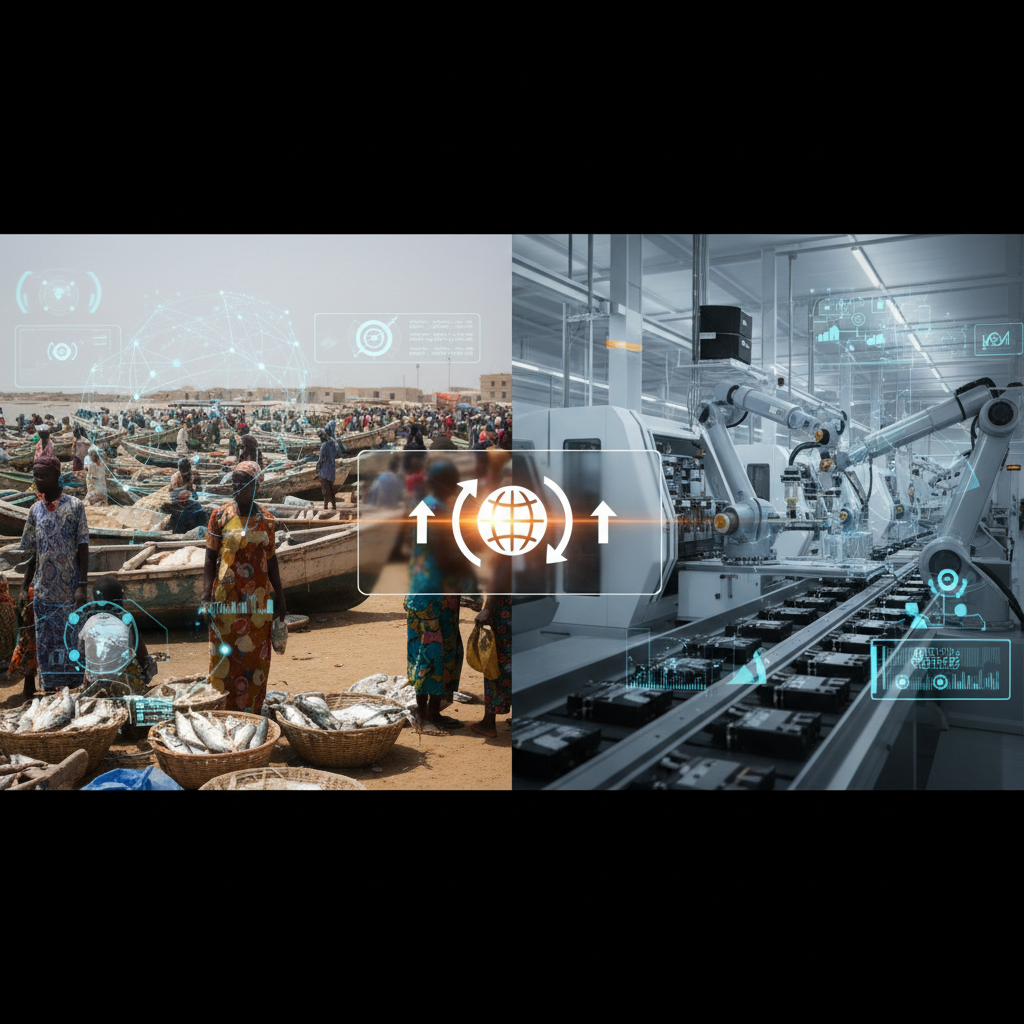

The news hit like a Lagos downpour: Amazon's Project Kuiper, the satellite internet constellation, is making significant inroads into Africa, with Nigeria slated as a key market. The headlines sing praises of connectivity for the unserved, education for the remote, and economic upliftment for millions. Andy Jassy, Amazon's CEO, speaks of a future where everyone, everywhere, is connected. It sounds like a dream, a digital utopia descending from the heavens. But, as a Nigerian journalist who has seen these promises before, I must ask: whose dream is this, really?
Unpopular opinion: when a tech giant like Amazon, with its insatiable appetite for data and market dominance, offers to solve our connectivity problems from space, we should not just cheer. We should scrutinize, dissect, and demand answers. This isn't just about getting online; it is about who controls the infrastructure, who owns the data, and ultimately, who benefits from this new digital frontier. Let's talk about what nobody wants to discuss.
Project Kuiper, Amazon's ambitious low Earth orbit satellite internet service, aims to compete directly with Elon Musk's Starlink. The promise is clear: high-speed, low-latency internet access to remote and underserved regions globally. For a country like Nigeria, where internet penetration, despite significant strides, still leaves a substantial portion of the population offline, particularly in rural areas, this sounds like salvation. The Nigerian Communications Commission (NCC) has often highlighted the challenges of extending fiber optic cables to every village, making satellite solutions seem like a godsend. Indeed, the NCC's latest reports indicate that while urban centers boast decent connectivity, vast swathes of the country, especially in the North and rural South, remain digitally isolated. This is a problem that needs solving, no doubt.
But let us not be naive. Amazon is not a charity. Its primary objective is market expansion and profit maximization. Project Kuiper is not merely about providing internet; it is a strategic play to extend Amazon's ecosystem, from AWS cloud services to its e-commerce platforms, into new territories. Every byte of data transmitted, every user connected, every transaction facilitated, feeds into Amazon's vast data machine. This is where the AI-powered connectivity comes into sharp focus. The satellites themselves are not just passive relays; they are part of an intelligent network, potentially leveraging AI for optimized signal routing, predictive maintenance, and perhaps, even user behavior analysis. The more data they collect, the more powerful their algorithms become, and the deeper their market penetration.
Consider the implications for data sovereignty. When our internet traffic, our communications, our educational content, and our e-commerce transactions traverse Amazon's satellites and infrastructure, what assurances do we have about the privacy and security of that data? Who has access to it? Where is it stored? And under what legal jurisdiction does it fall? These are not trivial questions. They are fundamental to our digital autonomy as a nation. We have seen how global tech companies, often operating under the laws of their home countries, can exert immense influence, sometimes at odds with local regulations or national interests. Wired often covers the complexities of data governance in the age of global tech giants, and Africa's situation is particularly vulnerable.
Dr. Aisha Abubakar, a prominent Nigerian tech policy analyst and former Minister of State for Industry, Trade and Investment, voiced similar concerns recently. "While we welcome any initiative that seeks to bridge our digital divide, we must approach these partnerships with our eyes wide open," she stated in a recent forum. "The terms of engagement, particularly concerning data ownership, local content integration, and knowledge transfer, must be unequivocally in our favor. We cannot afford another era of digital colonialism, where our resources, this time data, are extracted for foreign profit with minimal local benefit." Her words resonate deeply with many who remember past resource exploitation.
Moreover, the economic impact needs careful consideration. While Kuiper promises jobs in installation and maintenance, will it foster a truly indigenous digital economy, or will it merely create a new class of consumers dependent on foreign platforms? What about local internet service providers (ISPs) and telcos? Will they be able to compete with a behemoth like Amazon, or will they be relegated to mere resellers of Kuiper's bandwidth? This could stifle local innovation and entrepreneurship, creating a monopolistic environment rather than a competitive one. We need to ensure that these initiatives empower local businesses, not just displace them.
Look at the history. For decades, African nations have grappled with the terms of engagement with multinational corporations. From oil to minerals, the narrative has often been one of raw resource extraction with limited value addition locally. Now, the new gold is data, and the new infrastructure is digital. We must learn from past mistakes. The Nigerian government, through agencies like the National Information Technology Development Agency (nitda), has been pushing for local content development and data localization policies. These efforts must be strengthened, not undermined, by the arrival of global satellite internet providers.
Even in the realm of AI, the implications are profound. If Amazon's AI systems are optimizing our internet, what biases might be embedded in those algorithms? Are they trained on diverse datasets that reflect Nigeria's unique linguistic and cultural nuances? Or are they extensions of models primarily developed for Western markets, potentially leading to algorithmic discrimination or a lack of relevance for local needs? This is not a hypothetical fear; algorithmic bias is a well-documented problem, as highlighted by various reports from MIT Technology Review.
“The promise of AI is immense, but so is its potential for harm if not governed responsibly,” noted Professor Ndubuisi Ekekwe, a Nigerian tech entrepreneur and academic, in a recent interview. “When AI is embedded in critical infrastructure like internet connectivity, its ethical implications multiply. We need transparency, accountability, and local oversight to ensure these systems serve our people equitably.” His point is critical, especially as AI becomes more pervasive.
Everyone's celebrating, but I have questions. We must demand clear answers on pricing models, ensuring affordability for the average Nigerian, not just the elite. We must insist on robust data protection agreements, perhaps even data localization, to safeguard our digital sovereignty. We must push for genuine partnerships that include technology transfer, local capacity building, and investment in indigenous tech ecosystems, rather than just being passive recipients of foreign services. The era of just accepting whatever Big Tech offers must end.
Amazon's Project Kuiper has the potential to transform Nigeria's digital landscape, but only if we, as a nation, approach it with strategic foresight and an unwavering commitment to our own interests. We must not allow the allure of connectivity to blind us to the deeper implications of digital dependency. The future of our digital economy, our data, and our sovereignty hangs in the balance. We must negotiate, not merely accept. This is not just about internet access; it is about our place in the global digital order. It is about ensuring that this new wave of connectivity truly empowers Nigerians, rather than merely extending the reach of another foreign empire. The time for critical engagement is now, before the satellites are fully entrenched and the terms of our digital future are irrevocably set. Perhaps we can learn from how other nations are approaching digital sovereignty, as explored in articles like When AI Learns Your Secrets: Navigating the Global Data Privacy Maze From Suva to Silicon Valley [blocked].