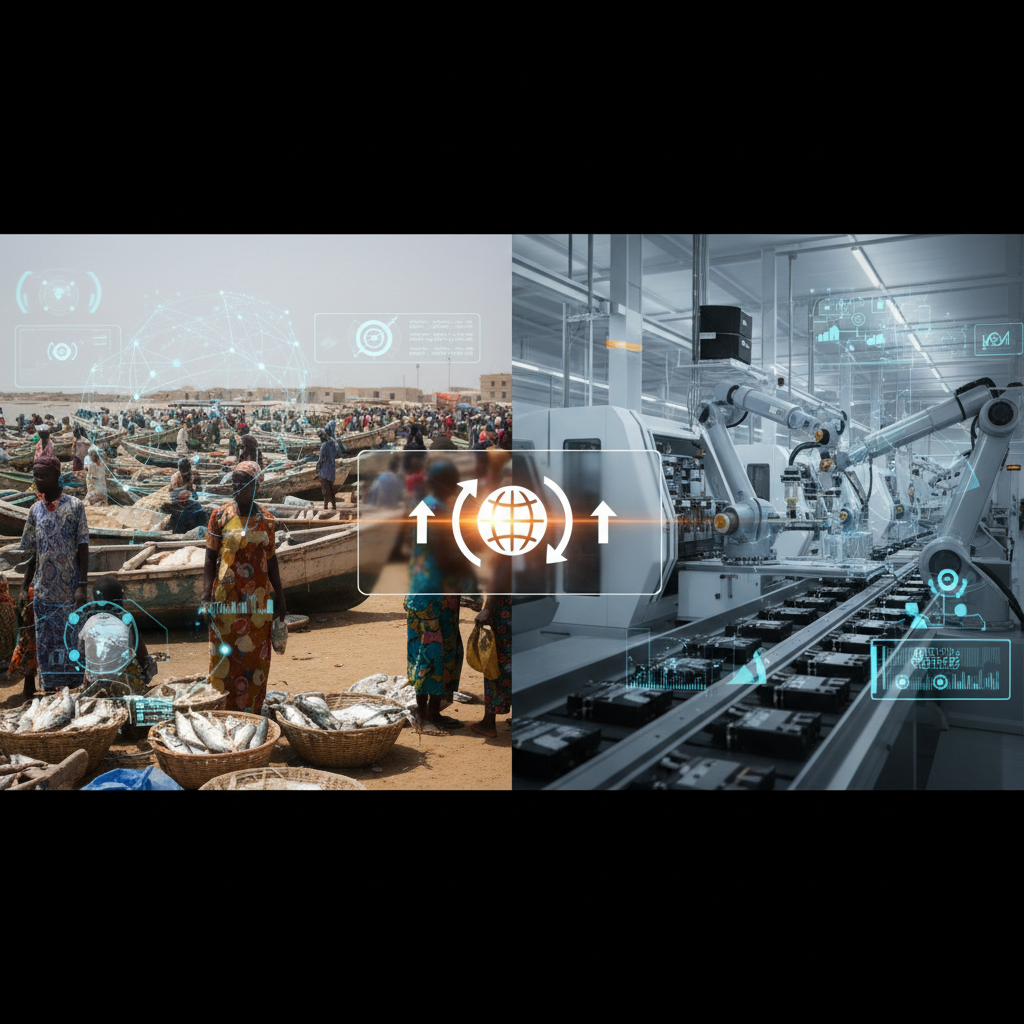
The rhythmic clang of metal on metal, the hiss of hydraulic presses, and the pervasive scent of hot plastic once defined the industrial zones flanking Dakar. In the bustling Thiaroye district, where the fish market's chaos meets the ordered hum of factories, a new sound is emerging: the subtle whir of algorithms at work. This is not the clamor of human labor, but the quiet efficiency of artificial intelligence, meticulously orchestrating production lines and predicting failures long before they manifest.
My recent visit to a prominent textile manufacturing plant, a facility that supplies both local markets and international brands, revealed a landscape in flux. The plant, which had traditionally relied on manual inspection and reactive maintenance, has begun integrating AI-powered predictive maintenance systems. Sensors now monitor machine vibrations, temperature fluctuations, and energy consumption, feeding data into algorithms that forecast potential breakdowns with startling accuracy. "Before, a critical loom could fail without warning, costing us days of production and thousands of CFA francs," explained Fatou Diop, a veteran floor manager, her voice tinged with a mix of apprehension and awe. "Now, the system tells us a week in advance that a bearing needs replacement. It is like having a griot for the machines, foretelling their ailments."
This is not an isolated incident. Across Senegal, from food processing plants to nascent automotive assembly lines, AI is quietly, yet profoundly, reshaping manufacturing. A recent report by the African Development Bank, corroborated by private sector analyses, indicates that AI adoption in African manufacturing, while still nascent compared to global leaders, has seen a compound annual growth rate of approximately 25% over the past three years. In Senegal specifically, industry analysts at the MIT Technology Review suggest that pilot programs for predictive maintenance and quality control have expanded by nearly 40% in the last year alone, driven by a desire to enhance competitiveness and reduce operational costs.
The economic imperative is clear. McKinsey estimates that AI could add 1.2 to 3.6 percentage points to Africa's annual GDP growth by 2030, with manufacturing being a significant contributor. Companies like Senelec, the national electricity company, are reportedly exploring AI for grid maintenance, while smaller private enterprises are deploying vision AI for quality inspection. For instance, a leading beverage company in Senegal has implemented AI-driven optical inspection systems, reducing defect rates by an estimated 15% and increasing throughput by 8% in its bottling lines. This directly translates to higher profits and a stronger position in the regional market.
However, the narrative is not uniformly positive. While efficiency gains are undeniable, the human cost of this technological shift remains a contentious issue. In the textile factory I visited, several quality control inspectors, whose roles once involved meticulous manual checks, have been retrained for data annotation or system monitoring. Others, particularly older workers, have been offered early retirement packages. "The machines do not complain, they do not ask for raises, and they do not get sick," a factory owner, who preferred to remain anonymous, told me, a pragmatic glint in his eye. "This is the reality of global competition. We must adapt or perish."
This sentiment echoes across the continent. While proponents argue that AI creates new, higher-skilled jobs, the transition is rarely seamless. The documents reveal that many of the new positions require digital literacy and specialized training that is not readily available to the existing workforce, especially in a country where access to advanced technical education remains a challenge. The Centre de Recherche et de Formation en Intelligence Artificielle (cerfia) at the Cheikh Anta Diop University in Dakar is working to bridge this gap, but the scale of the challenge is immense.
Expert analysis from Dr. Aminata Sow, a renowned economist specializing in African industrialization at the codesria (Council for the Development of Social Science Research in Africa), underscores this duality. "AI offers an unprecedented opportunity for African nations to leapfrog traditional industrial stages, but it also risks exacerbating existing inequalities," Dr. Sow stated during a recent conference in Abidjan. "Without proactive government policies for workforce reskilling and social safety nets, the benefits of AI in manufacturing may accrue disproportionately, leaving a significant portion of the labor force behind." Her words serve as a stark reminder that technological progress, unchecked, can widen societal divides.
Indeed, the winners in this evolving landscape are often those agile enough to invest in both technology and human capital development. Companies like Orange Senegal, through its innovation hubs, are actively partnering with local startups to develop AI solutions tailored for African contexts, including manufacturing. This approach, which emphasizes local capacity building, contrasts sharply with the purely import-driven models that often fail to create sustainable value chains. The question remains: how many Senegalese companies can afford such comprehensive strategies?
Worker perspectives are varied, often reflecting their position within the hierarchy. Younger employees, particularly those with some technical background, express cautious optimism, seeing opportunities for career advancement in areas like data science and robotics. However, older, less digitally literate workers voice deep anxieties about job security. "I have worked here for thirty years, my hands know these machines better than any sensor," lamented Idrissa Gueye, a fifty-five-year-old mechanic. "Now they tell me a computer knows better. What will become of us?" His concern is palpable, a testament to the human element often overlooked in the rush for technological supremacy.
What is coming next? My sources tell me that the next wave of AI integration will move beyond predictive maintenance and quality control to encompass fully autonomous production lines and intelligent supply chain management. The dream of the "smart factory," where AI systems manage everything from raw material procurement to final product delivery, is no longer a distant fantasy but a rapidly approaching reality. Companies like Siemens and Schneider Electric are already deploying advanced industrial AI solutions globally, and their presence in Africa is growing. This will further intensify the pressure on local manufacturers to adapt, or risk being outmaneuvered by more technologically advanced competitors.
For Senegal, and indeed for all of Africa, the embrace of AI in manufacturing is not merely an economic decision, but a profound societal one. It promises increased productivity, enhanced quality, and greater global competitiveness. Yet, it also demands a careful reckoning with its impact on employment, skills development, and social equity. The challenge lies not in resisting the tide of innovation, but in channeling its immense power to build an inclusive future, one where the benefits of smart factories extend beyond corporate balance sheets to uplift the lives of all Senegalese citizens. This is just the tip of the iceberg, and the true measure of our progress will be how we navigate these turbulent waters. For more on how AI is shaping industries globally, consider reading about the geopolitics of AI. The lessons from other regions can inform our path forward.