
The air in Dr. Layla Al-Hassan's lab at the Royal Scientific Society in Amman hums with a familiar tension. Flasks bubble, centrifuges whir, and the faint scent of reagents lingers. But today, there is a new, almost digital, hum. It is the sound of anticipation, of a quiet revolution whispered through servers and screens. Dr. Al-Hassan, a biochemist with eyes that have seen both the promise and the pitfalls of scientific advancement, is grappling with AlphaFold 3. Google DeepMind’s latest iteration of its protein-folding AI has sent ripples through the global pharmaceutical and biotech industries, promising to accelerate drug discovery like never before. Yet, here in Jordan, the story is far more nuanced than the breathless headlines suggest.
From Silicon Valley, we hear tales of unprecedented speed and efficiency, of years compressed into months, and of diseases once deemed untreatable now within reach. And yes, the core technology is undeniably powerful. AlphaFold 3’s ability to predict the structure of proteins and other biomolecules with astonishing accuracy, including their interactions, is a game-changer for understanding biological processes and designing new therapies. It is a marvel of computational biology, a testament to what focused AI development can achieve. But let us be honest, the narrative often spun by Western tech giants and media overlooks the practical realities on the ground, especially in regions like ours. The West has it backwards, often assuming that a technological breakthrough automatically translates into universal benefit and immediate adoption.
Consider the adoption rates. While major global pharmaceutical players like AstraZeneca and Eli Lilly are reportedly integrating AlphaFold 3 into their research pipelines, the picture in Jordan is different. Our local pharmaceutical sector, while robust for a developing nation, operates on different scales and with different investment priorities. According to a recent report by a regional consulting firm, less than 5 percent of Jordan's pharmaceutical and biotech companies have actively piloted AlphaFold 3 or similar advanced AI drug discovery platforms as of early 2026. This is not due to a lack of talent or interest; our universities produce brilliant scientists. It is a matter of infrastructure, capital expenditure, and the immediate return on investment for companies often focused on generic drug production or regional markets. The cost of licensing, integrating, and maintaining such sophisticated AI systems, coupled with the necessary high-performance computing resources, can be prohibitive for many local enterprises.
Dr. Tariq Mansour, CEO of PharmaJo, a mid-sized pharmaceutical company based in Zarqa, articulated this challenge clearly during a recent industry forum. “AlphaFold 3 is fascinating, truly. But for us, the immediate question is not 'can it predict a protein structure' but 'can it help us bring an affordable, effective drug to market faster for the diseases prevalent in our region?' The investment required is substantial, and the path to commercialization for novel drugs is long and fraught with regulatory hurdles. We need to see a clearer, more direct ROI before we can fully commit,” he stated. This sentiment is echoed across many smaller and medium-sized enterprises in the region. They are not rejecting innovation; they are demanding practical, localized solutions.
So, who are the winners and losers in this unfolding drama? Globally, the clear winners are the large pharmaceutical conglomerates with deep pockets and existing R&D infrastructure. They can absorb the costs, leverage the insights, and potentially dominate the next generation of drug development. Companies like Google DeepMind, of course, are also major beneficiaries, solidifying their position at the forefront of AI innovation. For Jordan, the picture is mixed. Smaller, agile biotech startups with venture capital backing, often founded by returning Jordanian scientists with international experience, might find niches. They could leverage AlphaFold 3 for specific, targeted research projects, perhaps in collaboration with international partners. However, the majority of established local players risk being left behind if they cannot find ways to adapt or collaborate.
What about the workers? The fear, often unspoken, is job displacement. Will computational biochemists replace bench scientists? Not entirely, but their roles will undoubtedly evolve. Dr. Al-Hassan believes the shift is towards augmentation, not replacement. “Our scientists will become more efficient, focusing their wet lab experiments on the most promising candidates identified by AI,” she explained. “The demand will shift towards those who can interpret AI outputs, design intelligent experiments, and integrate computational tools into traditional workflows. It is a challenge, but also an opportunity for upskilling.” This is where Jordan's approach makes more sense than Silicon Valley's often dismissive attitude towards labor. We cannot afford to simply discard human capital; we must nurture and re-skill it. Training programs, perhaps spearheaded by institutions like the King Abdullah II Design and Development Bureau (kaddb) or local universities, will be crucial to bridge this skills gap.
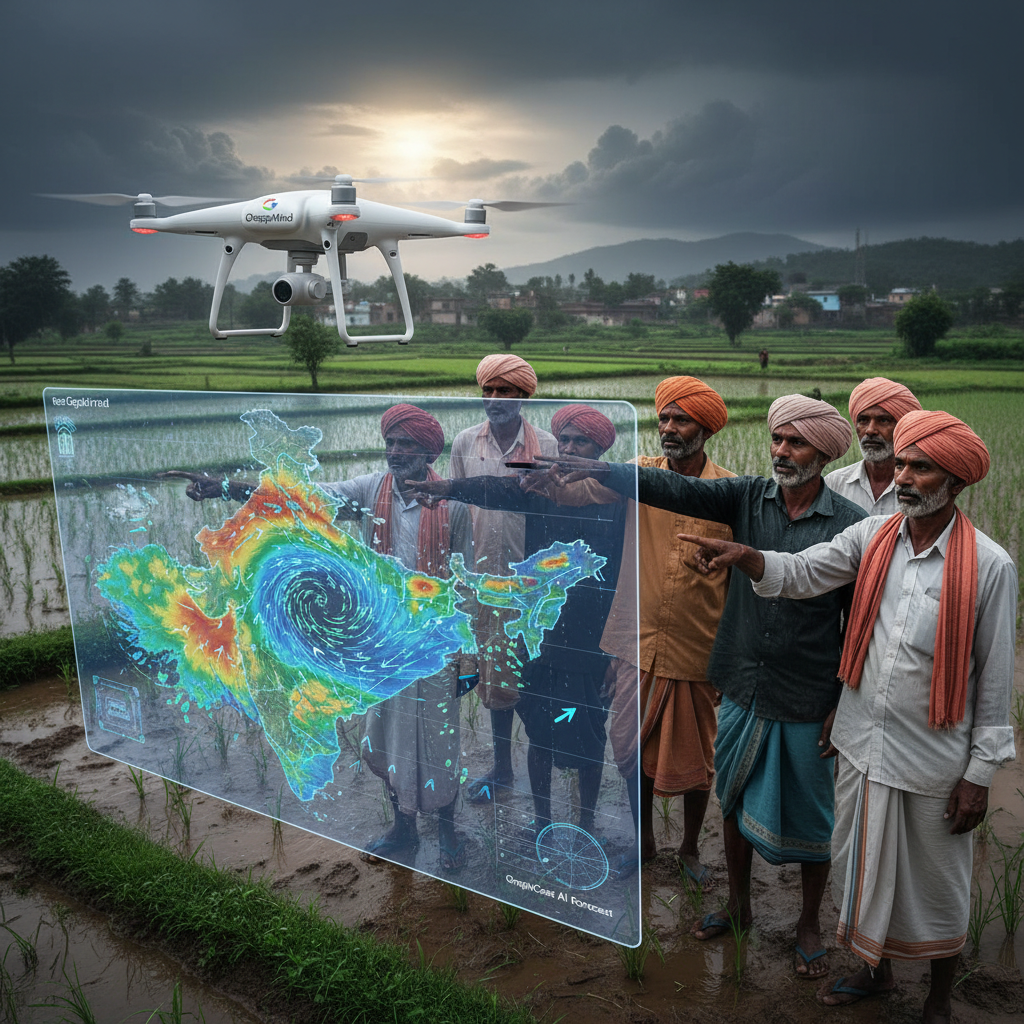
Unpopular opinion from Amman: While AlphaFold 3 is a scientific triumph, its immediate impact on the ground in places like Jordan is less about revolutionary drug pipelines and more about exacerbating existing inequalities in technological access and investment. The digital divide, it seems, extends even to the molecular level. For a country like Jordan, grappling with resource constraints and regional complexities, the focus must be on leveraging AI for immediate, tangible benefits that address local challenges, such as water management or sustainable agriculture, before fully diving into the capital-intensive world of novel drug discovery. There is a strong argument to be made that our limited resources are better spent on AI for sustainable development [blocked] and localized solutions.
Looking ahead, the future is not bleak, but it demands strategic thinking. Collaboration is key. Jordanian research institutions and companies could partner with international pharmaceutical giants, offering access to diverse genetic data or clinical trial populations in exchange for access to advanced AI platforms and expertise. Government incentives for AI adoption in research and development, coupled with investment in high-performance computing infrastructure, could also level the playing field. Furthermore, the development of open-source or more affordable, localized versions of such AI tools, perhaps tailored to specific regional diseases, could democratize access. The global scientific community, including Google DeepMind, has a responsibility to ensure that these powerful tools do not exclusively benefit the already privileged few.
As the sun sets over Amman, casting long shadows across the ancient city, the digital hum in Dr. Al-Hassan's lab continues. The promise of AlphaFold 3 is real, but its integration into Jordan's scientific landscape will be a slow, deliberate process, shaped by economic realities and a pragmatic approach to innovation. It is not just about the algorithm; it is about the ecosystem in which it lands. We must ensure that this powerful tool serves humanity broadly, not just the select few who can afford the ticket to the future. For more insights into Google DeepMind's work, visit their official page here. For broader discussions on AI's enterprise impact, TechCrunch offers frequent updates.