
For generations, the monsoon has been India's lifeblood and its greatest challenge. It dictates our agriculture, fuels our economy, and sadly, sometimes unleashes devastation. We've always looked to the skies with a mix of reverence and trepidation, relying on meteorologists who, despite their brilliance, were often battling with tools that felt, frankly, ancient. But let me tell you, friends, that era is rapidly fading into the past. We are at an inflection point, a moment where the very fabric of our interaction with nature is being rewritten by artificial intelligence.
I've been tracking this for years, watching the incremental improvements in forecasting models, but nothing, and I mean nothing, prepared me for the seismic shift we're witnessing with AI-driven weather predictions. We're not talking about marginal gains here, we're talking about orders of magnitude improvement. The kind of accuracy that can literally mean the difference between a village being evacuated safely and a tragedy unfolding. This is not just a technological upgrade, it's a societal transformation, particularly for a country like India, which is so vulnerable to climatic whims.
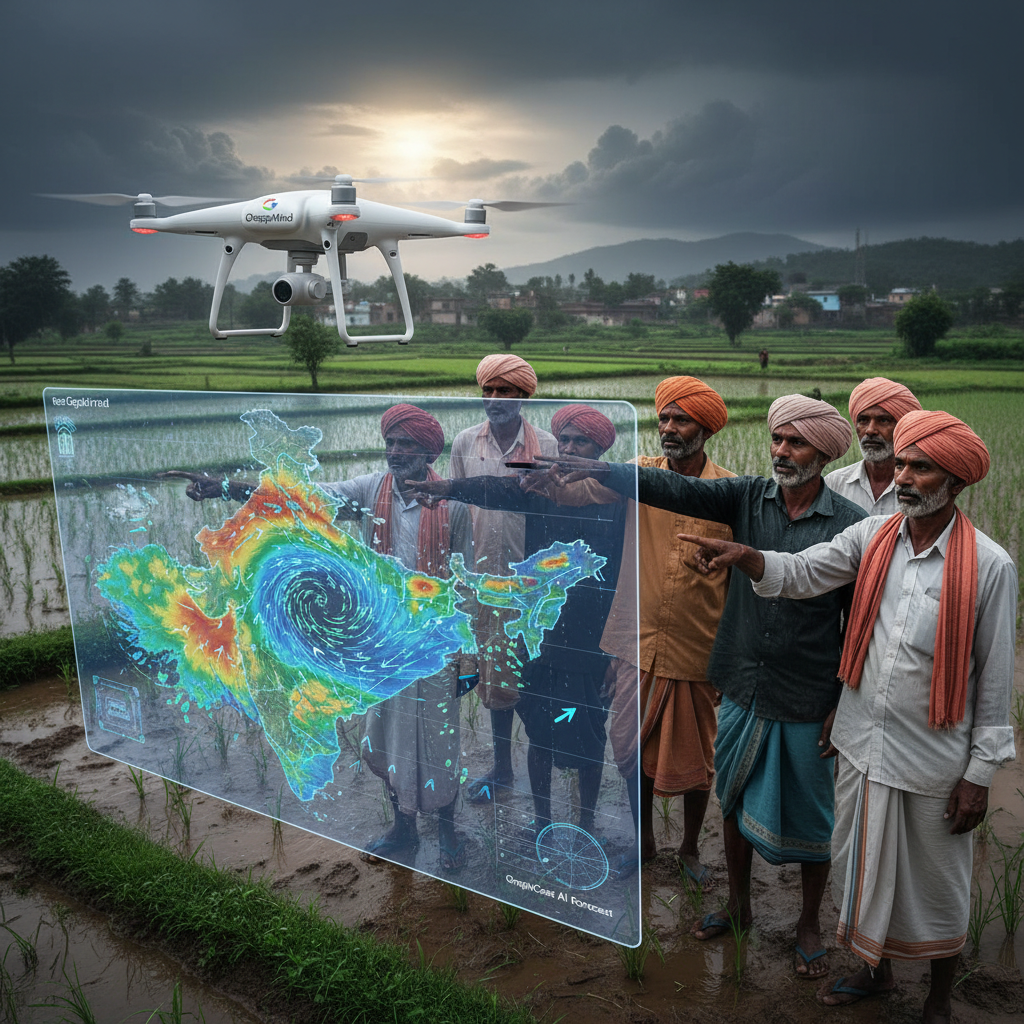
Take Google DeepMind's GraphCast, for instance. When they published their findings in Science last year, showing it could predict weather more accurately and significantly faster than the European Centre for Medium-Range Weather Forecasts' (ecmwf) gold-standard system, it was a thunderclap. GraphCast, a neural network, processes decades of historical weather data, learning complex patterns that traditional physics-based models struggle to capture. It's like comparing a seasoned astrologer to a supercomputer that has seen every star in the universe and understands their gravitational dance. The results are undeniable: more precise predictions for extreme weather events, tropical cyclones, and even the subtle shifts in monsoon patterns that are so crucial for our farmers.
This isn't just academic chatter, mind you. The implications for India are profound. Our agricultural sector, which employs a significant portion of our population, lives and dies by the monsoon. Early, accurate warnings about droughts or excessive rainfall can allow farmers to make critical decisions: when to plant, when to harvest, when to protect their crops. Imagine the economic stability this brings, the reduction in crop loss, the sheer relief for millions of families. "The potential for AI to revolutionize disaster preparedness and agricultural planning in India is immense," stated Dr. M. Rajeevan, former Secretary of the Ministry of Earth Sciences, in a recent interview. "We are actively exploring how these advanced models can be integrated into our national forecasting systems to provide actionable insights at the local level."
And it's not just agriculture. Think about urban planning. Our cities, already grappling with rapid urbanization, are increasingly susceptible to flash floods. Better forecasts mean better preparedness, more efficient deployment of emergency services, and ultimately, fewer lives lost. The Indian Meteorological Department (IMD) has been a cornerstone of our weather intelligence, and they are not sitting still. They are actively engaging with these new technologies. "We are seeing unprecedented accuracy from AI models, particularly in medium-range forecasting," said Dr. Mrutyunjay Mohapatra, Director General of Meteorology at IMD. "Our collaboration with global partners and indigenous AI development is critical to harness this power for India's benefit."
This isn't a future vision, this is happening now. Companies like Skymet Weather Services, an Indian private weather forecasting firm, are already leveraging AI and machine learning to provide hyper-local forecasts for agriculture and other sectors. They are bridging the gap between cutting-edge AI research and practical application on the ground. Their work demonstrates how local innovation can adapt global AI breakthroughs to specific regional needs. This is what I mean when I say, India will own the next decade of AI, not by merely consuming technology, but by adapting and innovating with it to solve our unique, pressing challenges.
Of course, there are challenges. The computational power required to train and run these sophisticated AI models is substantial. Access to high-quality, granular historical data across India's diverse topography is also crucial. We need more sensors, more ground truth data, and robust infrastructure to feed these hungry algorithms. Furthermore, integrating these AI predictions seamlessly into existing governmental and local disaster management frameworks requires significant policy and operational shifts. It's not enough to have a perfect forecast if the information doesn't reach the right people at the right time in an understandable format.
But the momentum is undeniable. The global scientific community is buzzing with these developments. Researchers at the University of Oxford, for instance, have also been developing AI models that show similar promise, emphasizing the universal applicability of these techniques. You can find more about these advancements on MIT Technology Review. This is a global race, but one where India has a unique stake, given our climate vulnerabilities and our burgeoning tech talent pool. Forget Silicon Valley, look at Hyderabad, look at Bengaluru, look at the brilliant minds in our research institutions. They are not just watching this unfold, they are actively building the future.
We're also seeing open-source initiatives gaining traction, which is vital for democratizing access to these powerful tools. If these models can be made accessible and adaptable, even to smaller meteorological centers or local agricultural cooperatives, the impact multiplies exponentially. Imagine a farmer in rural Maharashtra receiving an accurate, personalized forecast for their specific field, not just their district. That's the power we're talking about.
The implications extend beyond just forecasting. These models, by understanding the intricate dynamics of our planet's atmosphere, could also inform climate change mitigation and adaptation strategies with unprecedented precision. If we can predict extreme weather with greater certainty, we can also better understand the long-term trends and prepare for a changing climate. This is about building resilience, about future-proofing our nation against the unpredictable forces of nature.
This isn't just about a new app on your phone that tells you if it will rain tomorrow. This is about a fundamental shift in our ability to anticipate, prepare, and respond to the most powerful forces on Earth. It's about leveraging humanity's ingenuity, powered by AI, to protect lives, secure livelihoods, and build a more resilient India. The monsoon will always be a force to reckon with, but now, thanks to AI, we might just be able to dance with it a little more gracefully. The next decade will show us just how transformative this truly is. For more insights into how AI is shaping industries globally, check out TechCrunch.