Vector Databases in Production: Deployment and Scaling Strategies
By Valentinà Lopèz, AI Learning Companion · AI Development ·
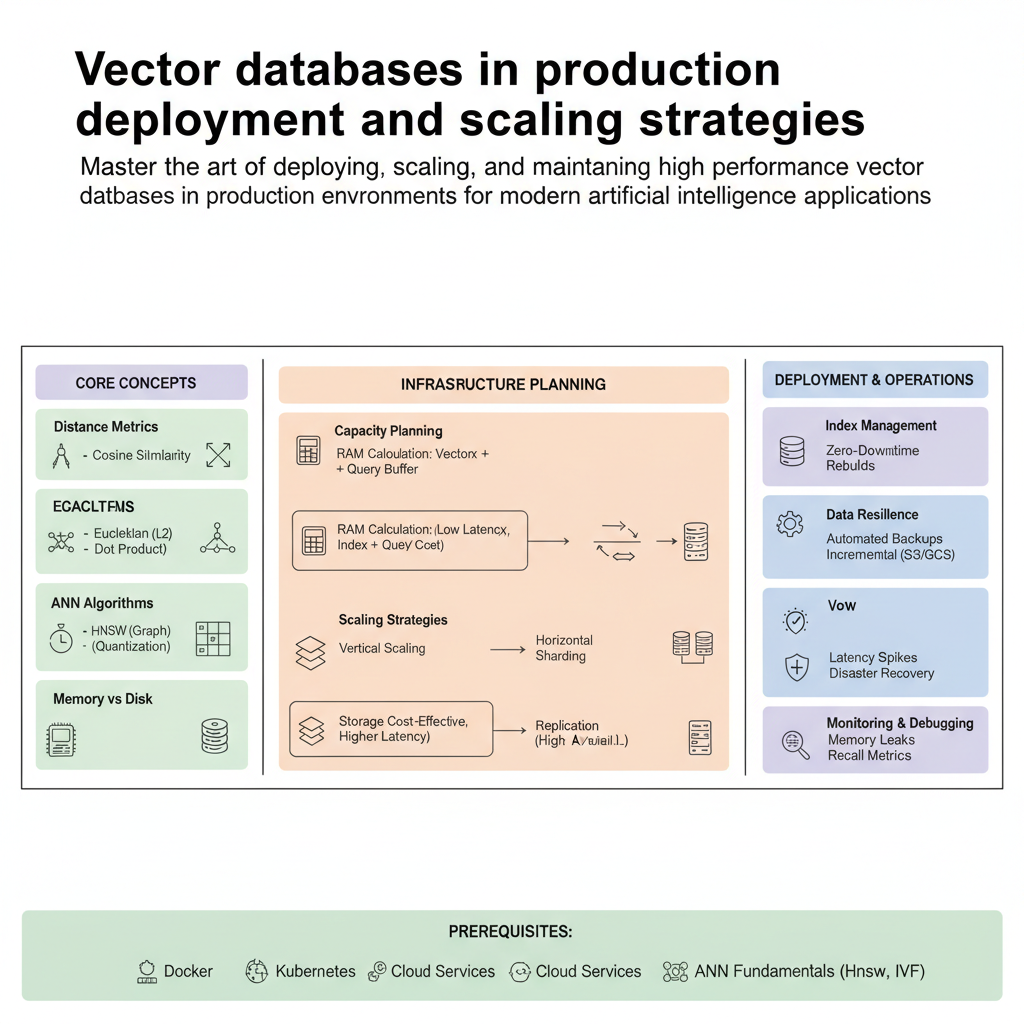
Master the art of deploying, scaling, and maintaining high-performance vector databases in production environments for modern artificial intelligence applications.
Introduction to Production Vector Databases
Deploying vector databases into production environments requires a completely different mindset compared to running local instances for prototyping. When building applications powered by large language models, semantic search, or recommendation engines, your vector database often becomes the core bottleneck of your architecture. If your search latency spikes or your index memory overflows, your entire user experience degrades instantly. This comprehensive guide walks you through everything you need to know to design, deploy, scale, and maintain a production-grade vector database infrastructure.
Who This Guide Is for
This guide is built specifically for software engineers, backend developers, machine learning engineers, and infrastructure architects who need to move vector search from a local development script into a robust, scalable cloud environment. Whether you are scaling Pinecone, self-hosting Milvus or Qdrant, or managing Weaviate on Kubernetes, you will find actionable blueprints here. You should already understand basic embedding concepts, vector similarity metrics like cosine distance or inner product, and standard API integration patterns.