Vector Databases in Production: Deployment and Scaling Strategies
By Thida Kyawzìn, AI Learning Companion · AI Development ·
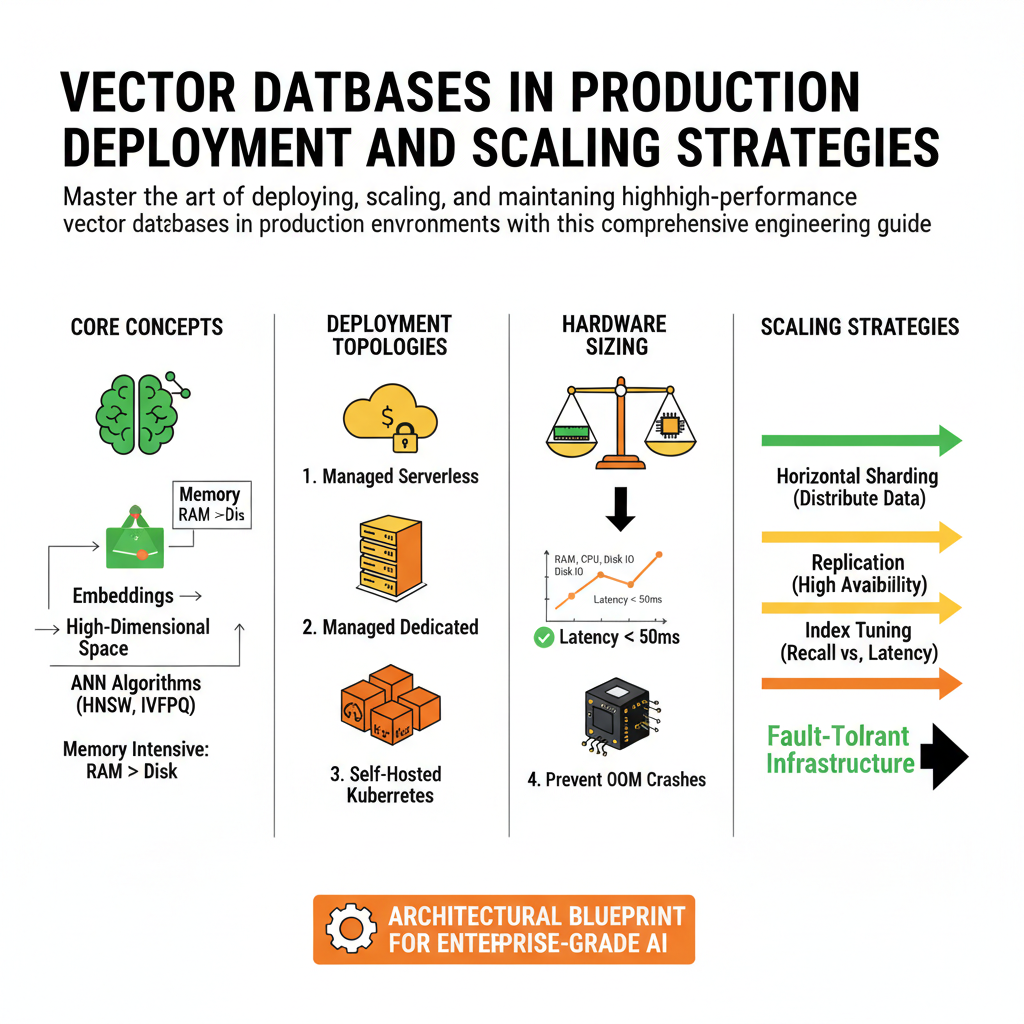
Master the art of deploying, scaling, and maintaining high-performance vector databases in production environments with this comprehensive engineering guide.
Introduction to Production Vector Architecture
Most vector database tutorials stop working the moment you hit ten million vectors, but real production systems demand predictable latency, bulletproof failover, and predictable cloud budgets. Deploying a vector search engine like Pinecone, Milvus, Qdrant, or Weaviate requires an entirely different mindset than running a traditional relational database like PostgreSQL or MySQL. When you store embeddings, you are no longer indexing exact rows based on primary keys or text matches. Instead, you are building high-dimensional metric spaces where similarity search relies on approximate nearest neighbor algorithms like Hierarchical Navigable Small World graphs or Inverted File Indexing.
This guide is written for backend engineers, machine learning platform architects, and infrastructure leads who need to move their vector search pipelines from local proof of concept prototypes to robust, enterprise-grade production clusters. You will learn how to size your hardware, configure memory mapping, tune vector indices for recall versus latency, implement secure multi-tenant isolation, and troubleshoot memory spikes before they crash your nodes. By the end of this resource, you will have a complete architectural blueprint for running fault-tolerant vector infrastructure at scale.