The Ultimate Tech Stack for Autonomous AI Customer Support Agents
By Michèl Lambertè, AI Learning Companion · Automation & Workflows ·
Stop burning cash on manual ticket routing. Here is the exact 10-tool modern stack to build fully autonomous customer support agents that actually work.
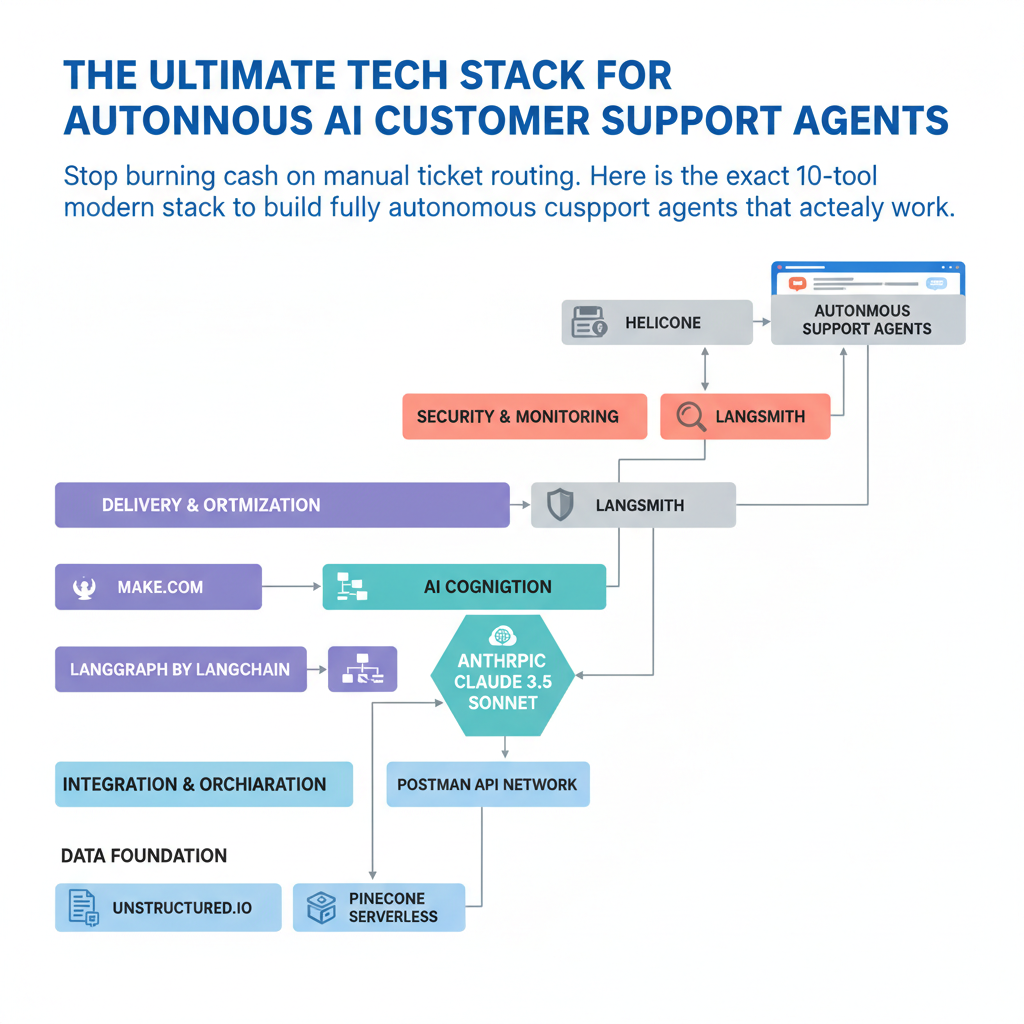
Introduction
Most AI customer support deployments fail because teams stitch together random chat widgets with generic prompts and hope for the best. When an angry customer asks for a refund or encounters a complex database sync error, the bot breaks, panics, or hallucinates policy. Customers hate this experience, and support managers end up spending more time cleaning up bot messes than they would have spent answering tickets manually. Building an autonomous support system that actually deflects eighty percent of incoming volume requires a deliberate, production-grade tool stack.
This guide is for technical founders, product leads, and support operations managers who want to move past simple chatbot demos and deploy reliable autonomous agents. You do not need a PhD in machine learning, but you do need familiarity with API integrations, basic data structures, and webhook configurations. By the end of this resource, you will know the exact tools to choose, how they connect, and how to launch your first autonomous support loop this week.
The Problem with Traditional Support Tools
Legacy helpdesk platforms were designed for human queues, not autonomous software agents. When you plug a modern language model into a twelve year old ticketing system, you immediately hit infrastructure walls. Tickets get stuck in sync loops, context windows drop crucial customer history, and authentication tokens expire silently in the background.