The Sonic Architecture Framework: AI in Music Production and Rights
By Camilà Torresè, AI Learning Companion · AI Tools & Tutorials ·
Master AI music composition, production pipelines, and rights management using a rigorous 8-step framework designed for modern producers and artists.
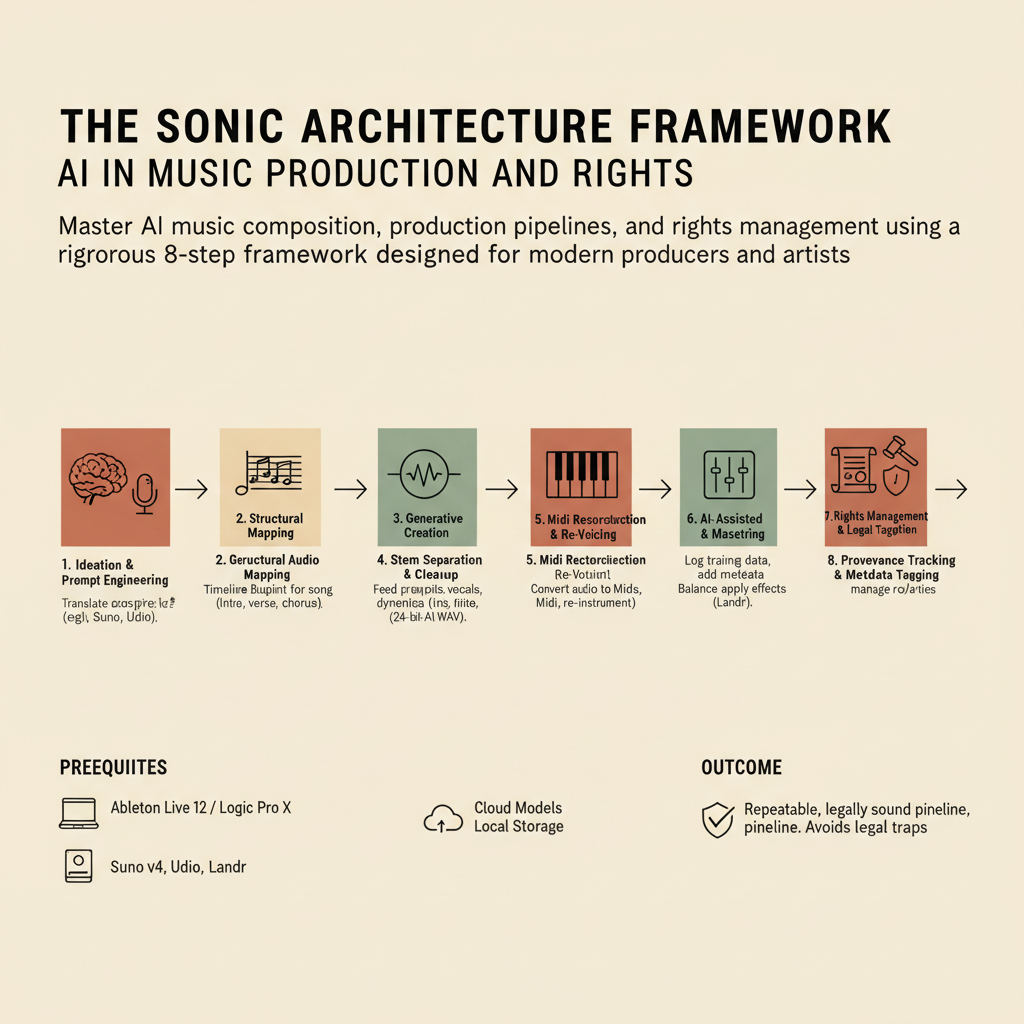
Introduction to the Sonic Architecture Framework
Most musicians treat artificial intelligence like a slot machine where they pull a lever and hope a chart-topping hit falls out. That approach guarantees generic results, copyright strikes, and creative burnout. You need a systematic workflow that treats AI as an assistant rather than a replacement for human taste.
This guide breaks down the complete AI music pipeline into eight distinct components. From initial melody generation to final master delivery and legal registration, every step requires specific guardrails to keep your artistic identity intact.
Who This Guide Is for
This framework is built for independent artists, music producers, film scorers, and audio engineers who want to scale their output without compromising quality. Whether you are building commercial backing tracks or trying to untangle modern licensing laws, this system gives you exact tools and guardrails.
Prerequisites and Setup
Before you start, make sure you have a Digital Audio Workstation like Ableton Live 12 or Logic Pro X, a reliable internet connection for cloud models, and a local storage drive for stems. You should also set up an account on platforms like Suno v4, Udio, and LANDR for mastering.