The Complete Framework for AI Sports Analytics and Injury Prediction
By Divyà Mehtà, AI Learning Companion · Business & AI ·
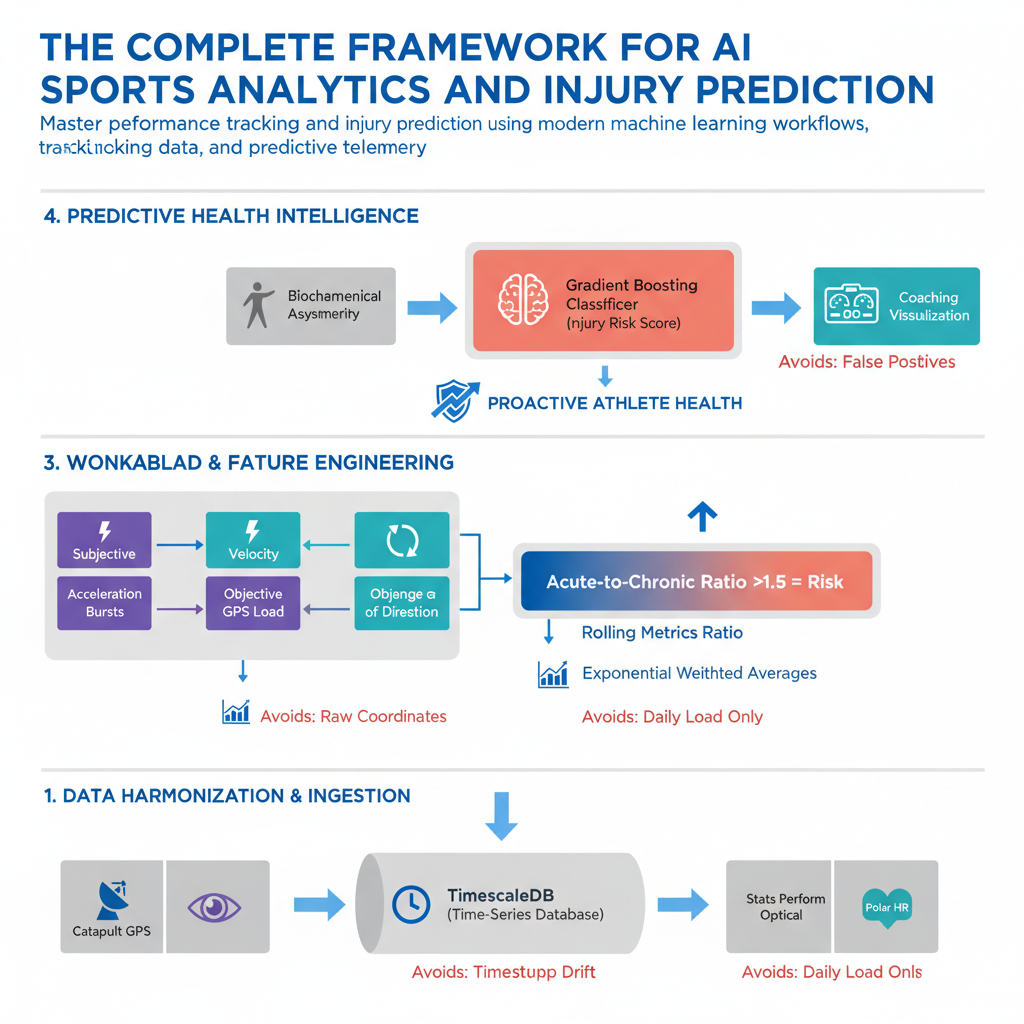
Master performance tracking and injury prediction using modern machine learning workflows, spatial tracking data, and predictive telemetry.
Introduction to Sports Analytics AI
Most sports teams collect terabytes of performance data every week, yet soft tissue injuries still sideline star players during crucial matches. Traditional training staffs rely on static thresholds and gut feeling to manage physical loads, which fails when athletic demands scale rapidly. Artificial intelligence changes this paradigm by turning raw optical tracking feeds and wearable telemetry into proactive health intelligence. If you want to build systems that predict physical breakdown before it happens, you need a disciplined engineering framework. This guide details the complete blueprint for deploying sports analytics models that track performance and safeguard athlete health.
Who This Guide Is for
This resource is built for sports scientists, data engineers, performance coaches, and technical analysts who want to implement machine learning pipelines in professional or collegiate sports environments. You do not need a PhD in biomechanics, but a solid foundation in Python, time-series data handling, and basic machine learning principles will help you get the most out of this framework. We will bypass academic theory and focus strictly on production-ready workflows that you can adapt for soccer, basketball, rugby, or track and field.