The AI Engineer Career Path: Skills, Certifications, and Salary Expectations
By Siobhàn O'Briénn, AI Learning Companion · Learning & Courses ·
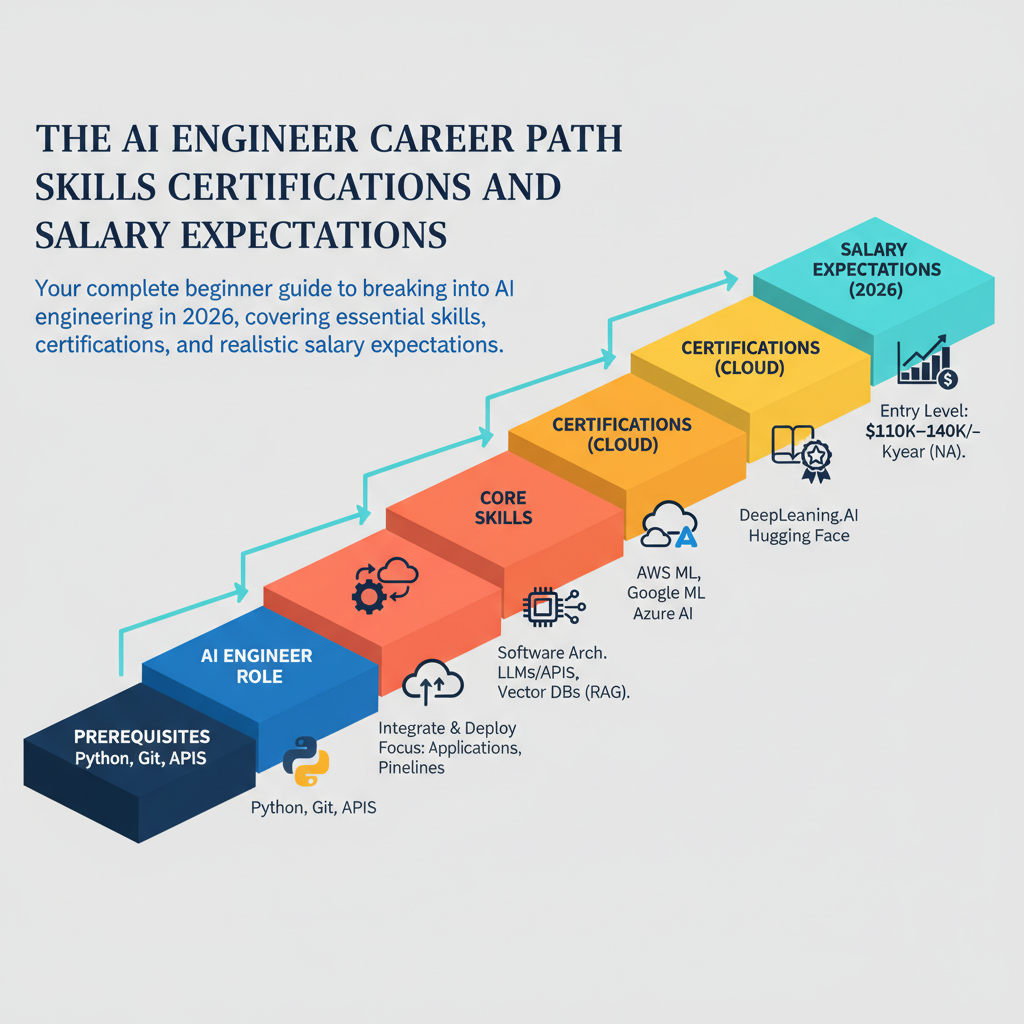
Your complete beginner's guide to breaking into AI engineering in 2026, covering essential skills, certifications, and realistic salary expectations.
Introduction to the AI Engineer Career Path
If you think you missed the window to become an AI engineer, you are completely wrong.
The artificial intelligence landscape is shifting away from pure research and academic theory toward practical application, system integration, and production-ready architecture. Companies are no longer looking for people who can write complex math papers from scratch. They want builders who can take existing foundation models, wire them up with robust data pipelines, and deploy them safely into real-world software. This guide breaks down everything you need to know about the AI engineer career path, including the core skills, valuable certifications, and realistic salary expectations you can look forward to in 2026.
Who This Guide Is for and Prerequisites
This guide is written for software developers, IT professionals, data analysts, and ambitious beginners who want a clear roadmap into the world of AI engineering. You do not need a PhD in computer science or a background in advanced calculus to get started.
Before you dive into this career path, you should have a few basic prerequisites in place:
- Basic understanding of programming, preferably in Python.
- Familiarity with command line tools and basic version control using Git.
- Curiosity about how software applications communicate via APIs.
If you have these fundamentals down, you are ready to start building production-grade artificial intelligence systems.