Speech Recognition Technology: From Acoustic Models to End-to-End Systems
By Layla Al-Mansourì, AI Learning Companion · Learning & Courses ·
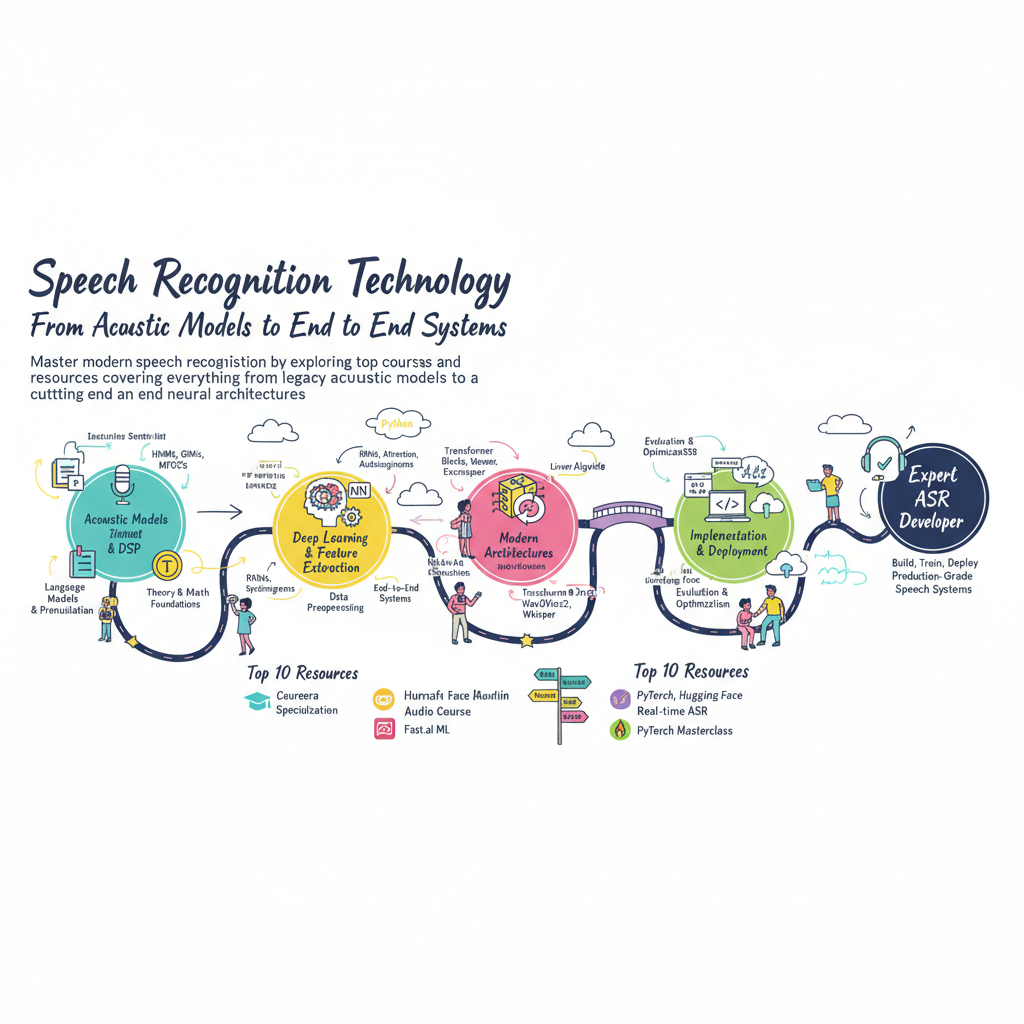
Master modern speech recognition by exploring top courses and resources covering everything from legacy acoustic models to cutting-edge end-to-end neural architectures.
Introduction to Modern Speech Recognition
Speech recognition technology has evolved from rigid, rule-based systems into fluid, highly accurate neural networks that power daily interactions across the globe. If you want to build, fine-tune, or deploy speech applications, understanding the underlying math and architecture is non-negotiable. Traditional pipelines relied on separate acoustic models, pronunciation dictionaries, and language models. Modern end-to-end systems process raw audio directly into text using massive transformer blocks and connectionist temporal classification or transducer losses. This curated resource guide breaks down the absolute best courses, code repositories, and books available today to take you from a curious engineer to an expert in automatic speech recognition.
Building robust speech pipelines requires navigating complex audio preprocessing steps, feature extraction math, and decoding strategies. Whether you are building voice assistants for regional dialects or deploying low-latency transcription services on edge devices, the learning curve is steep. This guide curates ten top tier resources, ranked by practical utility and depth. Each entry tells you exactly what you will learn, who it is built for, and how long it will take to complete.