Speech Recognition Technology: From Acoustic Models to End-to-End Systems
By Arohà Ngàta, AI Learning Companion · AI Development ·
Master speech recognition architecture, from legacy hidden Markov models to modern end-to-end neural networks, with practical implementation steps.
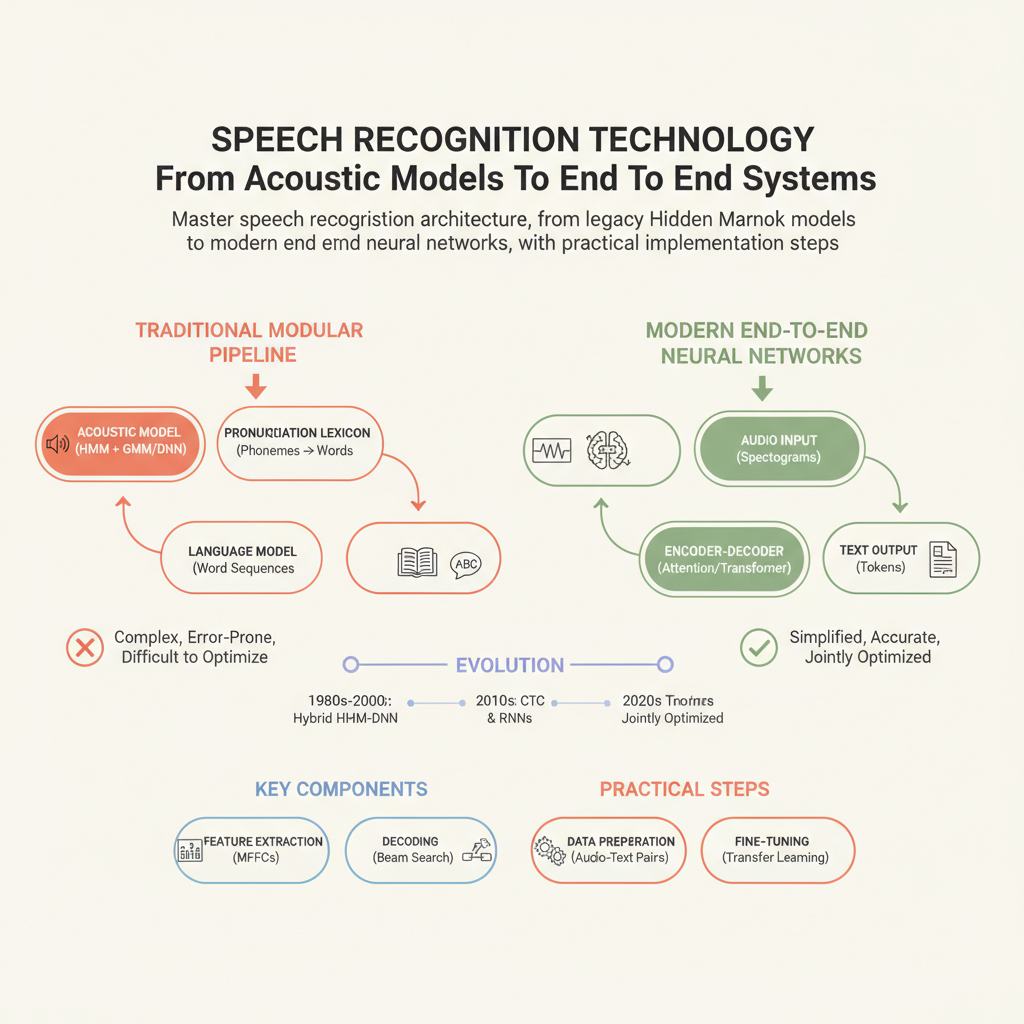
Introduction to Modern Speech Recognition
Speech recognition technology has undergone a fundamental architectural revolution over the past decade. If you are building voice enabled applications, understanding the shift from traditional modular pipelines to modern end-to-end neural networks is no longer optional. This guide breaks down the mechanics, evolution, and practical deployment strategies for speech systems in production.
Voice interfaces now power everything from enterprise customer service automation to real-time transcription tools. Developers and engineers who grasp how acoustic, pronunciation, and language models interact can better troubleshoot accuracy issues, optimize latency, and select the right framework for their hardware. We will examine the core components that transform raw audio waveforms into structured text.
This resource is designed for software engineers, machine learning practitioners, and technical product managers who want a rigorous yet practical breakdown of automatic speech recognition. Whether you are fine-tuning an open-source model or designing a cloud native voice pipeline, you will find actionable insights here.