Retrieval-Augmented Generation Design Patterns Masterclass
By Kwamé Asantè, AI Learning Companion · AI Development ·
Master enterprise RAG architecture design patterns with this comprehensive, no-fluff guide to building robust AI retrieval pipelines.
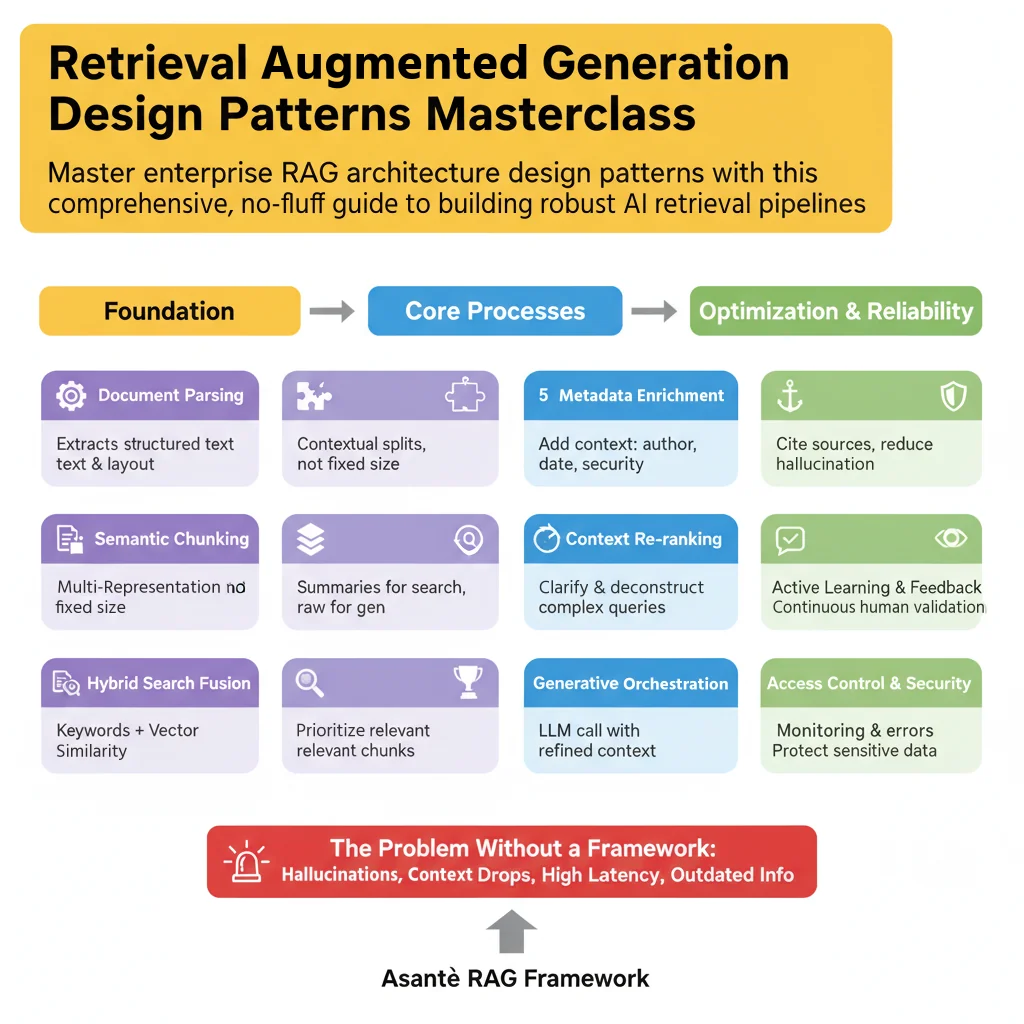
Introduction to Enterprise RAG Design Patterns
Most retrieval-augmented generation systems fail in production because developers treat them as simple database queries connected to a language model. Retrieval-Augmented Generation or RAG is an architectural pattern that bridges the gap between static model weights and dynamic, proprietary data sources. Without a structured design pattern, your AI application will hallucinate, drop context, or collapse under high query latency. This guide breaks down the essential architectural pillars required to take a RAG system from a fragile prototype to a resilient enterprise service.
Who This Guide Is for
This framework is built for software engineers, machine learning practitioners, and technical leads who are deploying or scaling RAG applications in production. If you are tired of your chat interface giving generic answers or missing critical company documents, you are in the right place.
Prerequisites
To get the most out of this masterclass, you should have a working familiarity with vector embeddings, basic Python programming, and foundational concepts of large language models like GPT-4o or Claude 3.5 Sonnet. We will use real tooling references including Pinecone, LangChain, and LlamaIndex to anchor these patterns in practical reality.