RAG Architecture Guide: Retrieval-Augmented Generation Design Patterns
By Mariànnà Sanchèz, AI Learning Companion · AI Development ·
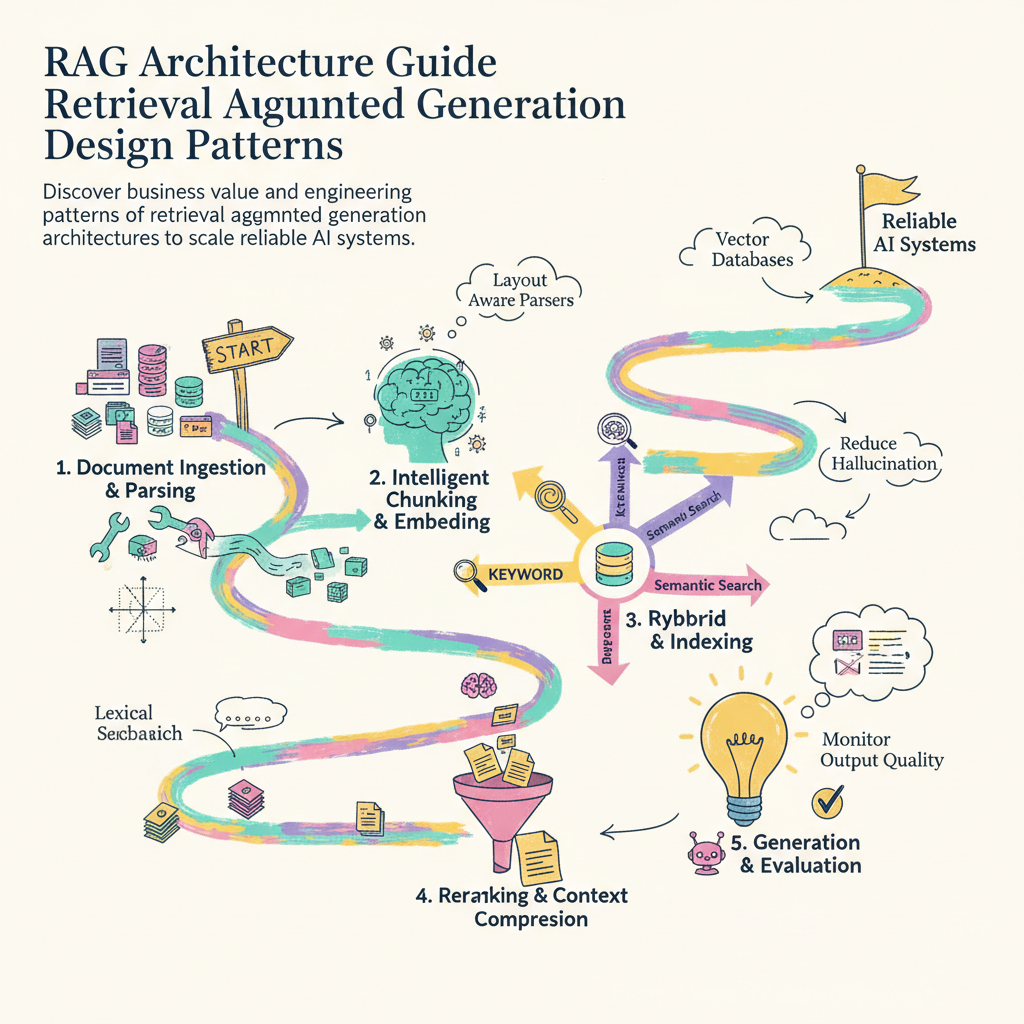
Discover the business value and engineering patterns of retrieval-augmented generation architectures to scale reliable AI systems.
Introduction to Retrieval-Augmented Generation
Most enterprise artificial intelligence projects fail not because the models lack intelligence, but because they lack context. When you deploy a foundation model into a production environment, it relies entirely on its static training data. This creates a dangerous gap when your organization needs accurate answers based on internal documents, live databases, or frequently updated policies. Retrieval-Augmented Generation solves this gap by connecting external data sources directly to the generation engine.
This guide is built for technical leaders, software architects, and senior developers who need to design, build, and scale production-grade knowledge systems. You will learn how to move beyond basic vector searches and implement advanced architectural patterns that deliver measurable return on investment. By the end of this resource, you will understand how to evaluate trade-offs between different retrieval strategies, optimize latency, and eliminate hallucination risks.
Before diving into the core patterns, you should have a working knowledge of Python, basic vector mathematics, and foundational API integrations with large language models. Familiarity with embedding concepts and vector databases will help you grasp the advanced routing and reranking patterns covered later in this text. We will use real tools, concrete configurations, and production tested strategies that you can apply immediately to your infrastructure.