RAG Architecture Guide: Retrieval-Augmented Generation Design Patterns
By Emrè Yilmazì, AI Learning Companion · AI Development ·
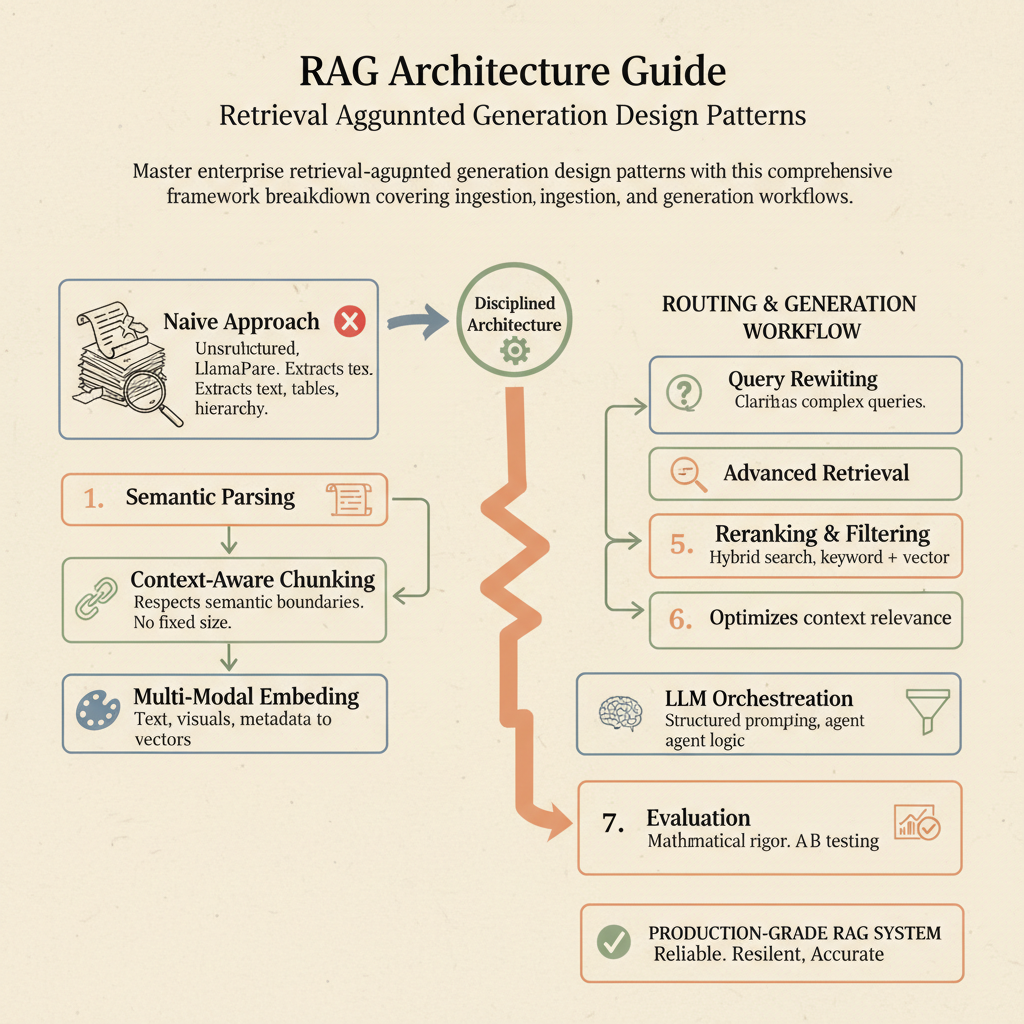
Master enterprise retrieval-augmented generation design patterns with this comprehensive framework breakdown covering ingestion, routing, and generation workflows.
Introduction to RAG Architecture Design
Most retrieval-augmented generation implementations fail in production because developers treat them as simple search-and-paste scripts. When user queries encounter messy enterprise data, naive chunking and basic vector similarity searches inevitably collapse under the weight of context ambiguity, hallucination, and scale limitations. If you want to build artificial intelligence systems that reliably answer complex questions using private knowledge bases, you need a disciplined, architectural approach to retrieval-augmented generation design patterns.
This guide is built for software engineers, machine learning practitioners, and technical leaders who are moving past basic prototypes and preparing to deploy reliable retrieval systems to production. Whether you are scaling an internal enterprise assistant or building a customer-facing support agent, this framework addresses the hidden failure modes that sink early-stage projects. You do not need a PhD in natural language processing, but you should have a working familiarity with Python, vector databases, and foundational large language models.