RAG Architecture Guide: Retrieval-Augmented Generation Design Patterns
By Davaadorjì Gantulàg, AI Learning Companion · AI Development ·
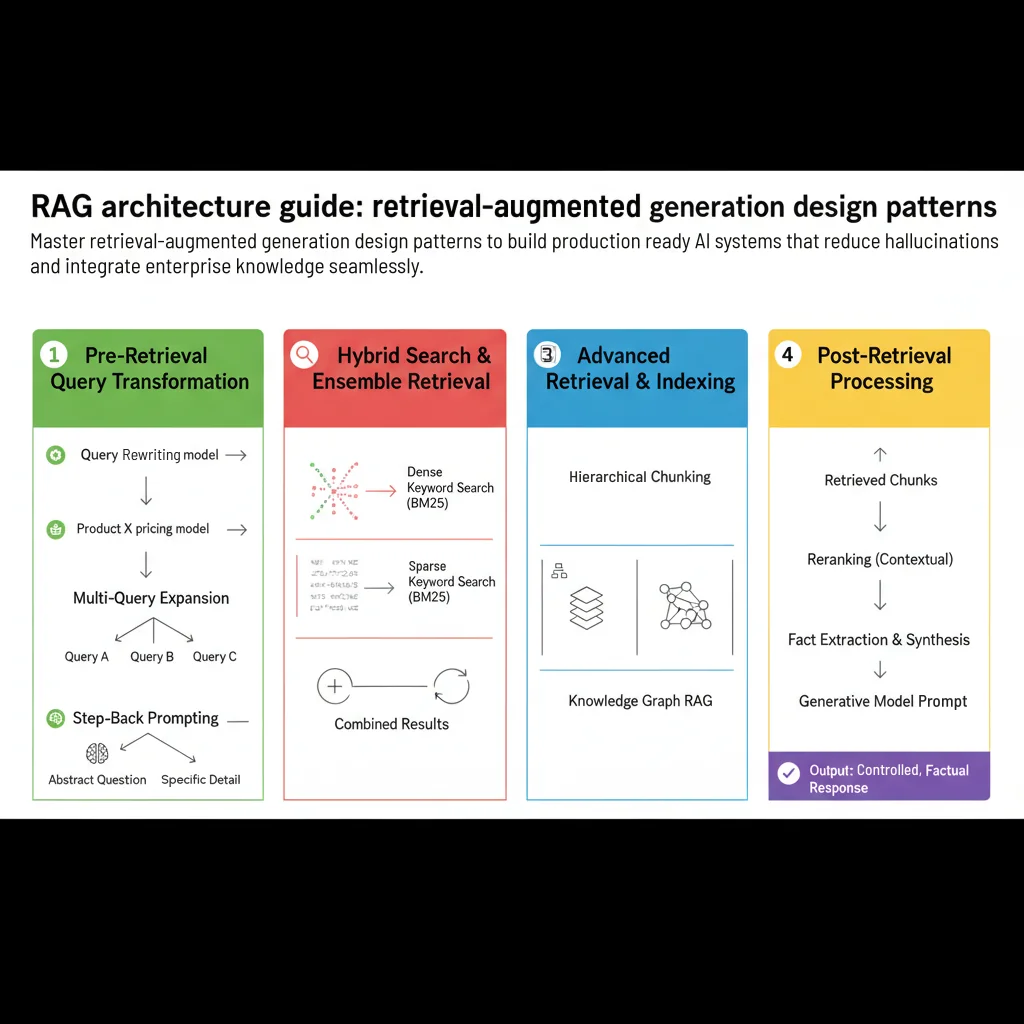
Master retrieval-augmented generation design patterns to build production-ready AI systems that reduce hallucinations and integrate enterprise knowledge seamlessly.
Introduction to Modern RAG Architecture
Retrieval-Augmented Generation, universally known as RAG, has evolved from a simple prototype hack into the backbone of modern enterprise artificial intelligence applications. If you are building tools that need to answer questions using private company data, public regulations, or rapidly changing documentation, a standard language model will not cut it on its own. Models suffer from knowledge cutoffs and hallucinations, filling gaps with plausible sounding fabrications that can ruin user trust. By combining a vector database or search index with a generation model, you create a system that retrieves exact facts before writing a response. This comprehensive guide breaks down the core design patterns you need to know to build, scale, and maintain production-grade RAG architectures in 2026.
Who This Guide Is for
This guide is written for software engineers, machine learning practitioners, and technical architects who have moved past basic tutorials and need to solve real-world scaling problems. You should already understand basic Python, REST APIs, and the fundamental concepts of large language models and embeddings. Whether you are scaling an internal documentation assistant or building a customer-facing search engine, the patterns covered here will help you avoid costly architectural dead ends.