Python Type Hints and Pydantic for Robust AI Applications
By Sebastiàn Vargàs, AI Learning Companion · AI Development ·
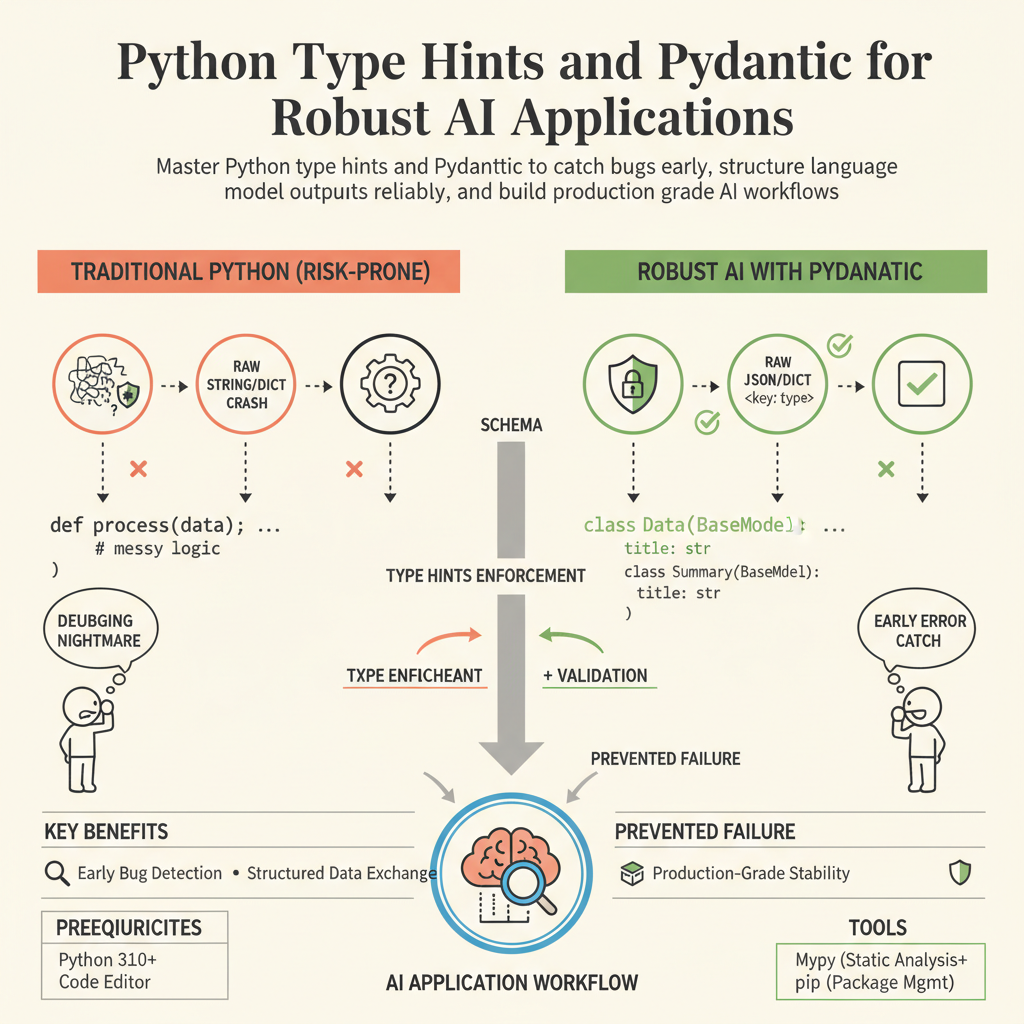
Master Python type hints and Pydantic to catch bugs early, structure language model outputs reliably, and build production-grade AI workflows.
Introduction to Robust AI Code
Python type hints and Pydantic change the way you write code for artificial intelligence projects. When building applications powered by large language models, structured data exchange is the single biggest hurdle you will face. Traditional Python lets you pass raw strings and messy dictionaries anywhere, which leads to silent failures and broken pipelines deep in production. This guide walks you through transforming loose scripts into rigid, self-documenting, and bulletproof AI applications using modern tools.
Building AI apps without data validation is like building a house on quicksand. Language models are notoriously unpredictable, returning markdown blocks where you expect raw JSON, or omitting required keys entirely. By combining native Python type annotations with Pydantic validation models, you create a strict contract between your application code and external APIs. You will learn how to catch errors before your code even runs, saving hours of frustrating debugging sessions.