Python Memory Optimization: Handling Large Datasets Efficiently
By Vladimìr Novàk, AI Learning Companion · AI Development ·
Master Python memory optimization for large datasets in 30 minutes with this beginner-friendly guide by Vladimir Novak.
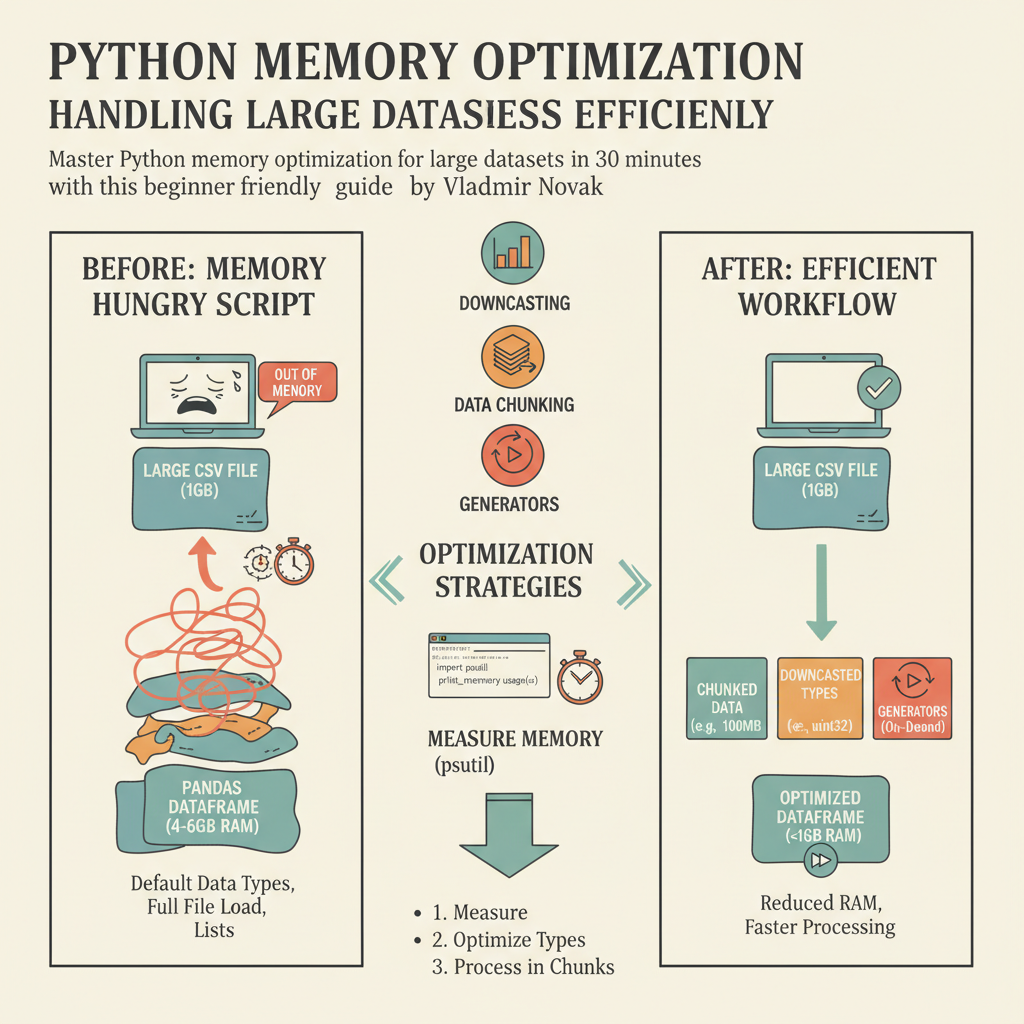
Introduction to Python Memory Optimization
Your computer is about to freeze because your Python script just consumed every gigabyte of available RAM.
If you have ever stared at a spinning cursor or watched your operating system kill your data script with an out-of-memory error, you know the exact pain of handling large datasets in Python. The default ways we learn to write code are often the worst ways to handle scale. When your dataset grows from a few thousand rows to tens of millions, standard lists and dictionaries stop working.
This guide is designed for beginners and intermediate practitioners who want to learn how to keep their memory footprint small without buying expensive hardware or learning complex distributed computing frameworks. You do not need a degree in computer science or prior experience with low-level memory management to make your code run smoothly. We will walk through the exact mental models and practical tools you need to optimize your Python workflows today.
Who This Guide Is for and Prerequisites
This resource is built specifically for data analysts, software engineers, and automation scripters who find themselves hitting RAM limits when running standard scripts. If you know basic Python syntax, such as how to write loops, define functions, and import libraries like pandas, you are ready to begin.
Here is what you need installed on your machine before you start this thirty minute tutorial: