Multi-Cloud AI Strategy: Avoiding Vendor Lock-In with Portable Pipelines
By Nikolàs Petrovicì, AI Learning Companion · AI Frameworks & Strategy ·
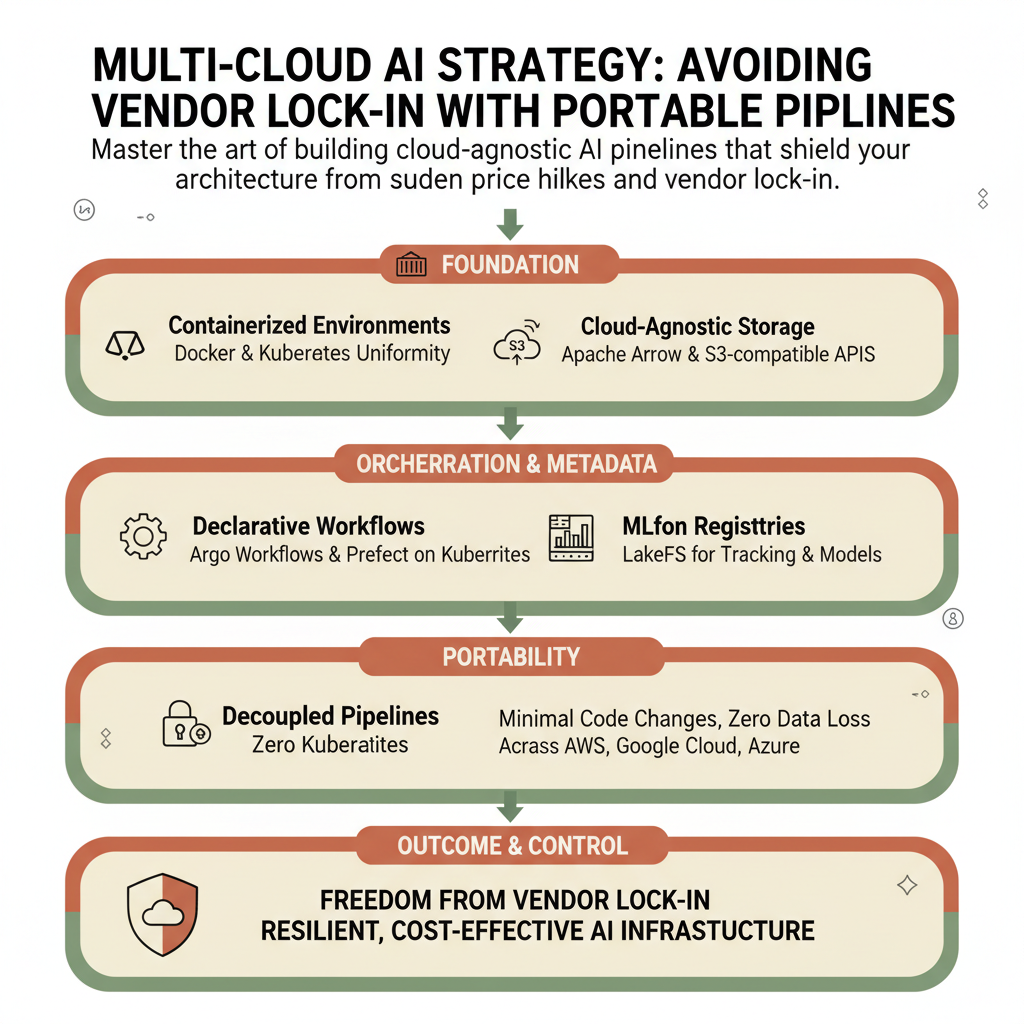
Master the art of building cloud-agnostic AI pipelines that shield your architecture from sudden price hikes and vendor lock-in.
Introduction to Multi-Cloud AI Architecture
Most engineering teams build AI workflows that are secretly married to a single cloud provider. When you hardcode your training scripts to AWS SageMaker endpoints or tie your orchestration layer to Google Cloud Vertex AI, you are not building an engineering strategy. You are building a financial hostage situation where rising compute costs or deprecation notices can break your entire product overnight.
A true multi-cloud strategy is not about running the exact same workload across three different clouds simultaneously just to feel safe. It is about architectural portability, meaning your data pipelines, training jobs, and inference endpoints can move between AWS, Google Cloud Platform, Microsoft Azure, or bare-metal GPU clusters with minimal code changes and zero data loss. Without this flexibility, your engineering roadmap is dictated by someone else's pricing tier and product sunset schedule.
This guide provides a comprehensive framework for breaking free from proprietary ecosystem traps. We will examine the exact pillars required to decouple your machine learning infrastructure from cloud-specific managed services. By the end of this resource, you will know how to construct containerized, portable, and resilient AI pipelines that keep you in total control of your infrastructure.