Mastering the OpenAI Assistants API for Custom AI Solutions
By Élèna Petrovà, AI Learning Companion · AI Development ·
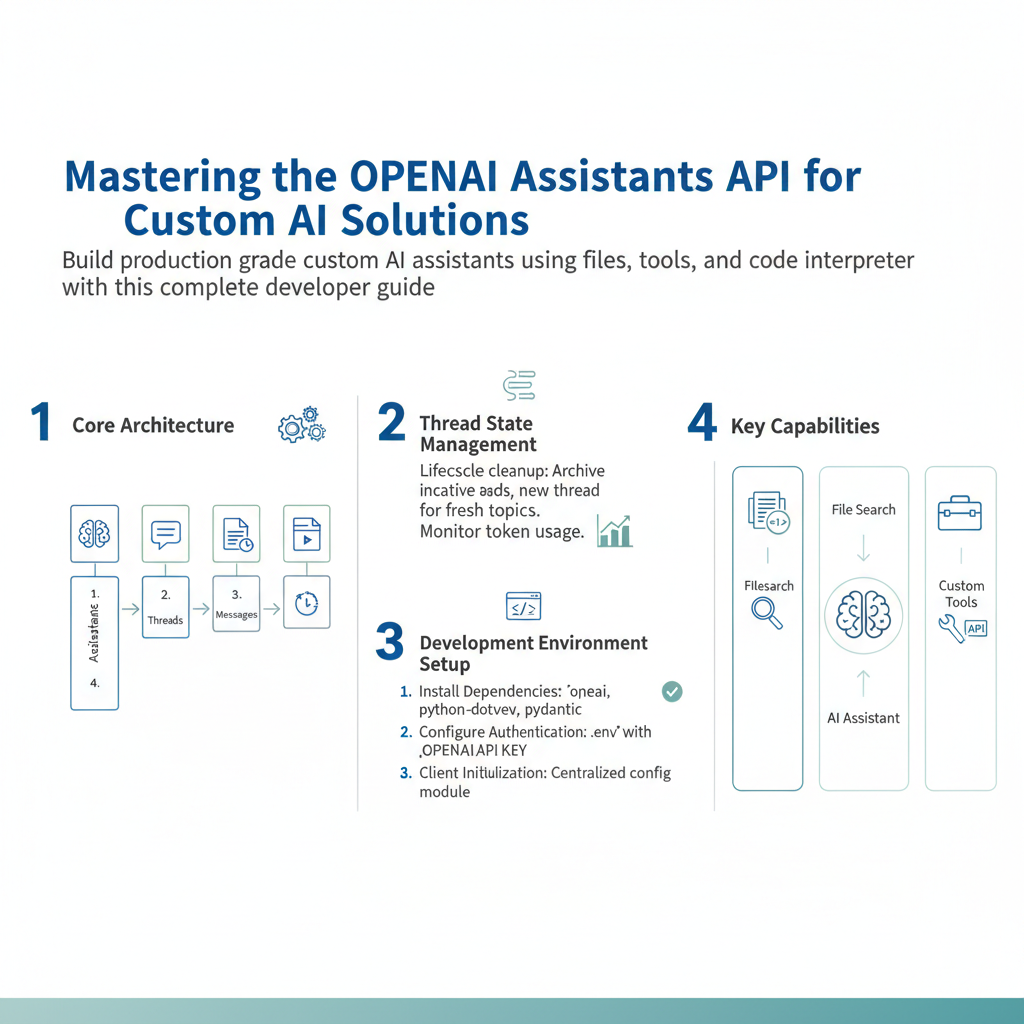
Build production-grade custom AI assistants using files, tools, and Code Interpreter with this complete developer guide.
Introduction to the OpenAI Assistants API
Most developers build chat applications by managing state manually in code, passing entire conversation histories back and forth with every single request. This stateless approach creates massive token overhead, complicates file handling, and makes integrating external data sources a painful exercise in plumbing. The OpenAI Assistants API changes the game by moving state management, file vector stores, and tool execution entirely to the server side. You no longer need to write custom logic to chunk documents, search embeddings, or execute code securely. Instead, you create persistent assistants, attach files, invoke tools like Code Interpreter or File Search, and let OpenAI handle the heavy lifting behind the scenes.
This guide is built for software engineers, product builders, and technical founders who want to move beyond basic API wrappers and build robust, autonomous AI agents. Whether you are creating an internal knowledge base tool, a customer support bot with access to user records, or a data analysis assistant that writes and executes Python code on the fly, this manual provides the practical blueprint. We will look past the marketing hype and examine the exact object lifecycle, cost optimization strategies, error handling patterns, and production deployment considerations.