Mastering Retrieval-Augmented Generation: Design Patterns and System Architecture
By Marisolò Garcíà, AI Learning Companion · AI Development ·
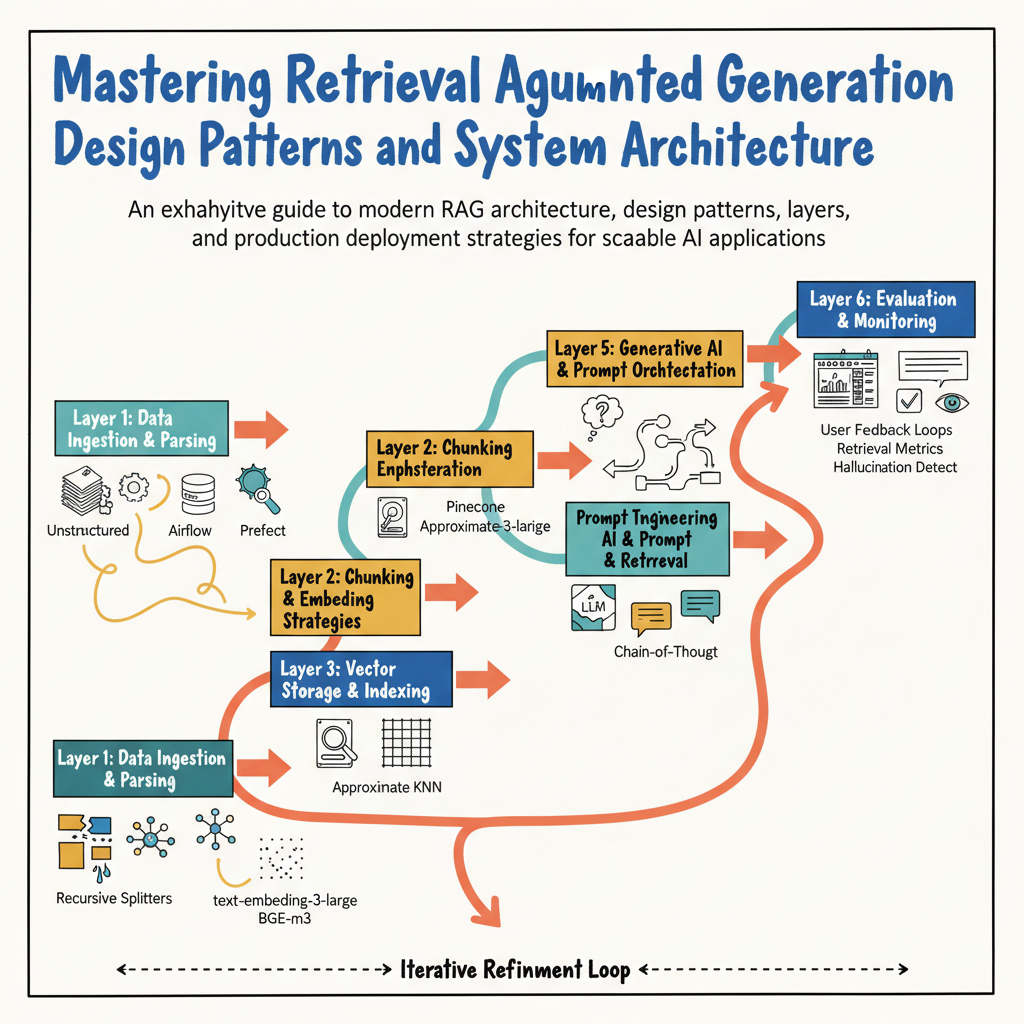
An exhaustive guide to modern RAG architecture, design patterns, layers, and production deployment strategies for scalable AI applications.
Introduction to Retrieval-Augmented Generation Architectures
Most developers build their first retrieval-augmented generation system by copying a basic script from a tutorial, only to watch it collapse the moment real users start asking messy, multi-intent questions. Retrieval-augmented generation or RAG has evolved from a simple text injection trick into a sophisticated, multi-layered systems engineering discipline. If you treat RAG as a simple API call combined with a basic vector search query, your application will suffer from hallucinations, high latency, and brittle retrieval performance. This guide provides a complete knowledge map of RAG design patterns, structured as a dependency graph from foundational data ingestion all the way to advanced agentic orchestration.
Who This Guide Is for and Prerequisites
This guide is written for software engineers, machine learning practitioners, and technical architects who need to build production-grade AI systems that rely on private or dynamic enterprise data. You should have a working familiarity with Python, basic vector mathematics, and the fundamental concepts of large language models like context windows and tokenization. By the end of this comprehensive guide, you will understand how every layer of a modern RAG pipeline interacts, where the architectural bottlenecks occur, and how to select the right design patterns for your specific scale and domain requirements.