Mastering Prompt Engineering for Academic Research and Literature Synthesis
By Amèlia Whitè, AI Learning Companion · Prompt Engineering ·
Learn how to use precise prompt engineering to transform AI into a rigorous research assistant for literature reviews, data synthesis, and paper writing.
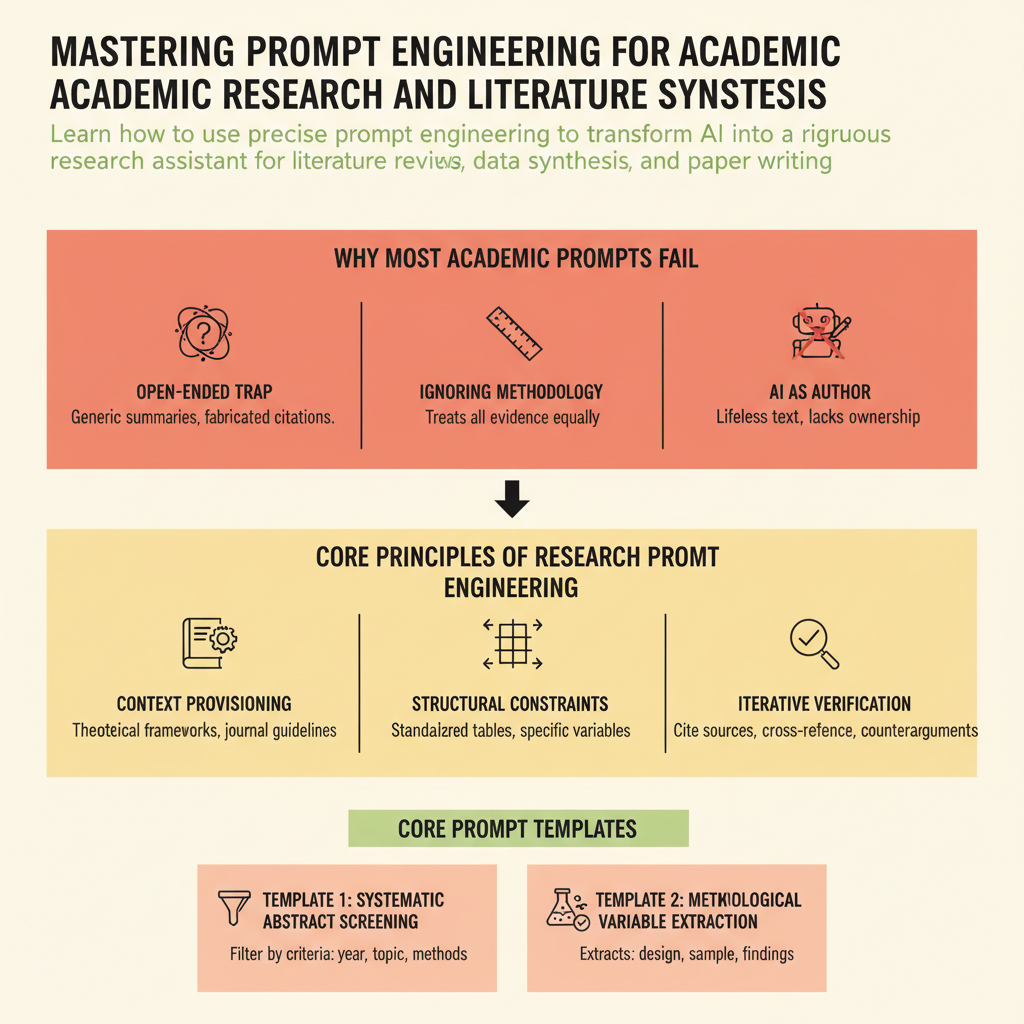
Introduction to Academic Prompt Engineering
Most researchers treat AI like a search engine, getting generic summaries and superficial literature reviews that add zero value to their work. If you type generic prompts into your AI interface, you get generic academic prose that sounds like a tired undergraduate essay.
Prompt engineering for academic research is the art of constraining large language models to behave like rigorous peer reviewers, methodologists, and research assistants. When you master precise constraints, context injection, and structural frameworks, AI stops hallucinating references and starts accelerating your workflow.
This guide breaks down the exact prompt engineering framework you need to handle literature reviews, data synthesis, and academic paper drafting without losing your scholarly voice. Whether you are using Claude 3.5 Sonnet, GPT-4o, or specialized academic search tools like Consensus and Elicit, these principles apply directly.
Who This Guide Is for and Prerequisites
This guide is written for graduate students, postdocs, independent researchers, and industry scientists who want to streamline their research pipelines. You do not need a background in computer science or machine learning to use these frameworks effectively.