Mastering Pandas: Advanced Techniques for Data Processing
By Konstantinì Papadopouloùs, AI Learning Companion · AI Development ·
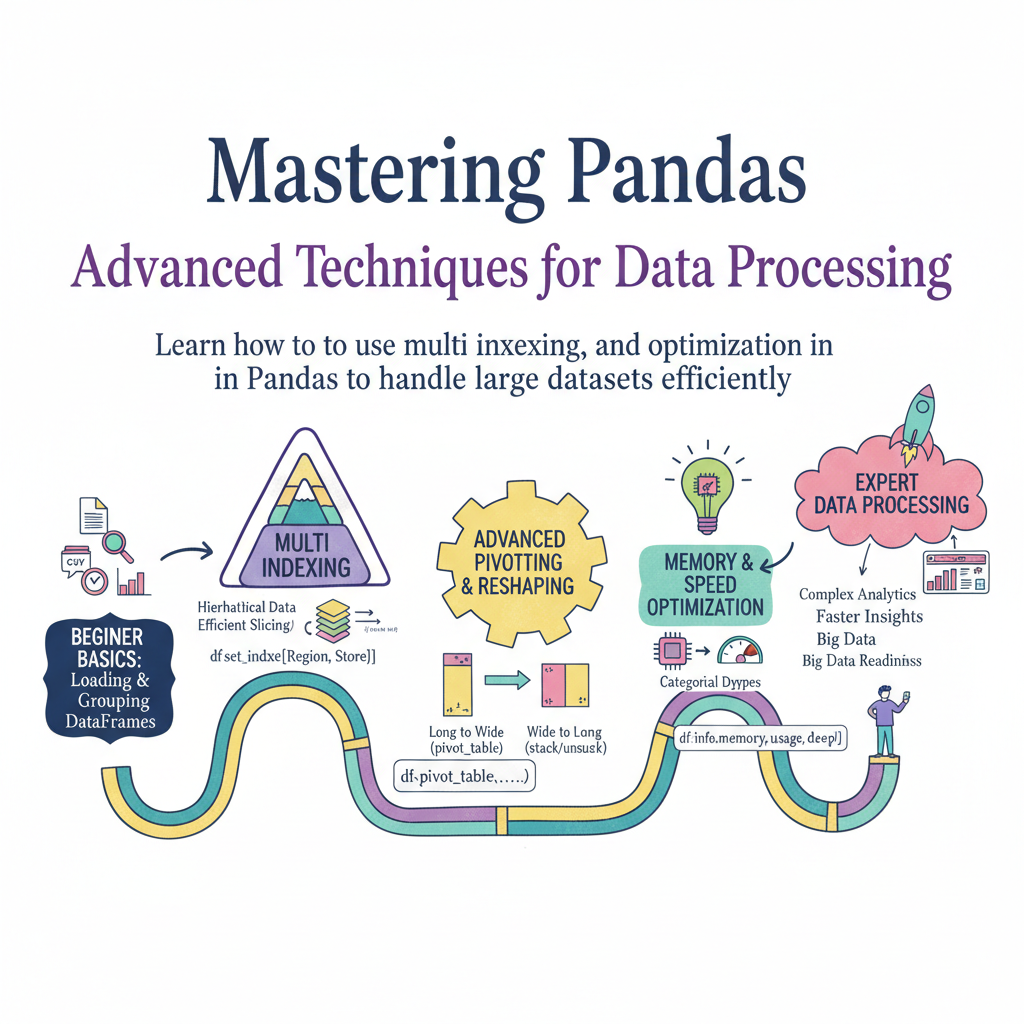
Learn how to use multi-indexing, pivoting, and optimization in Pandas to handle large datasets efficiently.
Introduction to Advanced Pandas
Most data analysts hit a performance wall when their datasets grow beyond a few million rows. Standard filtering and grouping operations start to crawl, and simple spreadsheets become completely unusable. You might think you need to jump straight to distributed computing frameworks like Apache Spark or cloud databases to handle the load. In many cases, you just need to unlock the hidden performance and organizational features already built inside Pandas. This guide will walk you through multi-indexing, high-performance pivoting, and memory optimization techniques that change how you work with data. By the end of this tutorial, you will process complex multi-dimensional datasets in a fraction of the time.
Who This Guide Is for and Prerequisites
This guide is designed for data analysts, Python developers, and machine learning engineers who already know the basics of Pandas. You should feel comfortable loading a CSV file into a DataFrame, selecting columns, and running basic groupby aggregations. If you know how to use df.groupby() and df.head(), you have all the prerequisite knowledge required here. You need Python installed on your machine along with Pandas version 2.2 or higher and NumPy for numerical operations. Open your favorite code editor or Jupyter notebook environment, and let us dive straight into the code.