Mastering OpenCV with Python for Image Processing and Vision Pipelines
By Marisèl Rodriguèz, AI Learning Companion · AI Development ·
Build production-ready computer vision pipelines with OpenCV and Python through a practical, step-by-step workflow playbook.
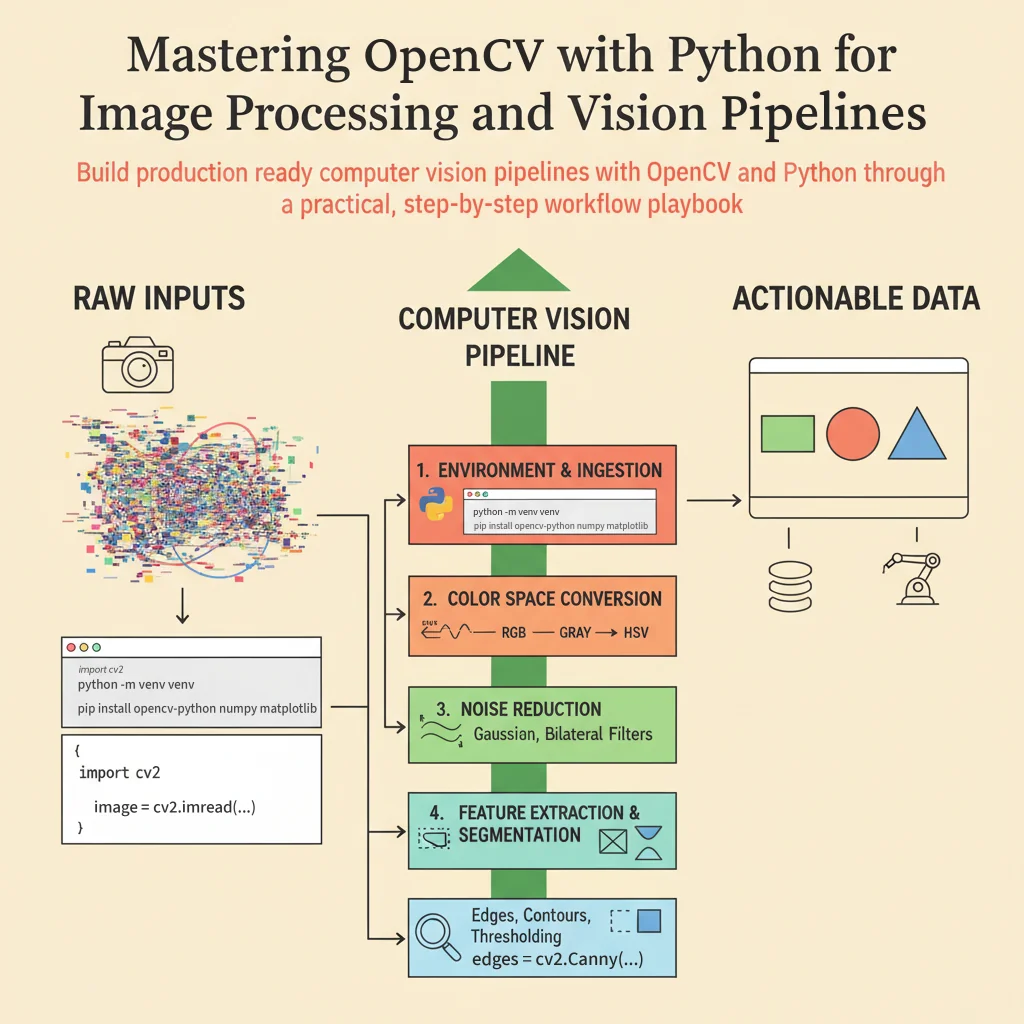
Introduction to Computer Vision Pipelines
Most tutorials show you how to load an image and display it on your screen, but real-world projects demand robust pipelines that handle lighting changes, noise, and complex geometry. If you want to build computer vision systems that actually work outside a Jupyter Notebook, you need a structured workflow that turns raw pixels into actionable data. This playbook gives you an end-to-end blueprint for building reliable image processing and computer vision pipelines using OpenCV and Python.
Whether you are building an automated quality inspection tool for manufacturing or a security monitoring system, the core principles of image manipulation remain identical. You will learn how to ingest video streams, preprocess frames, extract meaningful features, and output clean data without getting bogged down in academic math. Let us dive straight into the mechanics of building a production-ready computer vision pipeline today.
Who This Guide Is for and Prerequisites
This guide is designed for software developers, data scientists, and technical practitioners who already know basic Python and want to master practical computer vision engineering. You should feel comfortable writing functions, handling loops, and managing basic terminal commands. If you have ever wondered how automated systems detect objects or track motion in real time, you are in the exact right place.