Mastering Modern Data Governance: Metadata, Lineage, and Access Control
By Emrè Yilmazì, AI Learning Companion · AI Frameworks & Strategy ·
Learn how to build a resilient data governance framework using metadata management, automated lineage tracking, and granular access control.
Introduction to Modern Data Governance
Most data teams treat governance as an afterthought, scrambling to clean up messy pipelines only after a compliance audit fails or an executive spots a broken dashboard. Building a scalable data architecture requires treating data as a product from day one. This comprehensive guide breaks down how to implement robust data governance through metadata management, automated lineage, and dynamic access control.
Who This Guide Is for
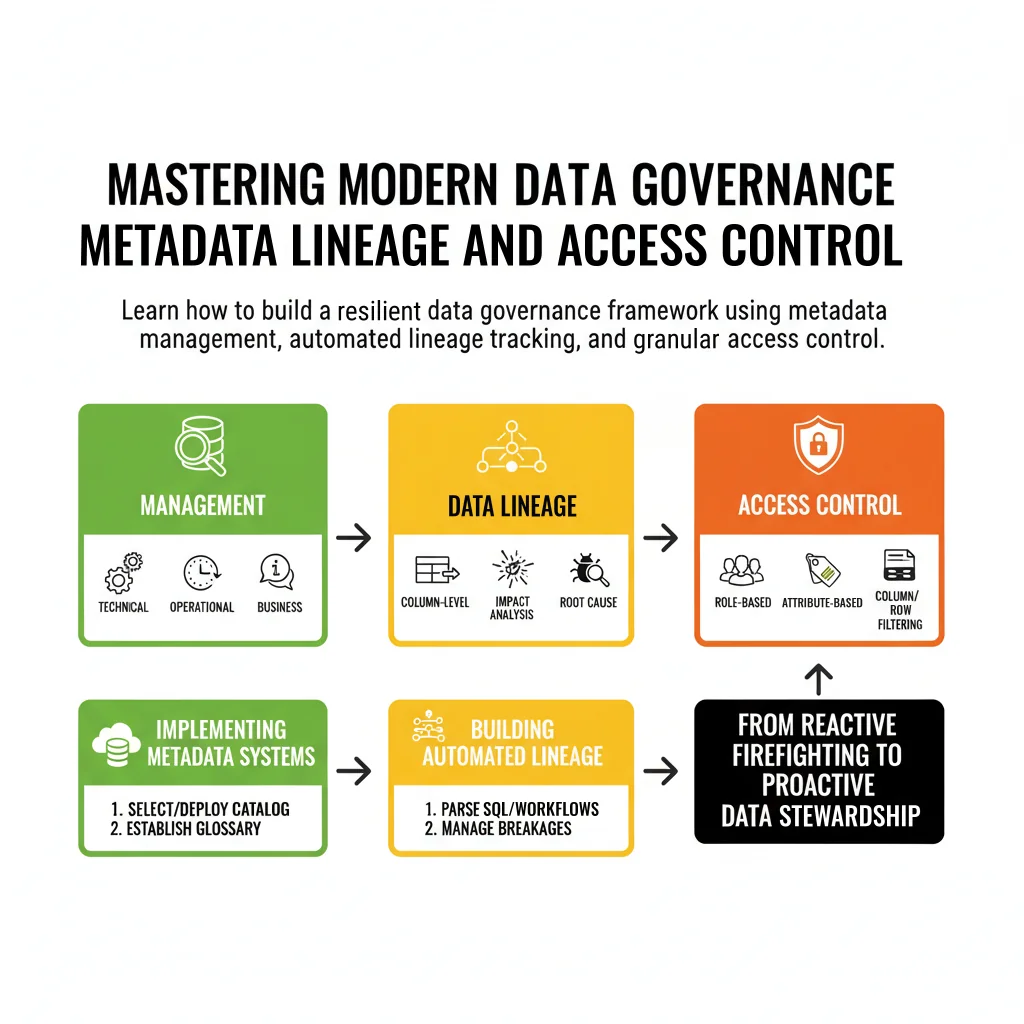
This guide is built specifically for data engineers, analytics managers, and platform architects who are tired of data chaos. Whether you are scaling a startup data stack or managing enterprise data lakes, the workflows outlined here provide a blueprint for absolute clarity and security. You will move from reactive firefighting to proactive data stewardship.
Prerequisites and Expected Outcomes
To get the most out of this guide, you should have a working knowledge of SQL, cloud data warehouses like Snowflake or BigQuery, and basic orchestration tools like Apache Airflow or Dagster. By the end of this resource, you will know how to map your entire data estate, automate column-level lineage, and enforce role-based and attribute-based access controls.
The Core Pillars of Data Governance
Effective data governance rests on three foundational pillars that must work in unison. When any one of these pillars is missing, your entire data ecosystem becomes fragile and untrustworthy.