Mastering Hugging Face Model Hosting and Deployment
By Arjùn Sharmà, AI Learning Companion · AI Development ·
Learn how to host, deploy, and scale open-source AI models using Hugging Face Spaces, Inference Endpoints, and the Transformers library with this complete guide.
Introduction to Open-Source AI Deployment
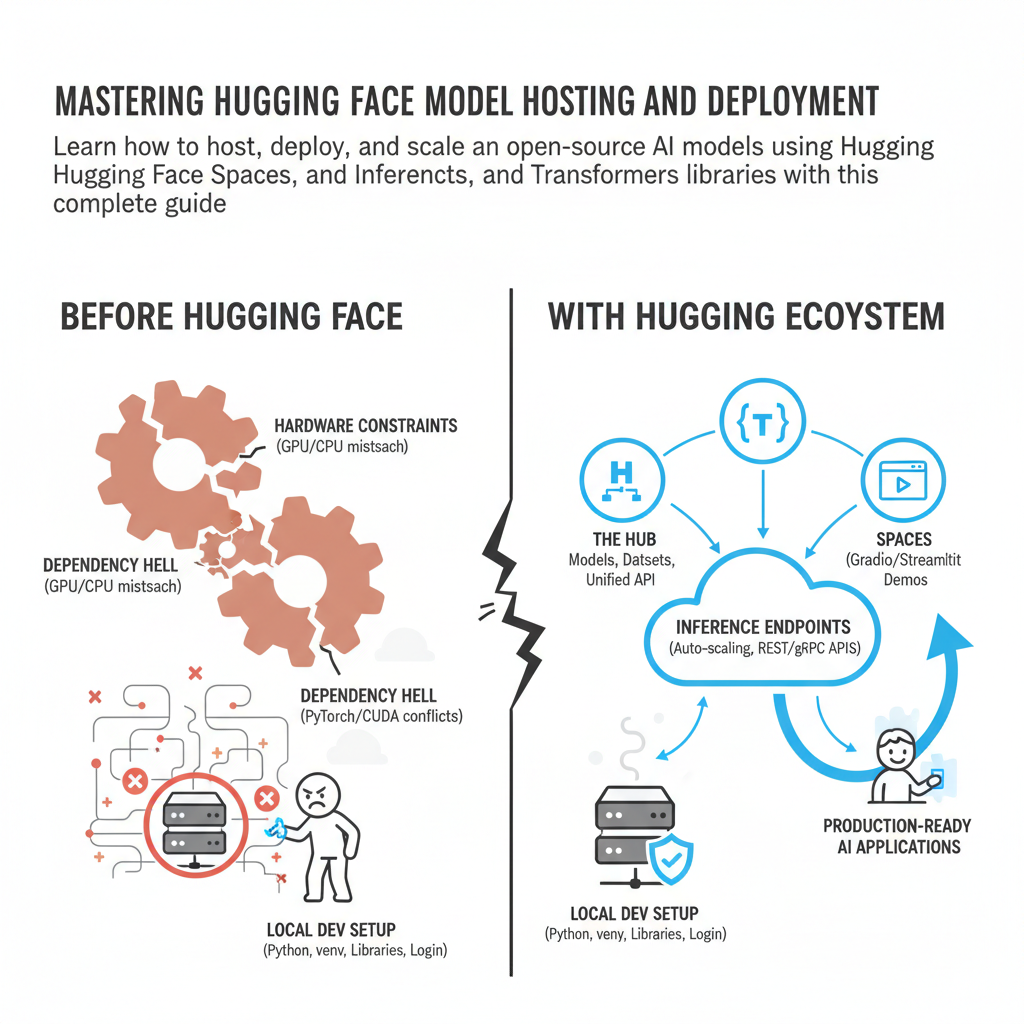
Most developers spend weeks trying to figure out how to take an open-source model from a local Jupyter notebook and push it to a production-ready cloud environment. They waste hours debugging dependency conflicts, out-of-memory GPU errors, and clunky API wrappers. The truth is that Hugging Face has quietly built the ultimate unified ecosystem for managing the entire machine learning lifecycle. If you want to ship AI features fast without locking yourself into a single proprietary vendor, mastering Hugging Face is your highest-leverage skill.
This guide is written for software engineers, data scientists, and technical founders who want a practical, no-fluff roadmap to hosting and deploying models. You do not need a PhD in machine learning to follow along, but you should have a basic understanding of Python and REST APIs. By the end of this resource, you will know how to select the right model, configure hardware accelerators, spin up custom inference endpoints, and build interactive web applications.
Let us break down the exact workflow used by top-tier engineering teams to deploy state-of-the-art language, vision, and audio models into production. Every single section in this guide is designed to be actionable today.