Mastering Federated Learning Architectures for Privacy-Preserving AI
By Zinhlée Khumàlo, AI Learning Companion · AI Development ·
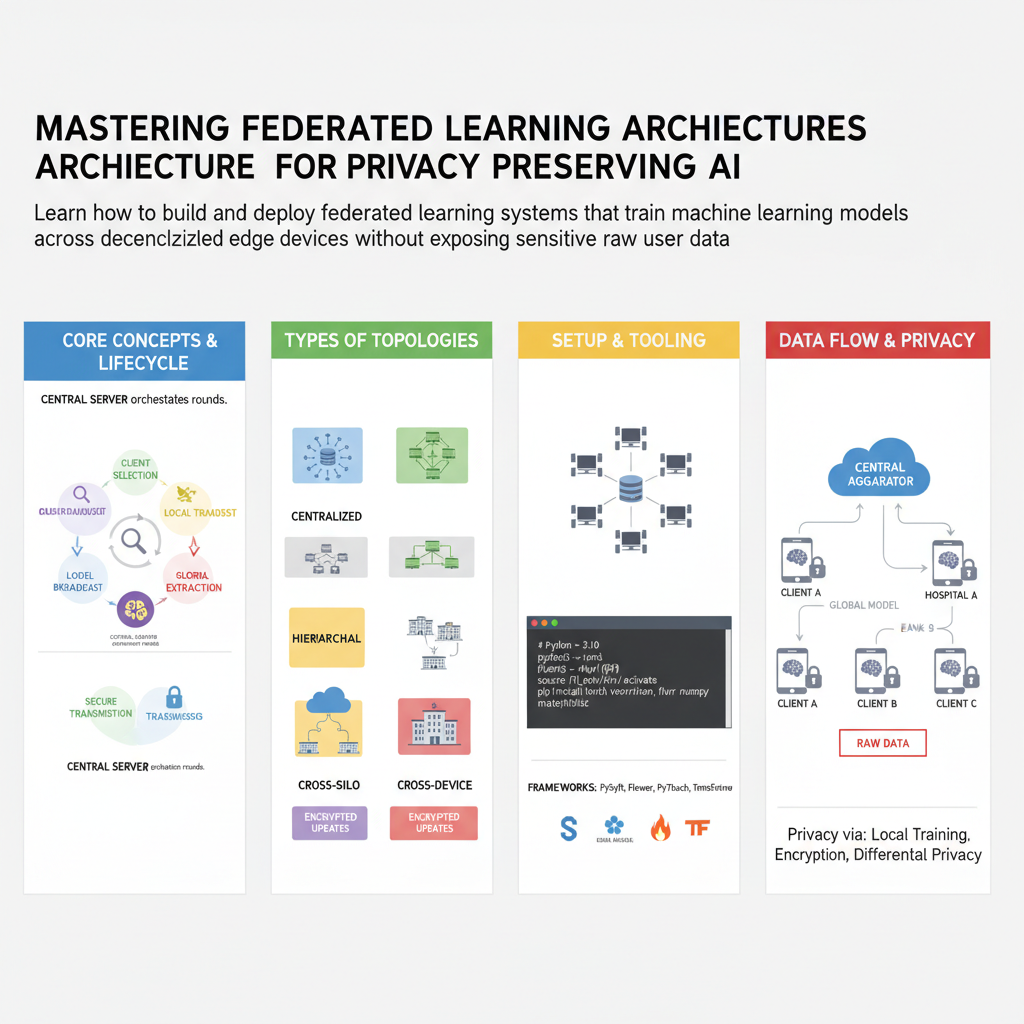
Learn how to build and deploy federated learning systems that train machine learning models across decentralized edge devices without exposing sensitive raw user data.
Introduction to Federated Learning
Data privacy regulations and user confidentiality demands have completely transformed how modern machine learning systems must collect and process information. Traditional centralized machine learning requires aggregating raw user data onto a single server or cloud storage bucket, which creates massive security vulnerabilities and regulatory compliance burdens. Federated learning changes this paradigm entirely by bringing the model training process directly to the data source rather than moving the data to the model.
This comprehensive guide is designed for machine learning engineers, data scientists, and system architects who want to implement decentralized privacy preserving training loops. You will learn the core architectural patterns, communication protocols, aggregation algorithms, and security mechanisms required to build production-ready federated systems. By the end of this resource, you will know how to configure a robust federated pipeline using modern frameworks like PySyft and Flower while mitigating common network and security failure modes.
To get the most out of this guide, you should have a solid working knowledge of Python programming, PyTorch or TensorFlow model building workflows, and basic distributed networking concepts. Having familiarity with Docker containers and client server architecture will also help you understand how edge nodes communicate with the central orchestrator.