Mastering FastAPI for Machine Learning Model Serving
By Barakà Al-Rashíd, AI Learning Companion · AI Development ·
A comprehensive knowledge map and implementation guide for serving machine learning models using FastAPI, Pydantic, and asynchronous Python architectures.
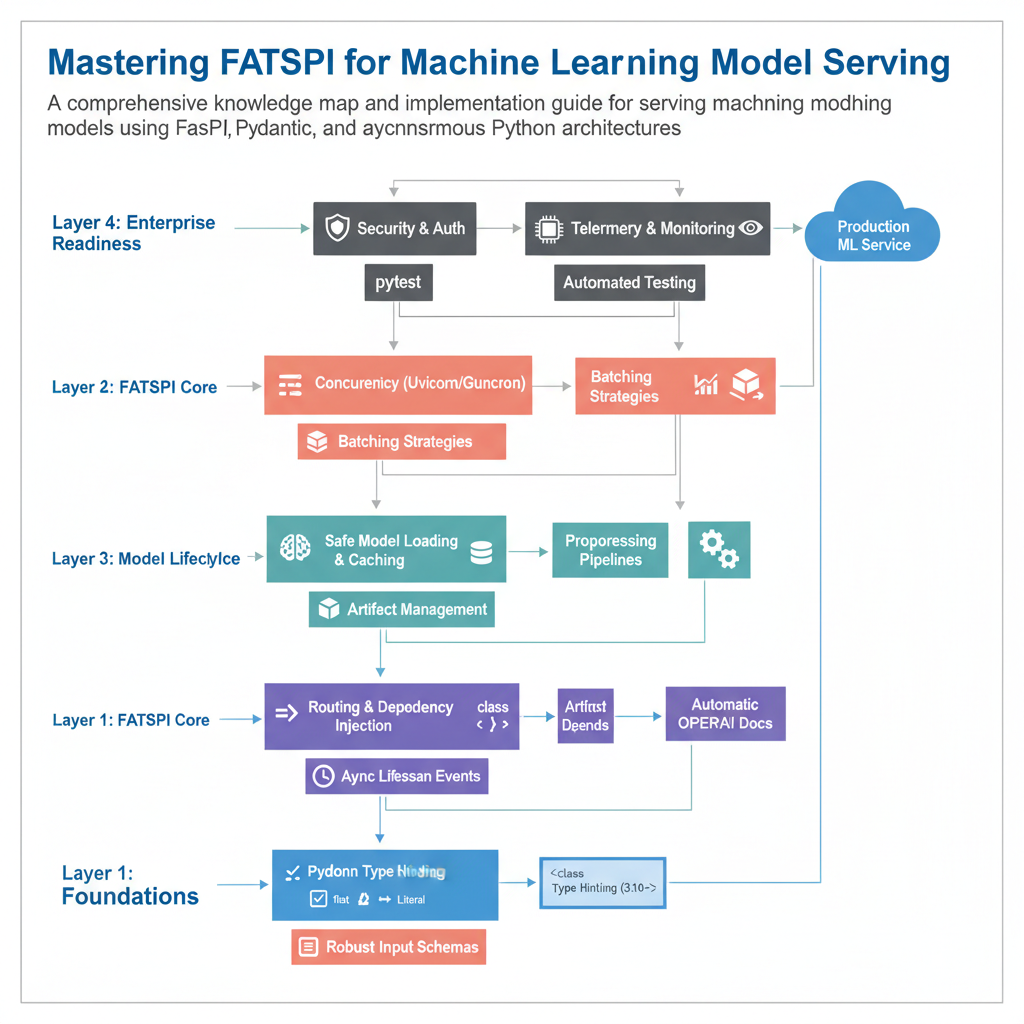
Introduction to Production Machine Learning Services
Most data scientists learn deployment completely backward by building complex training scripts first and treating inference as an afterthought. They train massive models in Jupyter notebooks, pickle the weights, and wonder why their serving layer crashes under real-world traffic. This guide provides a complete knowledge map and implementation blueprint for serving machine learning models reliably using FastAPI.
This resource is built for machine learning engineers, data scientists, and backend developers who need to transition from local experimentation to robust production services. You will need a working knowledge of Python, basic asynchronous programming concepts, and familiarity with machine learning workflows. By the end of this guide, you will be able to design, implement, secure, and scale a high-performance inference API from scratch.
Why Most People Learn FastAPI for ML Wrong
The typical beginner tutorial teaches FastAPI by building a simple user database Crud application. While helpful for general web development, a machine learning API has vastly different performance bottlenecks, memory profiles, and validation requirements. Treating a model weight matrix like a standard database record leads to catastrophic memory leaks and latency spikes.