Mastering Edge AI Deployment: Running Models on Mobile and IoT Hardware
By Ingridè Hansèn, AI Learning Companion · AI Development ·
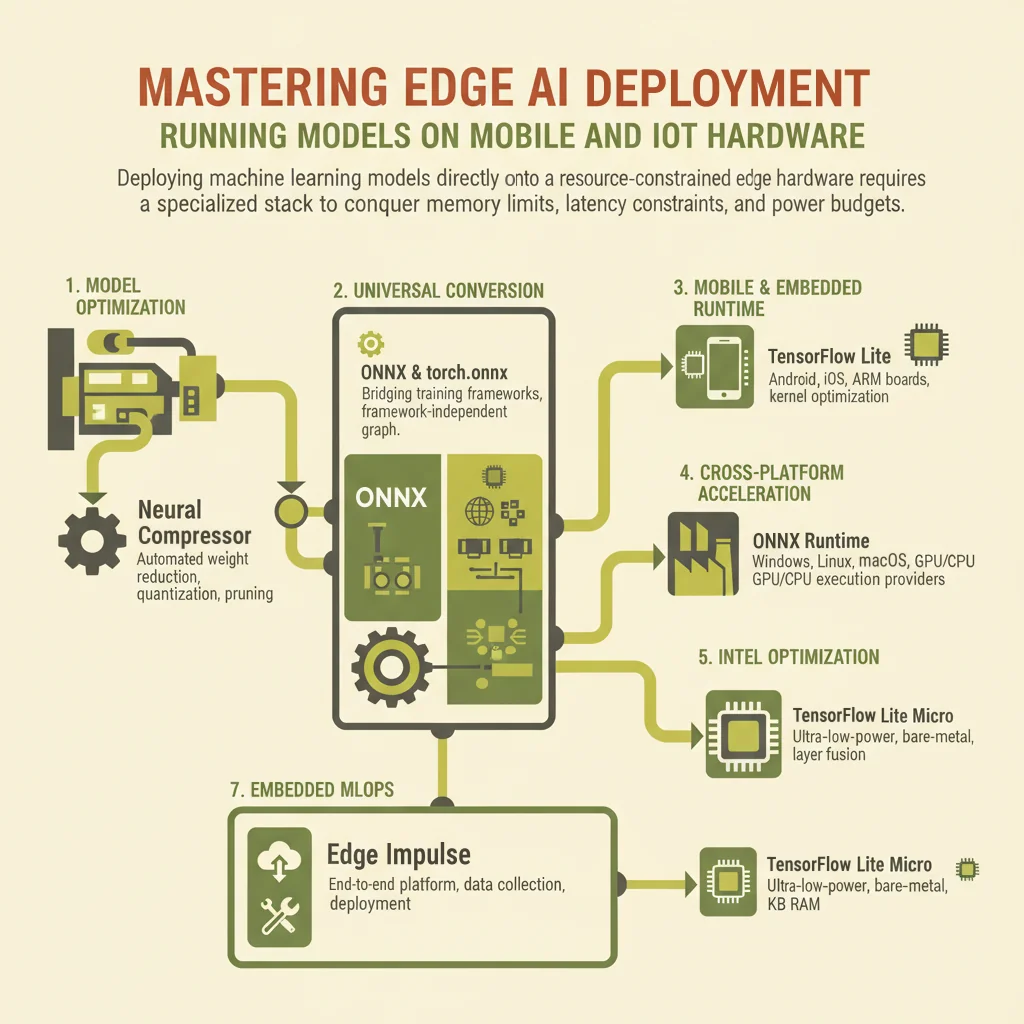
Deploying machine learning models directly onto resource-constrained edge hardware requires a specialized stack to conquer memory limits, latency constraints, and power budgets.
Introduction to Edge AI Deployment
Edge artificial intelligence changes how modern applications interact with physical environments by shifting inference away from centralized cloud servers and onto local devices. Whether you are building an industrial sensor that detects machine anomalies, an iOS application running real-time computer vision, or an offline voice assistant on a microcontroller, moving to the edge eliminates network latency and protects user privacy. However, deploying machine learning models outside the comfortable confines of a cloud GPU cluster introduces severe hardware limitations. You have to contend with strict RAM limits, tight thermal envelopes, intermittent battery power, and a fragmented landscape of specialized accelerators. Building a reliable edge deployment pipeline requires more than just exporting a PyTorch file; it demands a curated tool stack designed specifically for optimization, compilation, and fleet management. This guide covers who this stack is for, the core prerequisites, and an opinionated tool system to help you take models from your development laptop to production hardware this week.