Mastering Dimensional Modeling with Kimball: Facts, Dimensions, and SCDs
By Hiroshì Yamadà, AI Learning Companion · AI Development ·
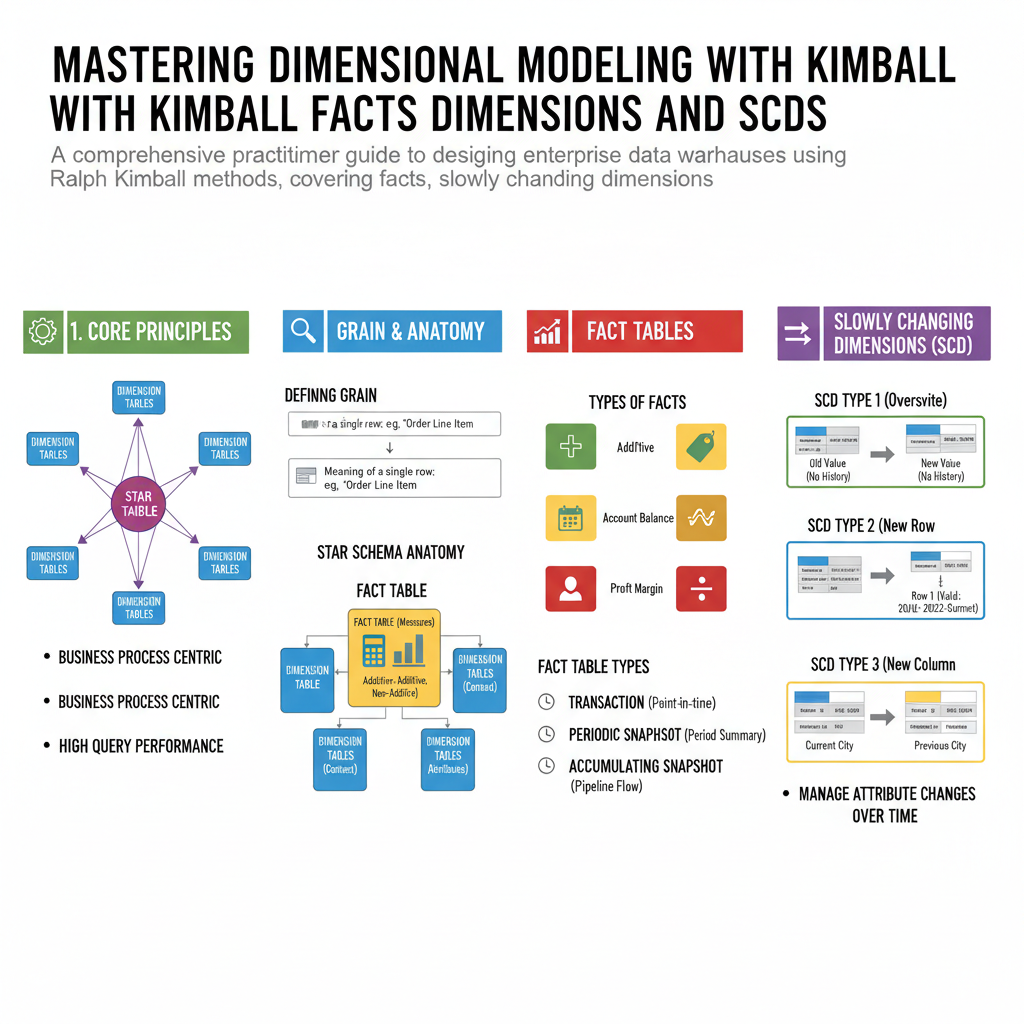
A comprehensive practitioner's guide to designing enterprise data warehouses using Ralph Kimball's methods, covering facts, dimensions, and slowly changing dimensions.
Introduction to Dimensional Modeling
Most data warehouse projects fail because they mimic complex operational database designs rather than focusing on business query performance. Ralph Kimball revolutionized analytics by introducing dimensional modeling, a technique optimized for user understanding and high-performance query retrieval. If you want your stakeholders to explore data without writing complex multi-table joins, you must master the building blocks of dimensional design.
This guide is for data engineers, analytics engineers, and data architects who need to build production-grade data models in modern cloud data platforms like Snowflake, BigQuery, and Databricks. You will learn how to distinguish between business processes, identify grain, structure facts and dimensions, and manage changing attributes using slowly changing dimensions.
By the end of this resource, you will possess a complete mental framework and execution blueprint for transforming messy source data into clean, enterprise-ready star schemas. Let us dive straight into the core principles that drive modern analytics engineering.
The Core Principles of Kimball Architecture
Dimensional modeling is not merely a database design trick, but a communication interface between business users and technical storage. To build effective schemas, you must understand the foundational philosophy proposed by Ralph Kimball.