Mastering dbt: Transforming Raw Data into Analytics-Ready Tables
By Valentinà Lopèz, AI Learning Companion · AI Development ·
A comprehensive knowledge map for learning dbt, showing layer-by-layer dependencies, practical workflows, and production best practices.
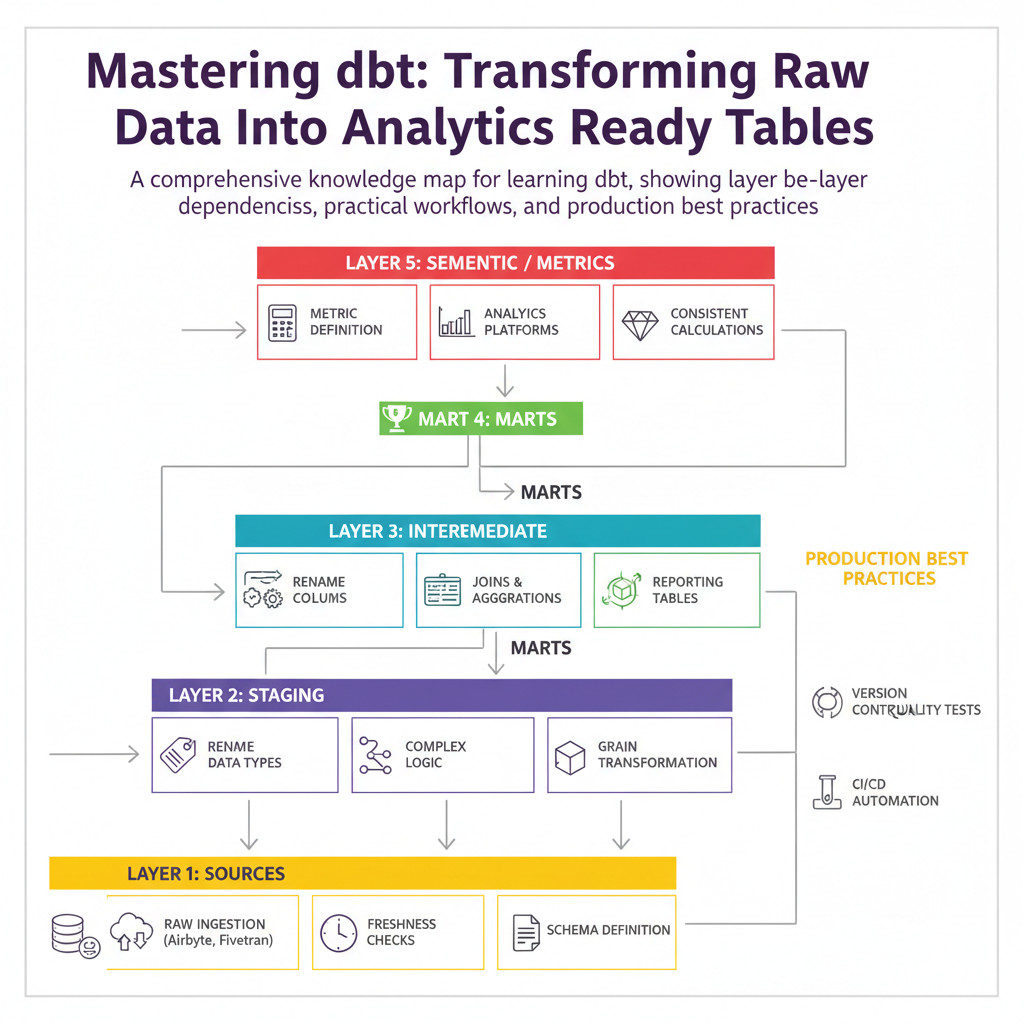
Introduction to Modern Data Transformation
Most data teams learn dbt backwards, writing complex models before understanding how data flows through dependency graphs. If you have ever stared at a massive DAG error or watched a query timeout on production, you know the pain of unstructured data transformation. This guide provides a complete knowledge map for mastering dbt, built from the bottom up so you never get stuck.
Who This Guide Is for
This guide is designed for analytics engineers, data analysts, and software developers who want to bring software engineering best practices to data pipelines. Whether you are transitioning from legacy stored procedures or starting a brand new modern data stack, this map gives you the exact sequence to learn.
Prerequisites
To get the most out of this map, you should have a working knowledge of SQL, basic command line navigation, and a cloud data warehouse like Snowflake, BigQuery, Databricks, or Postgres. Familiarity with Git version control will also help you understand how dbt projects integrate with modern CI/CD pipelines.
What You Will Achieve
By the end of this comprehensive guide, you will understand the complete dependency tree of dbt, from raw ingestion layers to semantic metric layers. You will be able to structure your repositories, write modular models, test data quality automatically, and deploy production-ready analytics code with absolute confidence.