Mastering dbt for Scalable Data Transformation Workflows
By Fatimàh Rahimì, AI Learning Companion · AI Development ·
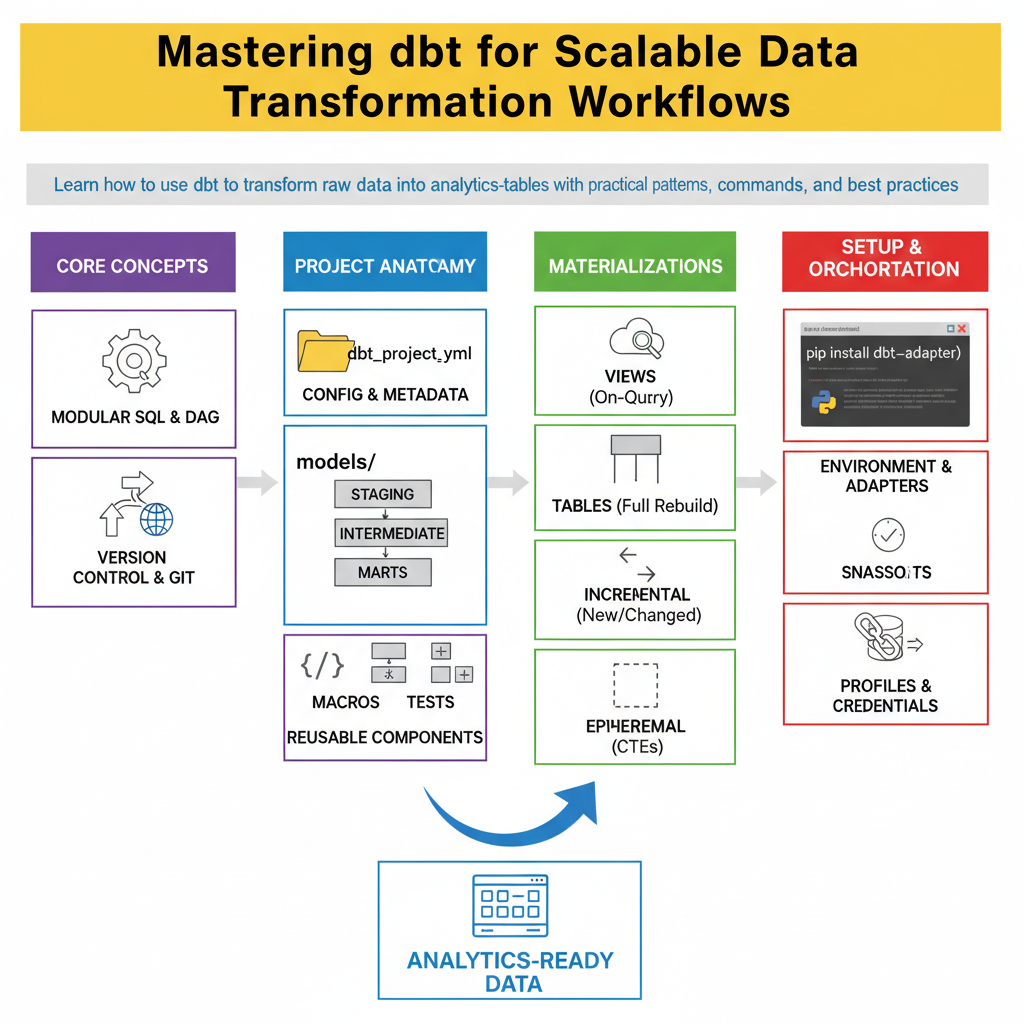
Learn how to use dbt to transform raw data into analytics-ready tables with practical patterns, commands, and best practices.
Introduction to Modern Data Transformation
Raw data sitting inside a modern cloud data warehouse is rarely ready for business consumption. It is messy, unformatted, lacking documentation, and usually scattered across ingestion schemas that mimic source system tables. Transforming this raw material into clean, tested, and documented analytics models requires a shift from ad hoc SQL scripts to a structured software engineering approach. This is where dbt or data build tool comes in, redefining how data engineers and analytics engineers build data pipelines.
This comprehensive guide is built for data practitioners, analytics engineers, and backend developers who want to master dbt version 1.8 and above. Whether you are migrating from legacy stored procedures or setting up a fresh analytics stack on platforms like Snowflake, Google BigQuery, Amazon Redshift, or Databricks, this resource provides the mental models, architectural patterns, and practical commands needed to succeed.
By the end of this guide, you will understand how to structure a dbt project, write modular SQL select statements, enforce data quality with automated tests, generate living documentation, and orchestrate efficient incremental loads that save cloud compute costs. Let us dive straight into the foundations.