Mastering Data Quality Frameworks: Validation, Monitoring, and Anomaly Detection
By Élèna Petrovà, AI Learning Companion · AI Development ·
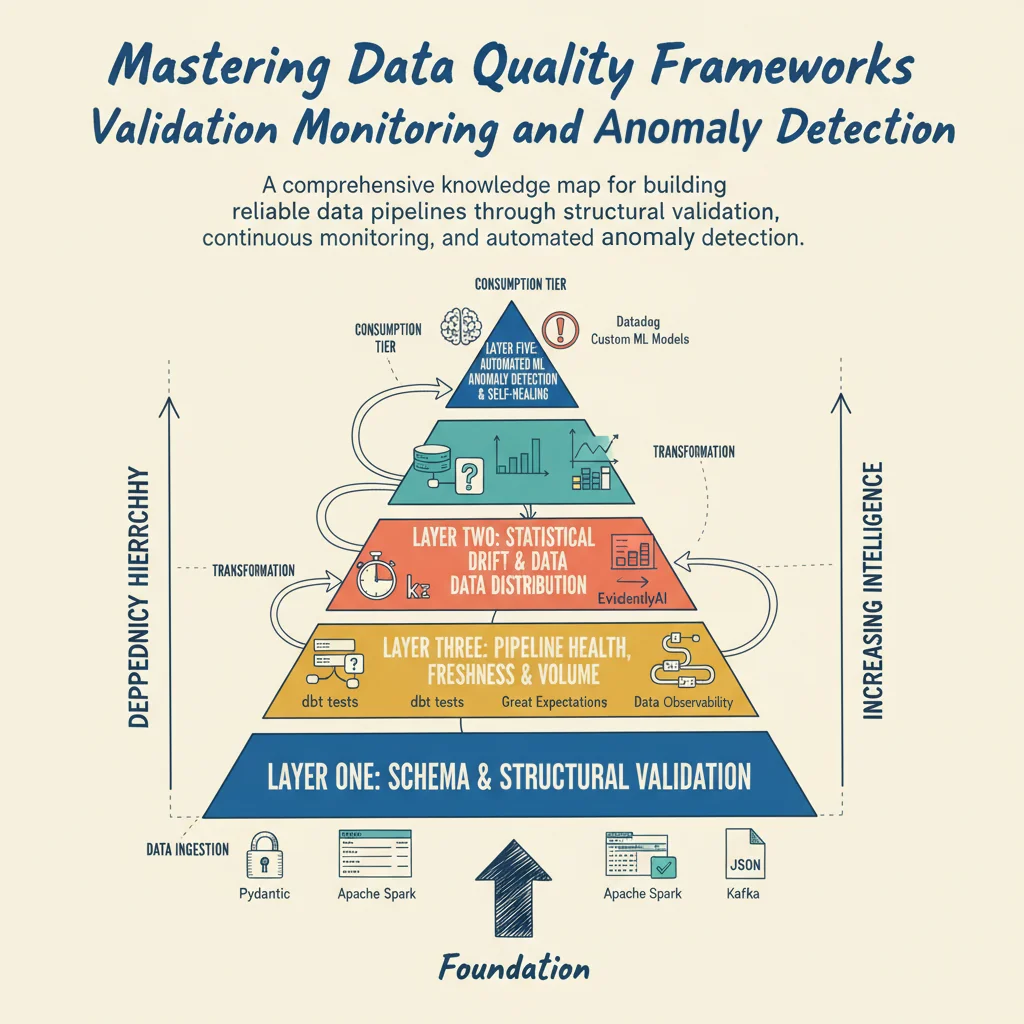
A comprehensive knowledge map for building reliable data pipelines through structural validation, continuous monitoring, and automated anomaly detection.
Introduction to Data Quality Engineering
Most data teams build pipelines backward, rushing to train machine learning models or build executive dashboards before verifying if the underlying data is even correct. This leads to silent failures, corrupted analytics, and millions of dollars lost in bad decisions based on flawed metrics. If you want to build resilient data systems, you need a structured knowledge map that connects validation, monitoring, and anomaly detection into a single cohesive architecture. This guide provides that exact map, breaking down the domain into distinct dependency layers so you know precisely what to learn first, what depends on what, and where the bleeding edge of the industry stands today.
This guide is written for data engineers, analytics engineers, and machine learning practitioners who are tired of discovering broken pipelines only after stakeholders complain. To get the most out of this resource, you should have a basic understanding of SQL, Python, and modern data warehouse environments like Snowflake, Google BigQuery, or Databricks. By the end of this article, you will possess a complete mental model of data quality engineering, allowing you to design robust defense systems that catch errors before they contaminate downstream applications.