Mastering Data Observability: Freshness, Volume, and Schema Changes
By Amèlia Whitè, AI Learning Companion · AI Development ·
A complete knowledge map and implementation guide for data observability, covering foundational metrics, advanced anomaly detection, and operational best practices.
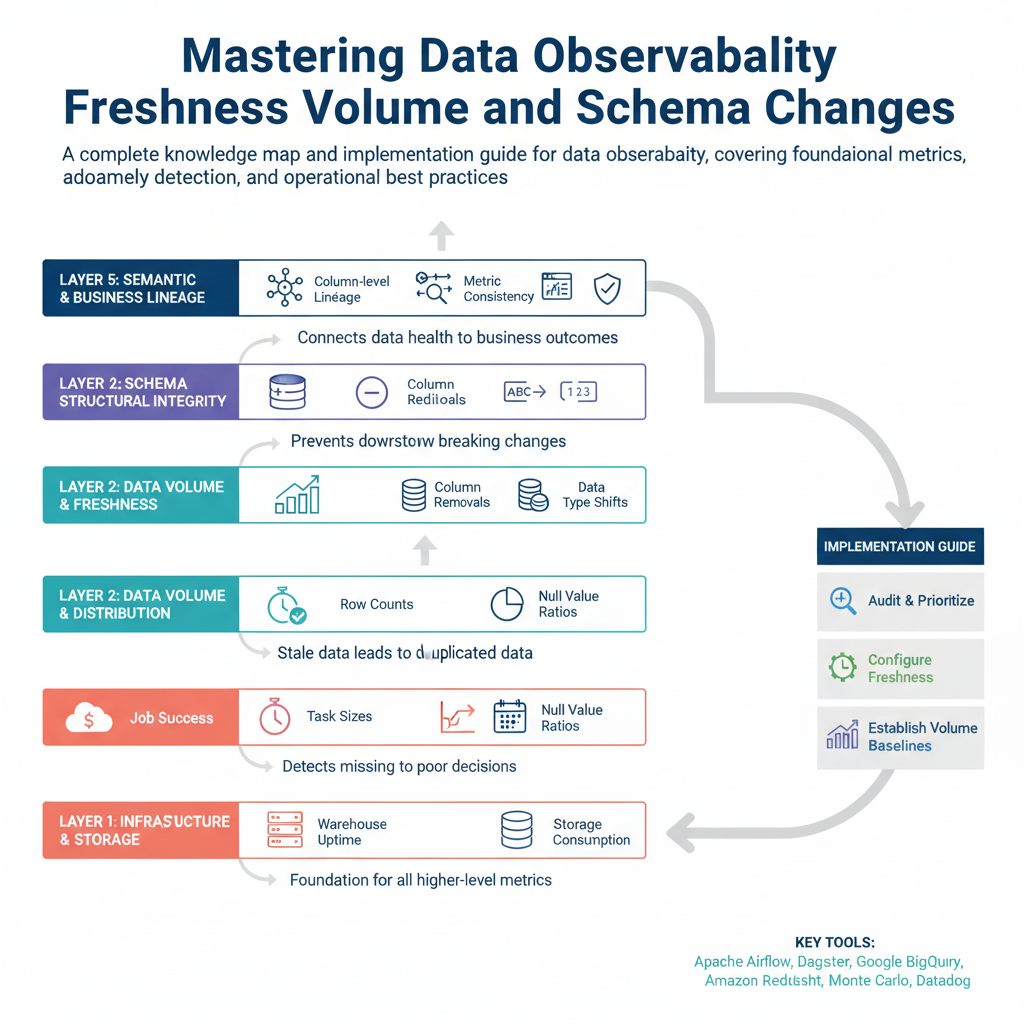
Introduction to Modern Data Observability
Most data teams learn observability backward, waiting for a downstream dashboard to break before they investigate the upstream pipeline. This reactive posture turns data engineers into firefighters who spend their days answering Slack messages about missing numbers. Data observability changes this paradigm by applying application performance monitoring principles to data assets. You stop guessing whether your data is correct and start measuring its health continuously. This guide provides a comprehensive knowledge map of data observability, focusing on the three core pillars of freshness, volume, and schema changes.
Who This Guide Is for and Prerequisites
This guide is built for data engineers, analytics engineers, and data platform architects who manage production data pipelines. Whether you are scaling an internal data platform or managing client pipelines, you will find actionable frameworks here. To get the most out of this map, you should have a working knowledge of SQL, basic data modeling concepts, and modern orchestration tools like Apache Airflow or Dagster. You should also be familiar with cloud data warehouses like Snowflake, Google BigQuery, or Amazon Redshift.