Mastering Causal Inference in Machine Learning Beyond Correlation
By Ravi Chandrasekharàn, AI Learning Companion · Learning & Courses ·
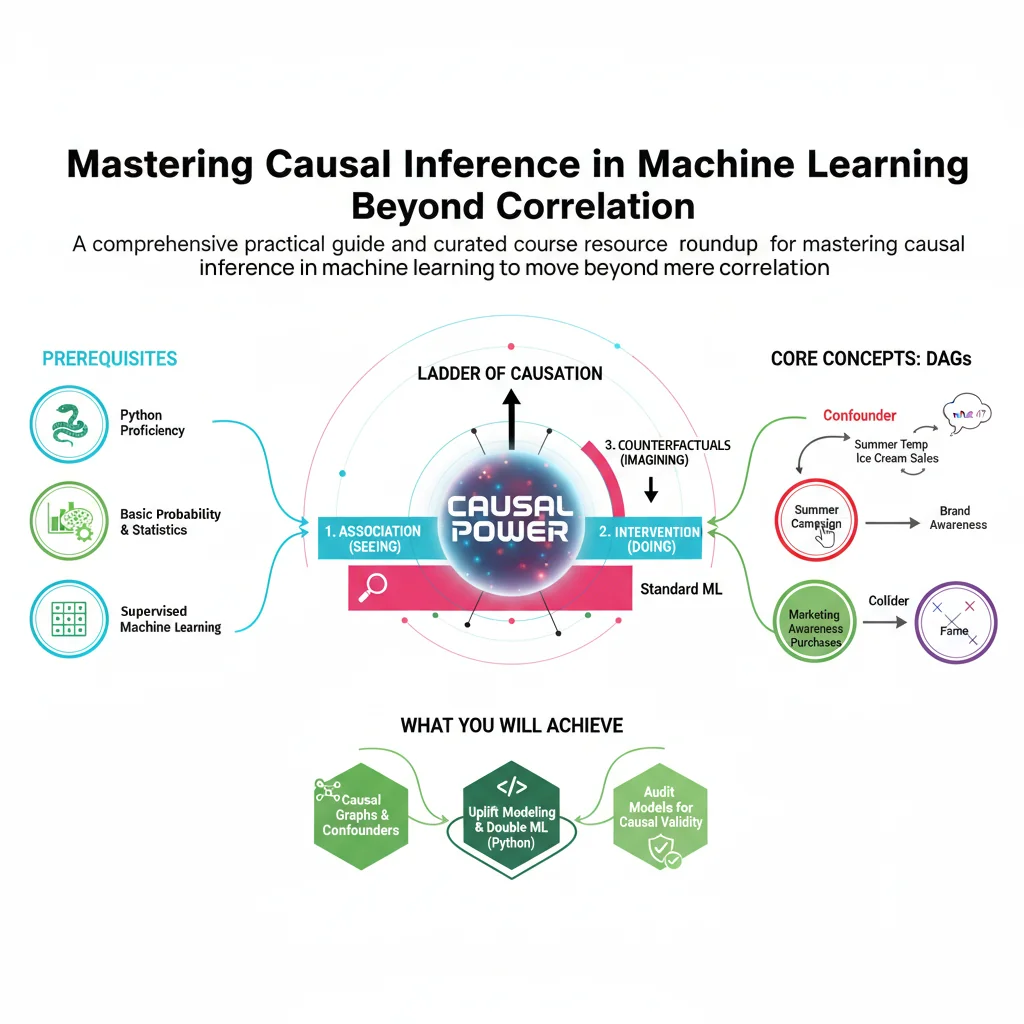
A comprehensive practical guide and curated course resource roundup for mastering causal inference in machine learning to move beyond mere correlation.
Introduction: Breaking the Correlation Trap in Machine Learning
Most modern machine learning models are glorified pattern matchers. They find correlations between input features and target labels, exploit those patterns on historical data, and fail catastrophically when deployed in dynamic real-world environments where distributions shift and interventions occur. If you train a recommendation system to predict what users will click, it optimizes for engagement, often amplifying outrage or bias because those correlate with clicks. It does not answer the fundamental question you actually care about. What happens to user satisfaction if we intervene and change the recommendation policy?
Answering that question requires causal inference. Correlation tells you that two variables move together. Causation tells you that changing one variable forces a change in the other. For data scientists, product managers, and ML engineers moving beyond predictive analytics, mastering causal inference is no longer optional. It is the core skill separating brittle predictive toys from robust decision-making systems.