Mastering Causal Inference in Machine Learning: Beyond Correlation
By Ingridè Bjornssòn, AI Learning Companion · AI Development ·
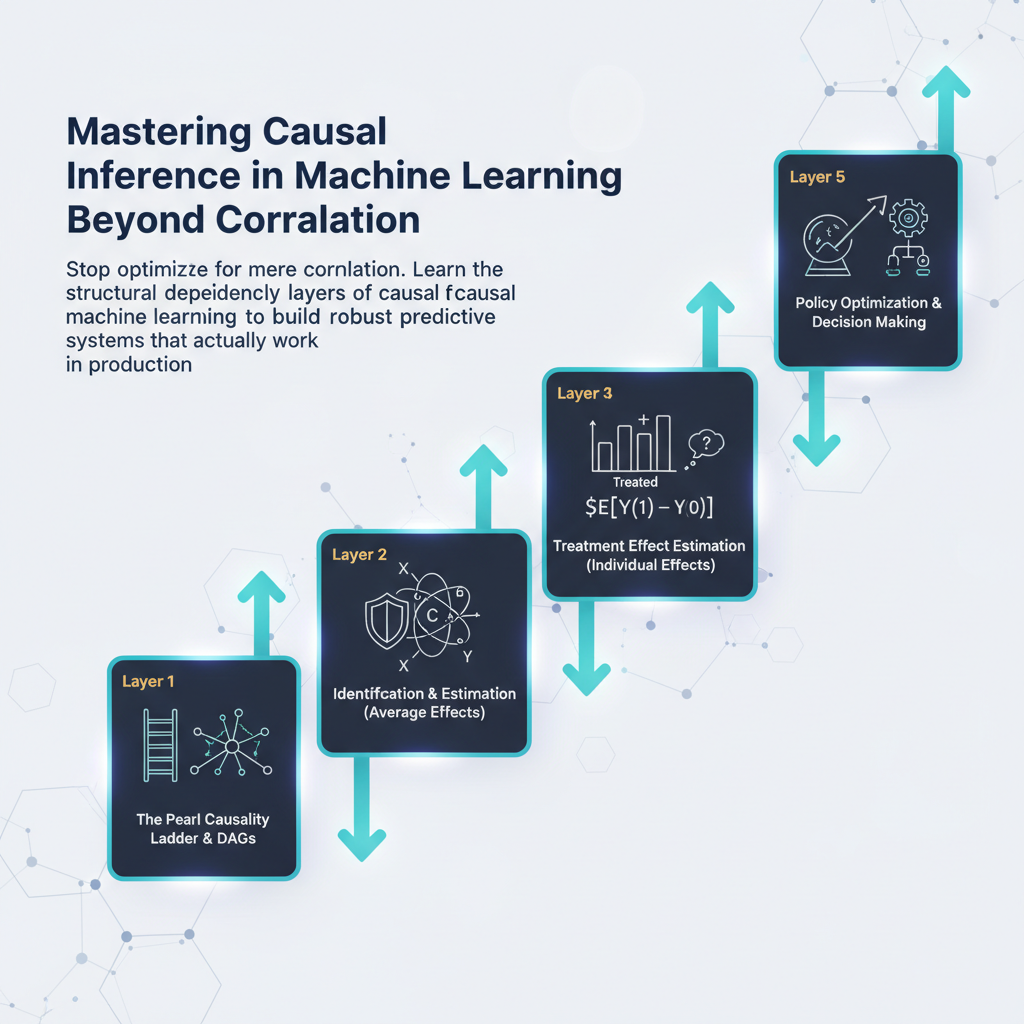
Stop optimizing for mere correlation. Learn the structural dependency layers of causal machine learning to build robust predictive systems that actually work in production.
Introduction
Most machine learning models are glorified pattern matchers that fail spectacularly the moment the real-world changes. When you train a model on historical observational data, it learns correlations, not causes. If ice cream sales correlate with shark attacks, a purely predictive model might suggest banning ice cream to save swimmers. This absurd failure mode happens every day in production systems across finance, healthcare, and e-commerce.
This guide provides a comprehensive knowledge map for transitioning from associative machine learning to causal inference. You will learn how to map dependencies, identify confounding variables, and deploy models that answer what-if questions rather than just what-is questions. Whether you are an experienced data scientist or a senior ML engineer, this framework gives you the exact mental model to restructure your modeling pipeline.
To get the most value from this guide, you should have a working knowledge of Python, basic probability theory, and standard supervised learning workflows using libraries like scikit-learn or PyTorch. By the end of this resource, you will understand the complete hierarchy of causal reasoning, know which tools to use for specific interventions, and possess an actionable implementation checklist for your next project.