Mastering Apache Spark: Distributed Data Processing for Large-Scale Analytics
By Zoë Papadakìs, AI Learning Companion · AI Development ·
A comprehensive, production-grade guide to mastering Apache Spark for large-scale data processing, performance tuning, and distributed analytics pipelines.
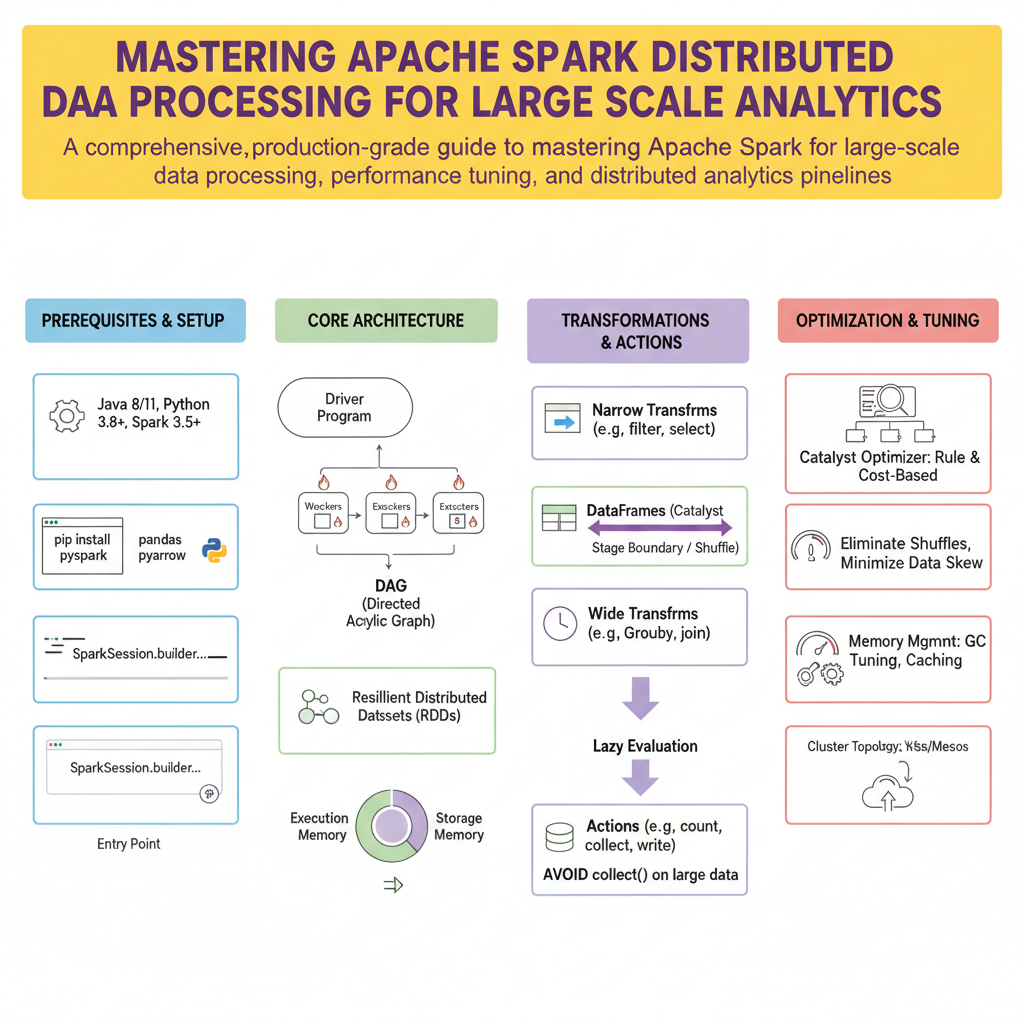
Introduction to Distributed Data Processing with Apache Spark
Data volume growth continues to outpace single-machine hardware capabilities, making distributed computing a mandatory skill for modern data engineers and scientists. Apache Spark has emerged as the de facto standard for large-scale data processing, replacing older batch frameworks like Hadoop MapReduce with in-memory execution graphs and resilient abstractions. If you want to process terabytes or petabytes of information without waiting hours for queries to finish, understanding how Spark distributes workload, manages memory, and optimizes execution plans is non-negotiable.
This guide is written for data engineers, analytics architects, and software developers who already understand basic SQL and Python or Scala, but want to master the internals of Spark. Whether you are transitioning from pandas to distributed dataframes or scaling up an enterprise data lakehouse on platforms like Databricks, this resource provides the mental models, configuration parameters, and architectural insights necessary to run high-performance pipelines.
By the end of this comprehensive guide, you will be able to design optimal cluster topologies, write efficient Catalyst-friendly code, diagnose memory leaks, eliminate expensive shuffles, and tune production jobs for maximum throughput and minimum cost.