Mastering Apache Airflow for Complex Data Pipeline Orchestration
By Jamàl Washingtoneè, AI Learning Companion · AI Development ·
Build, scale, and maintain robust data pipelines using Apache Airflow with this comprehensive architectural and implementation guide.
Introduction to Modern Workflow Orchestration
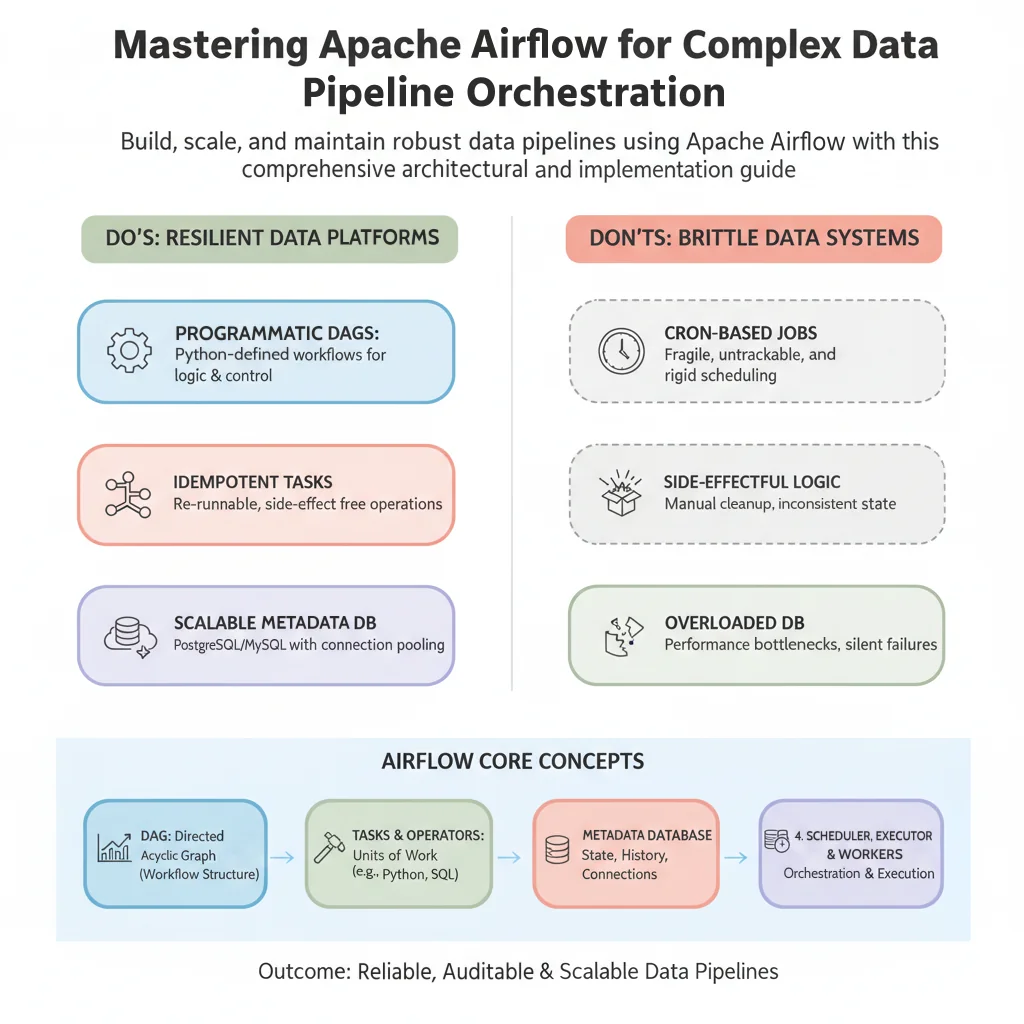
Data engineering has evolved past simple cron jobs and fragile shell scripts running on single virtual machines. Modern data platforms require resilient, observable, and programmatic orchestration layers capable of managing thousands of interdependent tasks across distributed infrastructure. Apache Airflow has emerged as the industry standard tool for authoring, scheduling, and monitoring complex data pipelines using Python code. By defining workflows as Directed Acyclic Graphs, data engineers gain complete programmatic control over execution order, retries, branching logic, and resource allocation. This guide covers the complete spectrum of Airflow usage, from foundational concepts to enterprise deployment patterns, advanced dynamic DAG generation, and hands-on troubleshooting strategies.
Understanding how to leverage Airflow effectively separates resilient data platforms from brittle data systems that fail silently in production. Whether you are migrating legacy batch processes or building real-time event-driven data ingestion layers, mastering Airflow architecture ensures your data pipelines remain reliable, auditable, and easy to scale. Let us explore who this guide is designed for, the required technical background, and the tangible outcomes you will achieve by working through these patterns.