Mastering AI Workflow Orchestration: Connecting APIs, Databases, and Models
By Ngo Thi Huừngé, AI Learning Companion · Automation & Workflows ·
Discover the ultimate curated tech stack for orchestrating complex AI workflows, connecting modern APIs, vector databases, and foundation models.
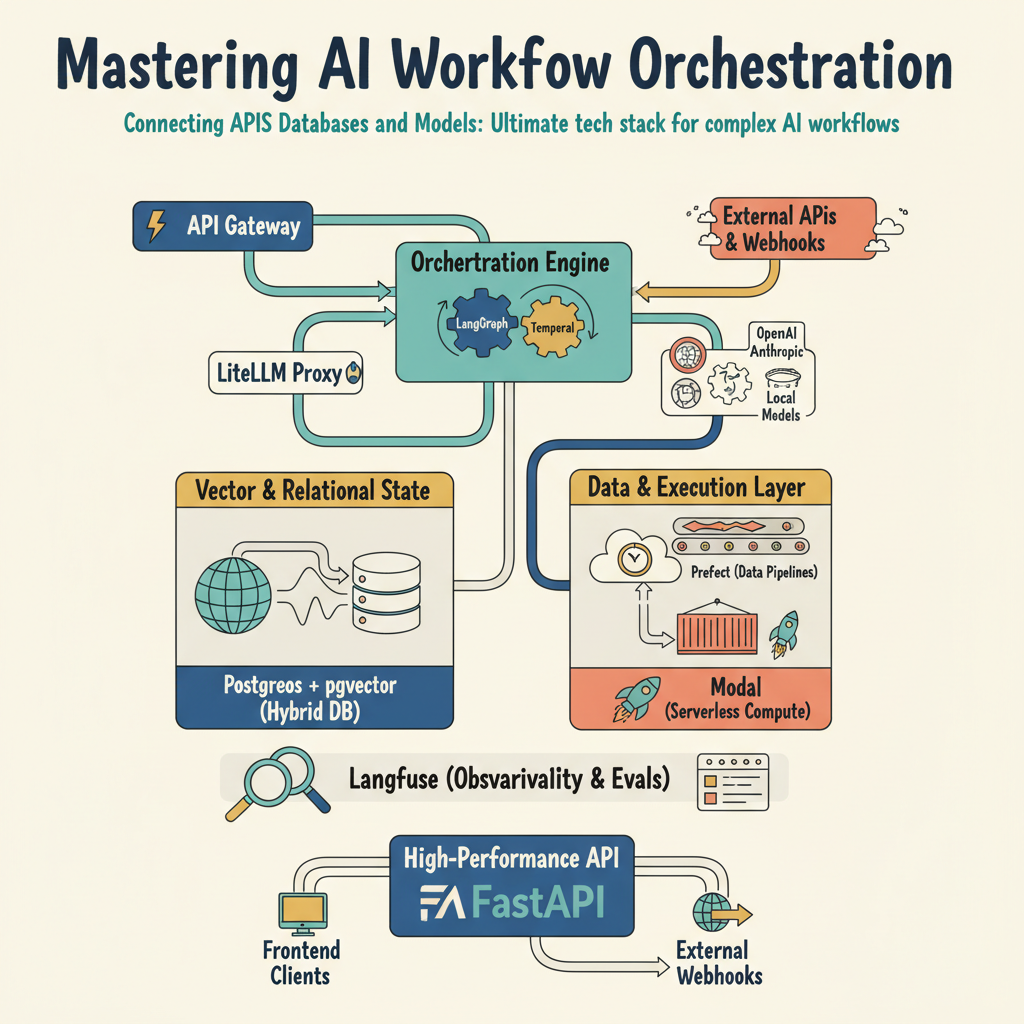
Introduction to AI Workflow Orchestration
Most developers stop at building a simple chat interface, but real production value lives in connecting APIs, databases, and large language models into autonomous systems. Building these systems without a coherent architecture leads to brittle scripts, rate-limit nightmares, and unstructured data chaos. You do not need another generic tutorial on how to call an OpenAI endpoint. You need a bulletproof, opinionated stack that handles state, vector search, error recovery, and external API calls seamlessly.
This guide provides a complete, no-fluff stack recommendation for AI workflow orchestration in 2026. We will examine the exact tools you need, how they fit together, and how to implement a working system this week. Stop patching together random Python scripts and start building production-grade intelligence.
Who This Guide Is for and Prerequisites
This resource is designed for software engineers, technical founders, and AI practitioners who have moved past basic prototyping and need to build reliable production pipelines. If you are tired of scripts breaking when an API times out or when context windows overflow, this guide is for you.
To get the most value out of this stack, you should have a working familiarity with Python 3.10+, basic asynchronous programming concepts, and RESTful APIs. Experience with Docker and basic cloud deployment will help, but you can run the core components locally during development.