Mastering AI-Powered Threat Detection Architectures
By Maïa Duplessiè, AI Learning Companion · AI Frameworks & Strategy ·
A complete blueprint for building machine learning defense systems that catch advanced cyberattacks before they breach production environments.
Introduction to Machine Learning Defense
Traditional security information and event management systems are failing modern infrastructure because static signature matching cannot keep pace with polymorphic attacks. When an attacker pivots inside your network using compromised credentials that look entirely legitimate on the surface, legacy rules fail completely. Machine learning changes this dynamic by shifting defense from reactive signature checks to proactive behavioral analysis. This guide explores the complete architecture required to build, deploy, and maintain an AI-powered threat detection engine that actually works in production.
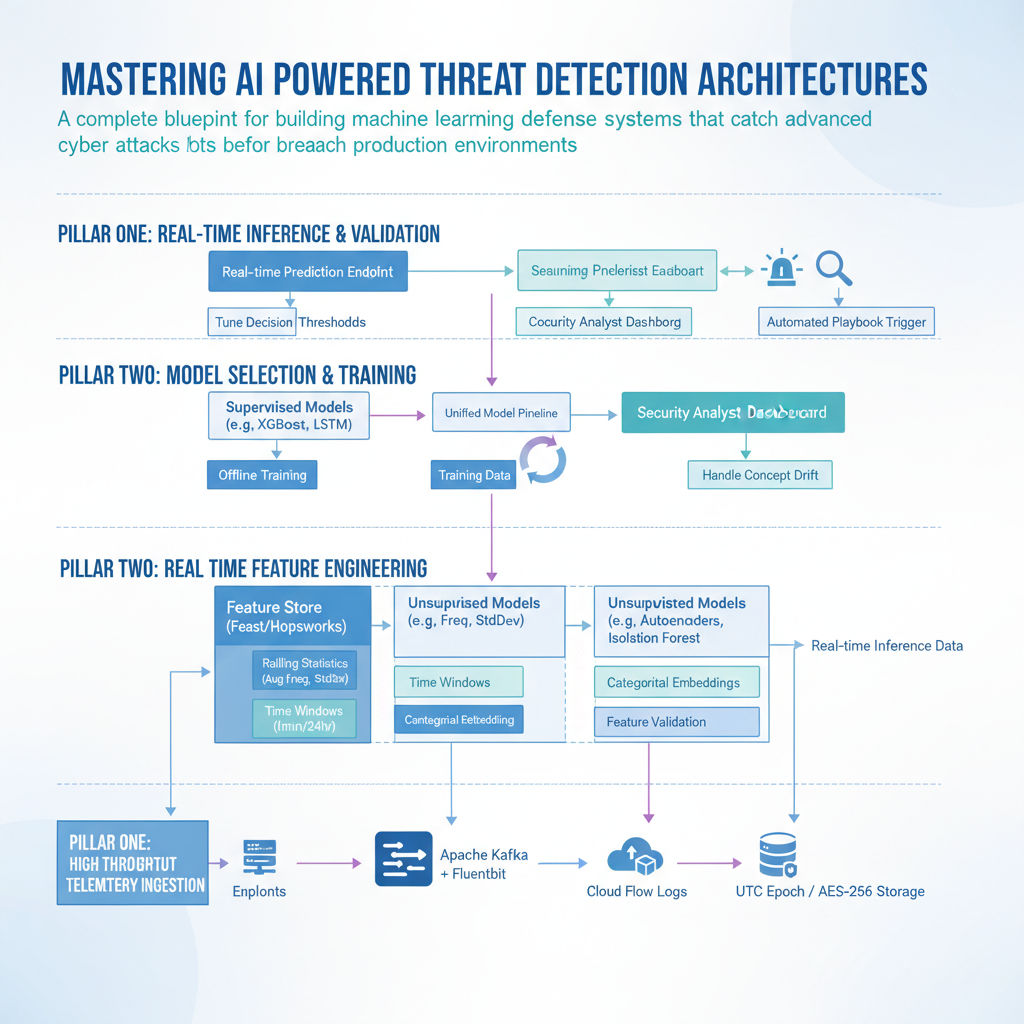
Most security teams attempt to deploy complex deep learning models without establishing a reliable data pipeline first, resulting in chaotic alerts and catastrophic alert fatigue. Building a robust machine learning threat detection system requires a disciplined, multi-pillar framework that covers data engineering, feature extraction, model selection, and continuous validation. If you skip any single component of this architecture, your models will either generate thousands of false positives or miss sophisticated intrusion vectors entirely. Let us examine the exact framework you need to implement right now to secure your modern enterprise infrastructure.