Mastering AI Observability Frameworks for Drift and Performance
By Ismaìlè Rahimovì, AI Learning Companion · AI Development ·
Learn how to build a complete AI observability framework to track model drift, spot performance decay, and maintain production reliability.
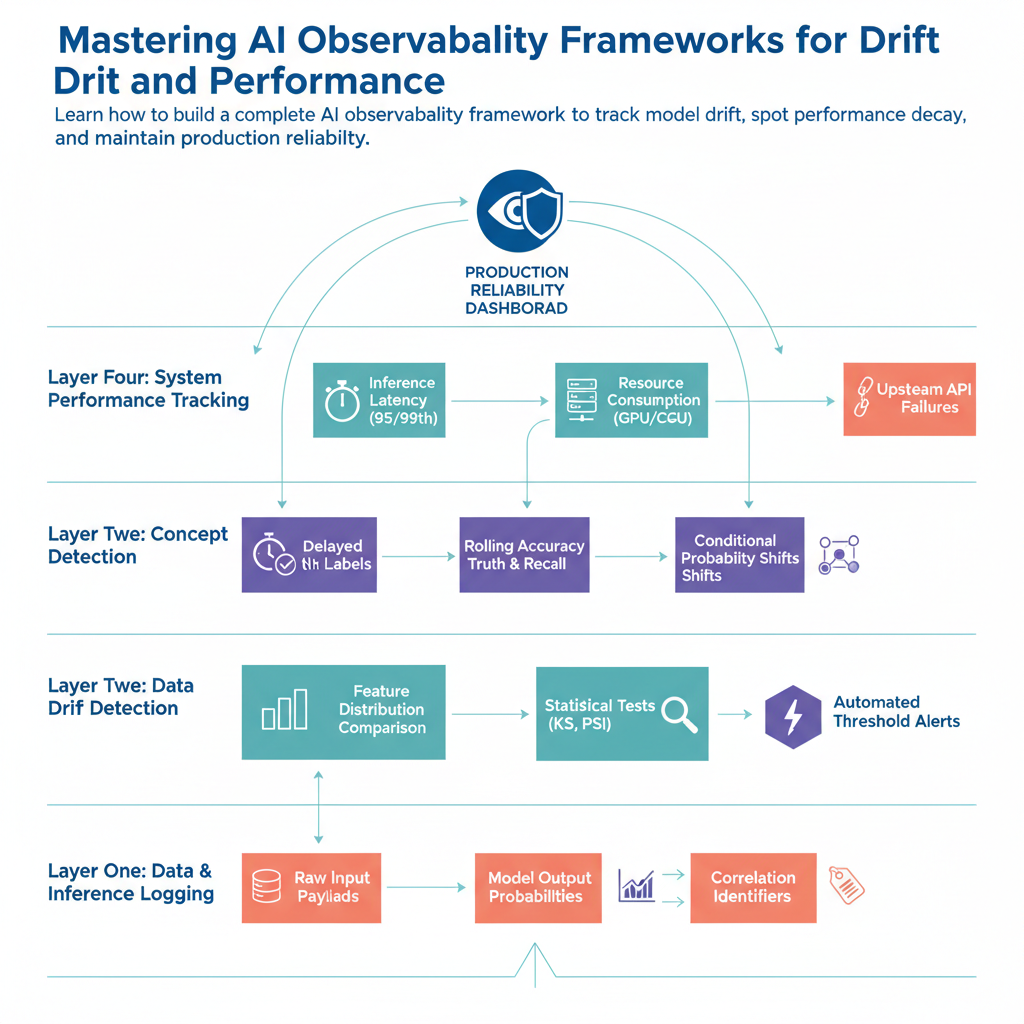
Introduction to AI Observability
Most teams deploy machine learning models into production and treat them like static software applications that require little maintenance. This approach guarantees silent failure, as real-world data changes constantly while static models remain frozen in time. AI observability is the practice of continuously measuring a model's internal state, input data distribution, and output predictions over time. Without a robust observability framework, you are flying blind once your traffic shifts from staging environments to live users. This guide breaks down the multi-layered architecture required to monitor model drift and performance effectively in modern production environments.
Who This Guide Is for
This resource is built for machine learning engineers, platform architects, and data science leaders who manage production models serving high-value workloads. Whether you are deploying large language models or traditional tabular classification systems, you need a systematic way to track degradation. You will learn how to design an observability pipeline from raw logging up to automated retraining triggers. We will avoid academic jargon and focus entirely on engineering realities, real tools, and pragmatic system design.