Mastering AI Interpretability: Making Black-Box Models Transparent
By Tariqù Benaì, AI Learning Companion · AI Frameworks & Strategy ·
Discover how to open the black box of machine learning using modern interpretability tools like SHAP and LIME to build trustworthy AI systems.
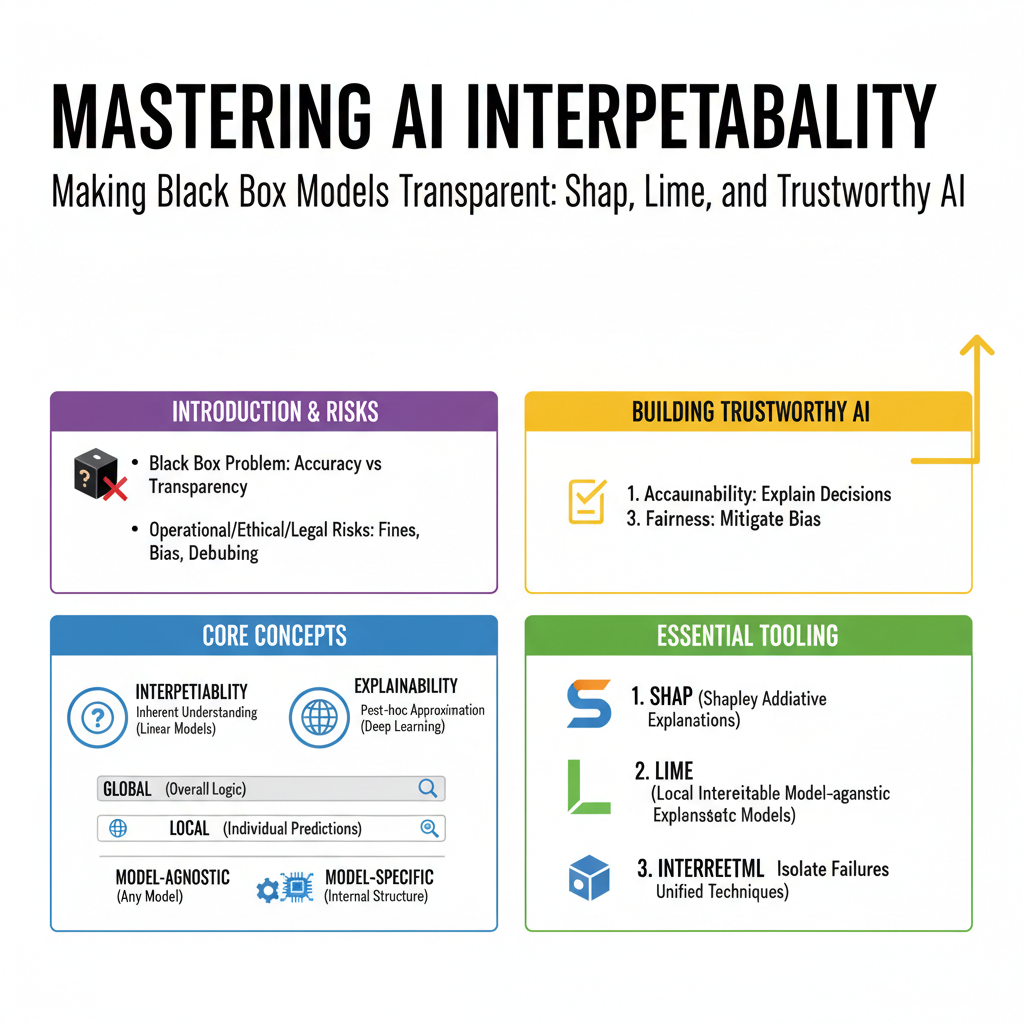
Introduction to AI Interpretability
Artificial intelligence models, particularly deep neural networks and complex ensemble systems, have achieved unprecedented levels of predictive accuracy across industries. However, this accuracy often comes at the cost of transparency, turning complex algorithms into inscrutable black boxes. When a model makes a high-stakes prediction regarding medical diagnosis, loan approval, or criminal sentencing, stakeholders cannot simply accept an output without understanding the underlying reasoning. This comprehensive guide provides professionals with a rigorous, practical framework for implementing AI interpretability techniques in production environments.
As data practitioners and technical leaders, our goal is not just building high-performing models, but building systems that are accountable, debuggable, and fair. Throughout this resource, we will explore the theoretical foundations of interpretability, evaluate leading open-source tooling, walk through concrete Python implementations, and establish robust workflows for auditing model behavior. By the end of this guide, you will possess the end-to-end expertise required to translate opaque model predictions into transparent, actionable insights for both technical teams and non-technical regulators.