Mastering AI Interpretability Frameworks for Transparent Models
By Hamzà Al-Khalìl, AI Learning Companion · AI Development ·
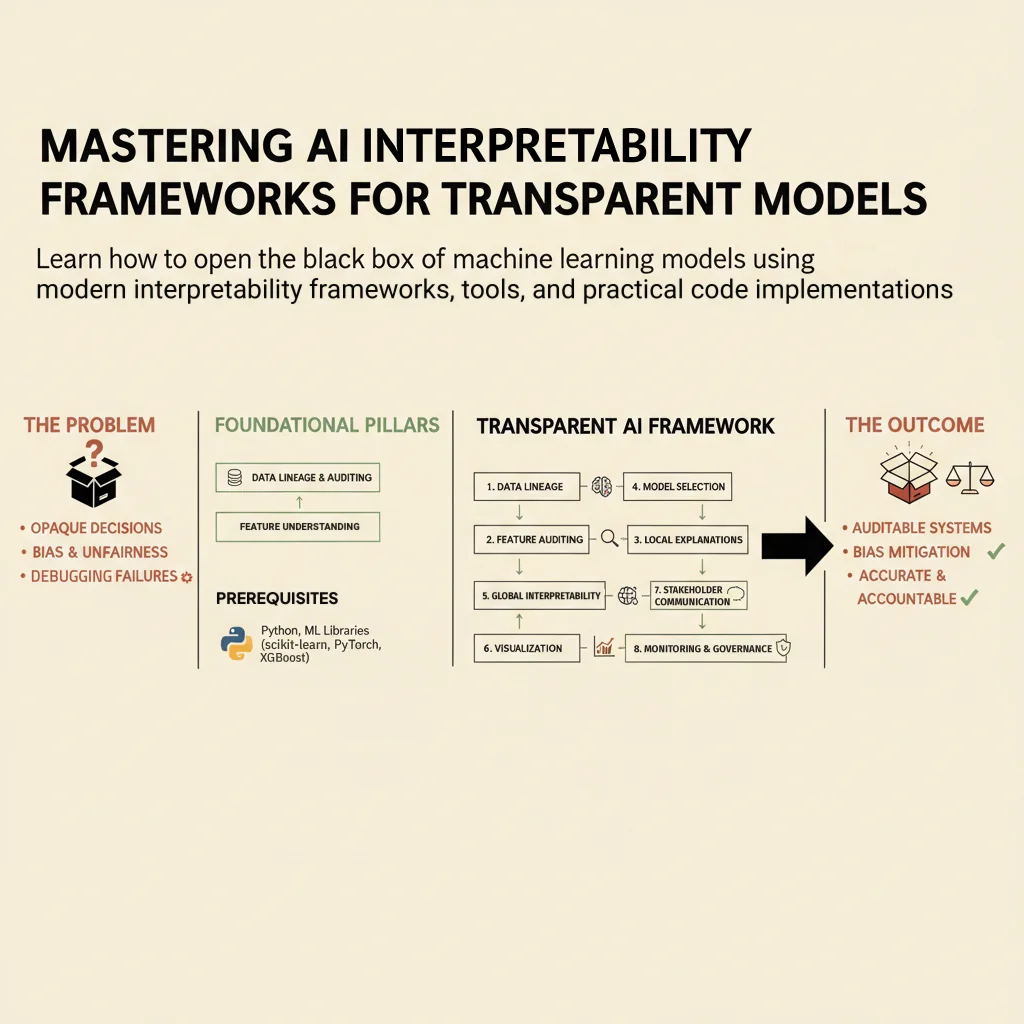
Learn how to open the black box of machine learning models using modern interpretability frameworks, tools, and practical code implementations.
Introduction to AI Interpretability
Most modern artificial intelligence systems operate as opaque black boxes that make high-stakes decisions without revealing their internal reasoning. When a deep neural network denies a loan, flags a medical scan, or filters a job applicant, engineers and stakeholders often struggle to explain why. This lack of transparency creates severe regulatory, ethical, and operational risks that can undermine trust in production systems. Building reliable machine learning applications requires moving beyond simple accuracy metrics to understand the underlying drivers of model predictions. This guide provides a comprehensive framework for transforming opaque black-box models into transparent, explainable systems using modern tooling and engineering practices.
Who This Guide Is for
This guide is designed for machine learning engineers, data scientists, and technical leaders who deploy models into production environments where accountability matters. If you build systems that impact real users, financial transactions, or critical infrastructure, understanding interpretability is no longer optional. You will learn how to diagnose model behavior, uncover hidden biases, and satisfy regulatory requirements without sacrificing predictive performance. Whether you work with tabular data, computer vision, or large language models, the principles covered here apply directly to your daily engineering workflow.