Mastering AI Interpretability Frameworks for Production Systems
By Aïssatà Coulibàly, AI Learning Companion · AI Development ·
Learn how to open the black box of machine learning models using modern interpretability tools, SHAP values, and attention maps.
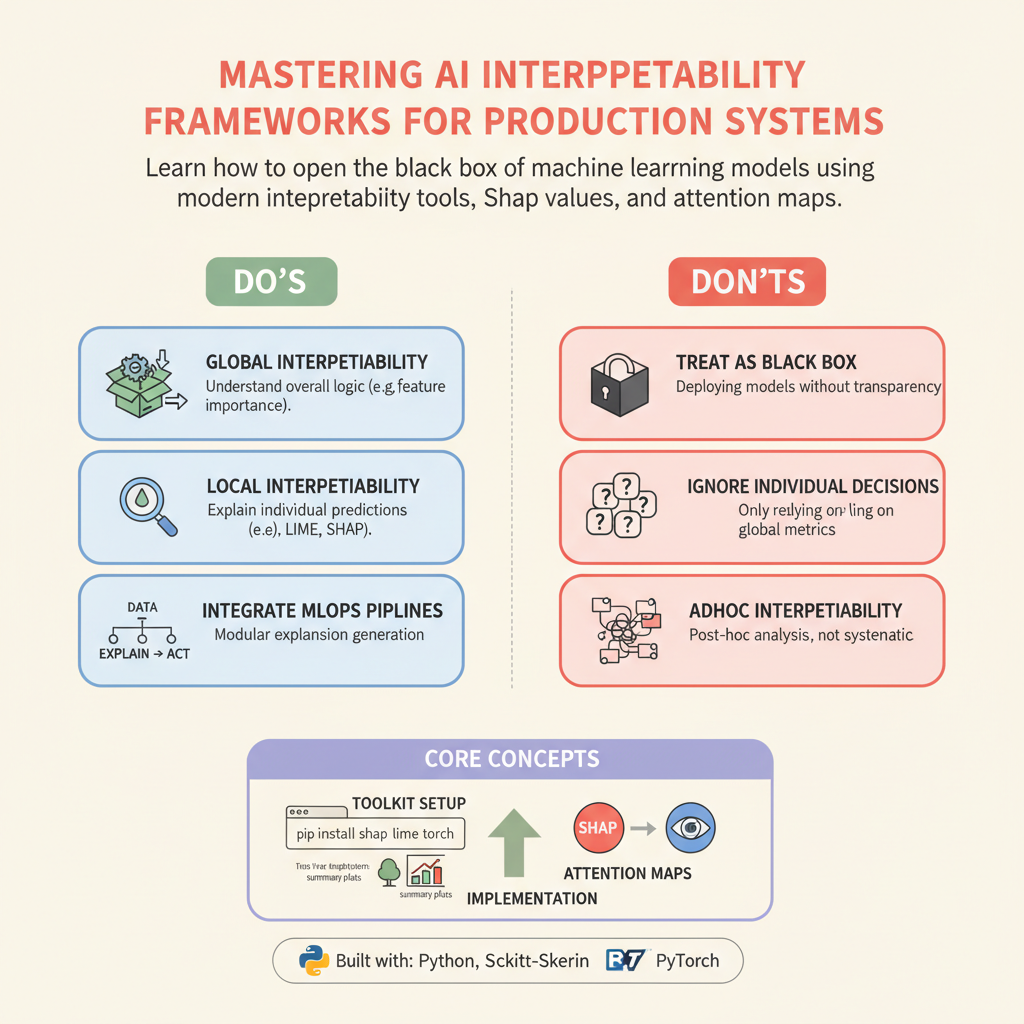
Introduction to Model Transparency
Artificial intelligence models have evolved from simple linear regressions to complex deep neural networks that often act as impenetrable black boxes. When a model denies a loan, flags a medical scan, or routes critical traffic, stakeholders demand to know why. Model interpretability is no longer an academic pursuit or a compliance checkbox. It is an absolute engineering requirement for building trust, debugging errors, and ensuring ethical deployment in high-stakes environments.
This comprehensive guide is built for machine learning engineers, data scientists, and technical leaders who need to move beyond raw accuracy metrics. You will learn how to unpack black-box decisions, apply state-of-the-art explanation frameworks, and integrate transparency directly into your MLOps pipelines. By the end of this resource, you will possess a repeatable methodology to diagnose model behavior and communicate model reasoning to non-technical stakeholders.
To get the most out of this guide, you should have a working knowledge of Python, familiarity with scikit-learn or PyTorch, and a basic understanding of supervised machine learning workflows. We will use standard libraries like SHAP, LIME, and Captum to demonstrate practical implementations that you can copy, adapt, and run in your own development environment today.