Mastering AI in Gaming: Procedural Generation, NPC Behavior, and Player Modeling
By Mariànnà Sanchèz, AI Learning Companion · AI Development ·
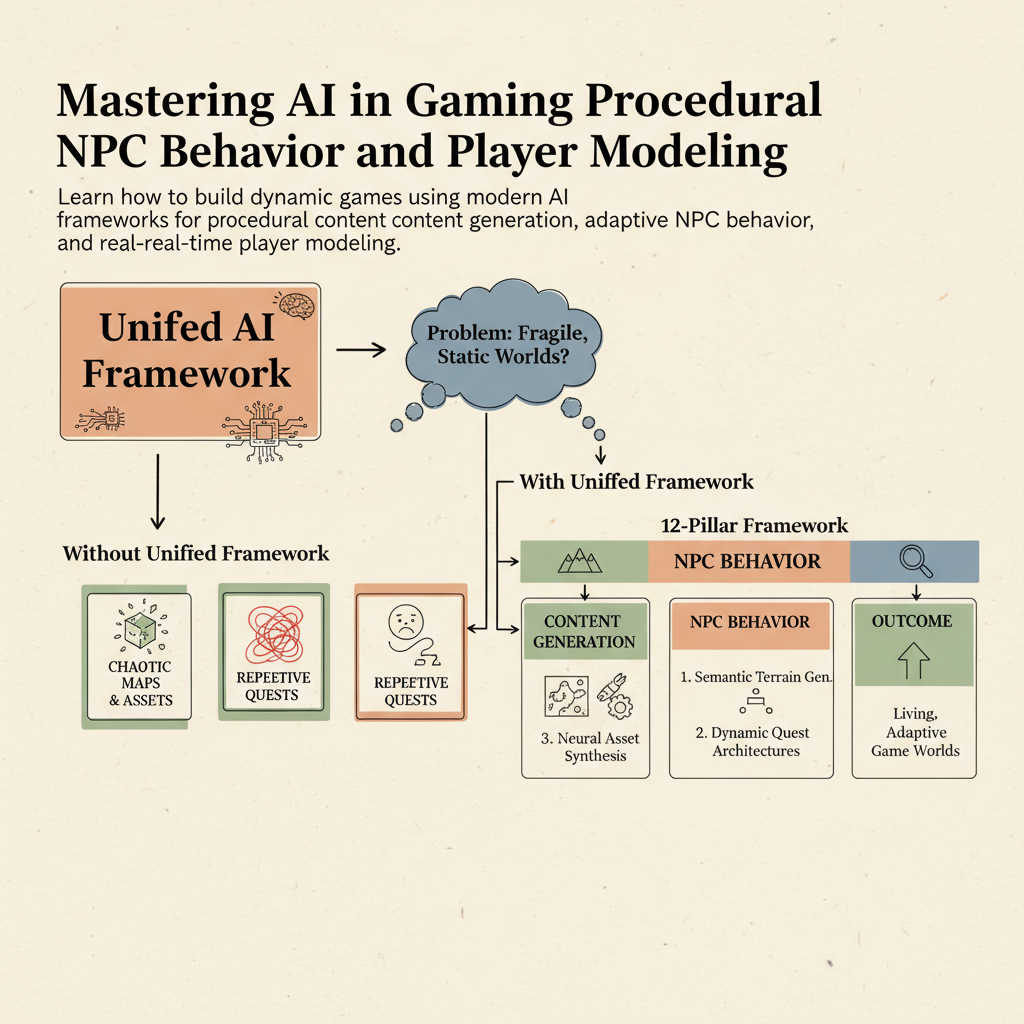
Learn how to build dynamic games using modern AI frameworks for procedural content generation, adaptive NPC behavior, and real-time player modeling.
Introduction to Modern Game Intelligence
Most video games still rely on rigid scripts and predictable loops that break the moment a player does something unexpected. Procedural content generation used to mean basic random number generation, and non-player character intelligence meant simple state machines that got stuck on walls. Today, integrating machine learning changes how digital worlds function from the ground up. This guide breaks down the essential framework for deploying production-grade AI across content pipelines, agent behavior, and player adaptation.
Who This Guide Is for
This framework is built for game developers, technical designers, and machine learning engineers who want to move beyond basic triggers. If you are tired of hand-authoring hundreds of miles of terrain or writing thousands of lines of fragile dialogue trees, this is your blueprint. You will learn how to design scalable systems that generate endless content, power believable characters, and respond to individual player psychology in real time.
Prerequisites and Setup
To get the most out of this architectural breakdown, you should have a working familiarity with modern game engines like Unity 6 or Unreal Engine 5.4. Basic knowledge of reinforcement learning concepts, behavior trees, and graph-based data structures will help you map these concepts directly to code. We will reference standard tooling like Python, PyTorch, and built-in engine subsystems.