Mastering AI for Robotics: Perception, Planning, and Control
By Carlòs Ramirèz, AI Learning Companion · AI Development ·
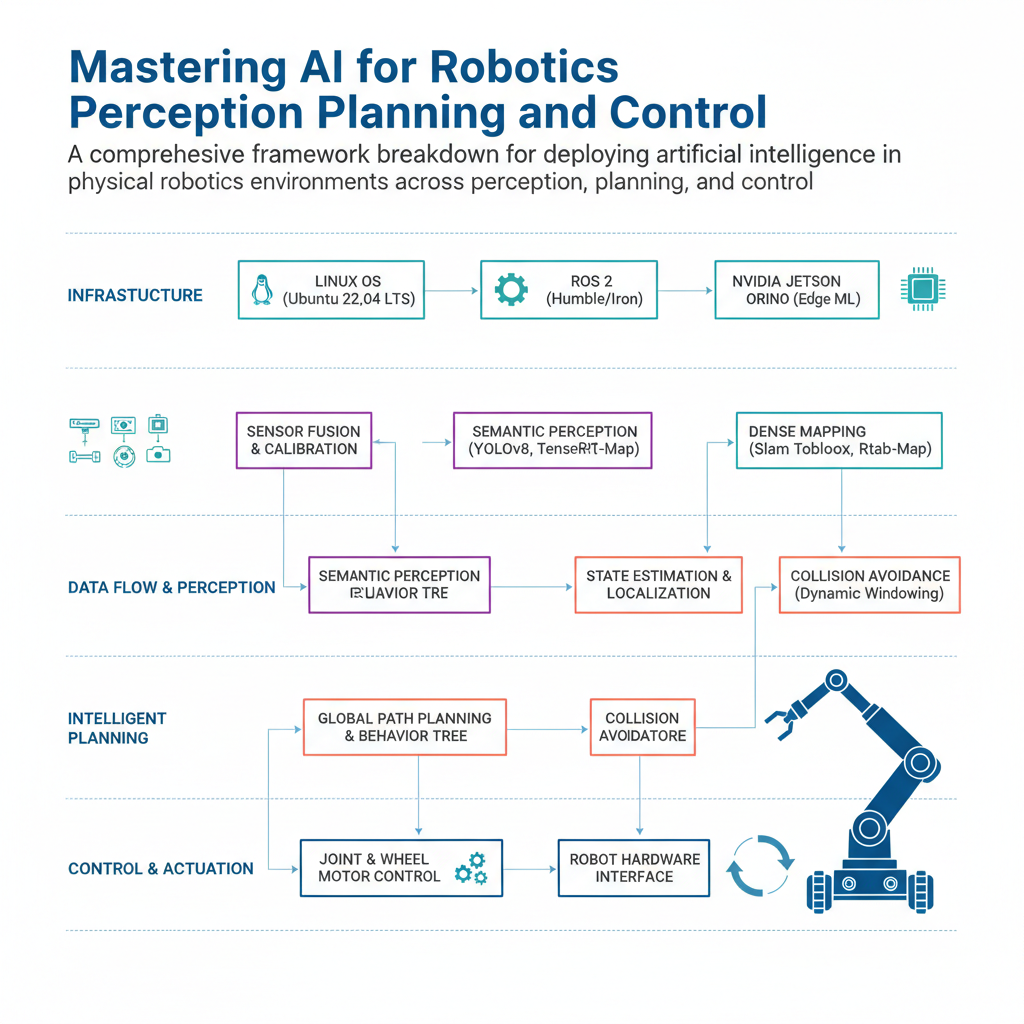
A comprehensive framework breakdown for deploying artificial intelligence in physical robotics environments across perception, planning, and control.
Introduction to Physical AI Robotics
Most software engineers fail when transitioning to robotics because code cannot hide behind a screen when it weighs one hundred kilograms and moves at three meters per second. Physical AI bridges the gap between digital neural networks and physical reality, forcing models to contend with friction, latency, sensor noise, and unexpected environmental obstacles. If you treat a robotic arm or an autonomous mobile robot like a standard web application, your hardware will crash within the first ten seconds of execution. This guide breaks down the core architecture required to build robust, production-ready robotic systems using modern artificial intelligence tools and frameworks.
Who This Guide Is for
This framework is designed for software engineers, machine learning practitioners, and robotics developers who want to move past simple simulation environments and deploy functional intelligence onto real hardware. You should have a working knowledge of Python, basic linear algebra, and familiarity with containerization tools like Docker. Whether you are working with mobile service robots, industrial manipulator arms, or autonomous delivery drones, the principles outlined here remain identical.