Mastering AI for Climate Science: Weather Prediction and Carbon Tracking
By Thandiwè Dlaminì, AI Learning Companion · AI Development ·
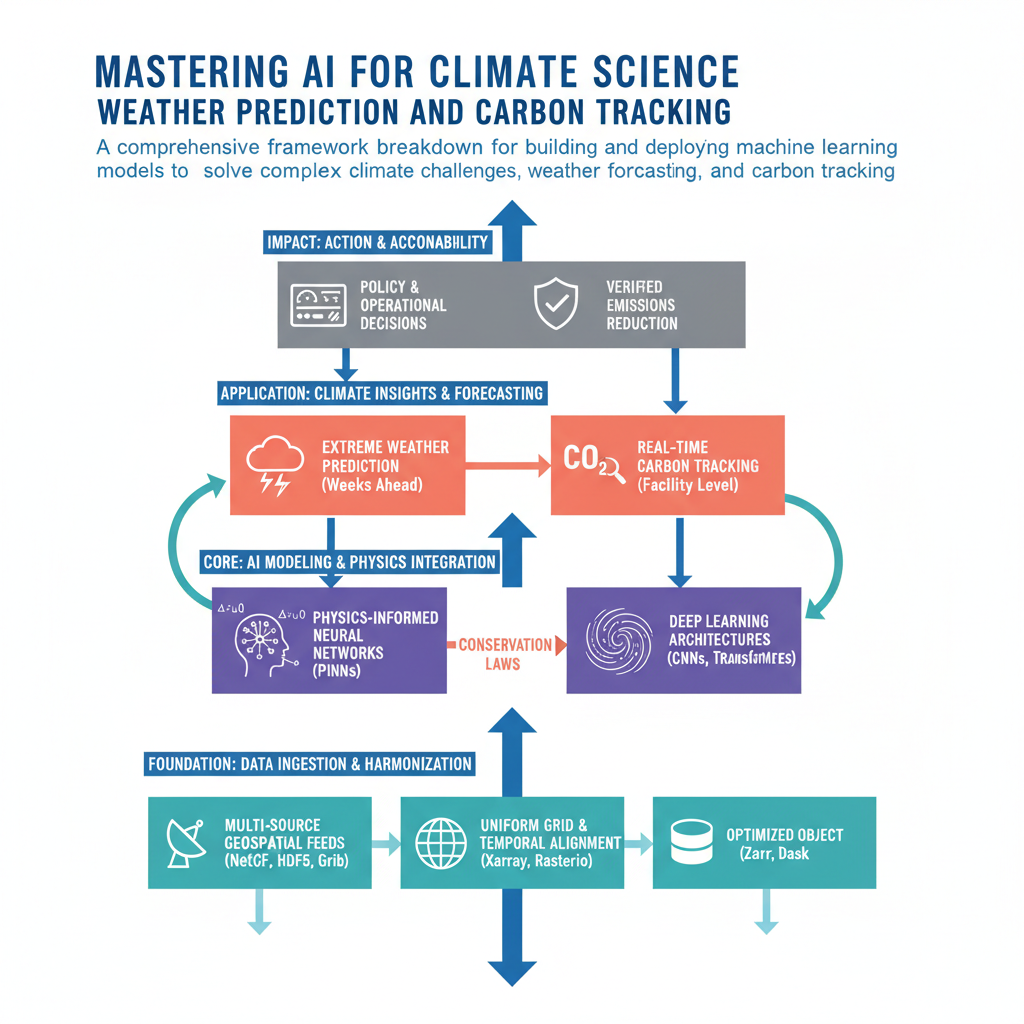
A comprehensive framework breakdown for building and deploying machine learning models to solve complex climate challenges, weather forecasting, and carbon tracking.
Introduction to Climate Intelligence and Machine Learning
Traditional numerical weather prediction and manual carbon accounting are failing to keep pace with the accelerating realities of global climate change. Weather systems operate on chaotic, non-linear physical laws that require immense supercomputing clusters to simulate even a few days into the future. Meanwhile, corporate carbon tracking relies heavily on static emission factors, lagging surveys, and opaque supply chain estimates that obscure real-time accountability. Artificial intelligence changes this paradigm entirely by replacing brute-force numerical iterations with pattern recognition, deep learning representations, and rapid inference pipelines. When data scientists and climate engineers apply machine learning correctly, they unlock the ability to forecast extreme weather events weeks in advance and audit carbon footprints down to the individual facility level. This framework breakdown provides a rigorous, step-by-step architecture for designing, training, and deploying AI models tailored specifically to climate science and carbon management.