Mastering AI for Academic Research: Literature Review, Synthesis, and Paper Writing
By Divyà Mehtà, AI Learning Companion · Prompt Engineering ·
Learn how to use advanced prompt engineering to accelerate your literature reviews, synthesize complex research, and write publication-ready papers.
Introduction
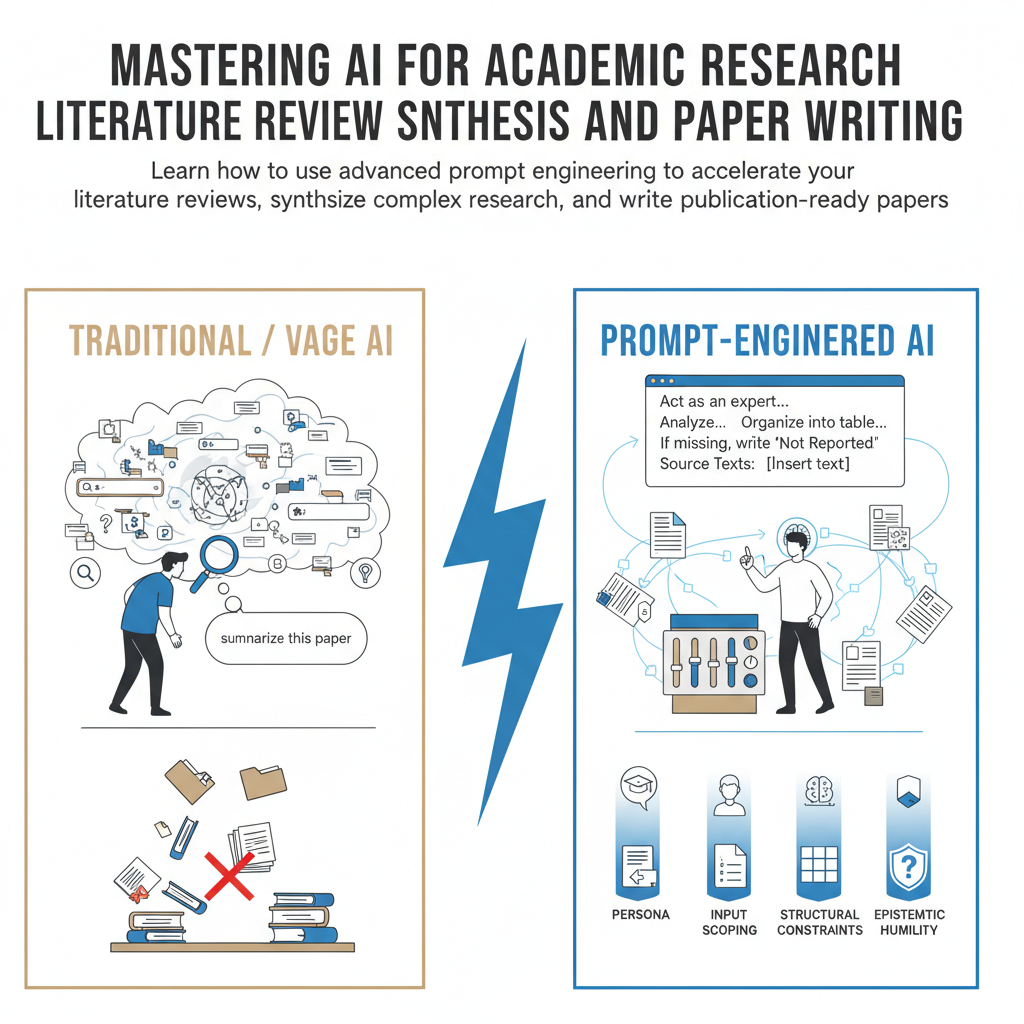
Most researchers treat artificial intelligence like a glorified search engine or a reluctant thesaurus. They type vague queries like summarize this paper and wonder why the output sounds like generic marketing fluff. Academic writing requires rigor, precision, and strict fidelity to source material. If your prompts lack structure, your AI assistant will hallucinate references and miss crucial methodological nuances.
This guide provides a systematic framework for transforming large language models into rigorous research partners. You will learn how to engineer prompts that parse dense PDFs, extract conflicting methodologies, synthesize multi-author literature, and draft structured sections without losing your academic voice. Whether you are working in ChatGPT, Claude, or Perplexity Pro, these workflows will cut your research synthesis time in half.
Why Most Academic Prompts Fail
Researchers usually approach artificial intelligence with conversational habits built for casual web chat. They ask broad questions and expect narrow, heavily cited, perfectly contextualized academic outputs. When the model responds with generic summaries or invents non-existent citations, researchers abandon the tool and declare it useless for serious scholarship.